
*Bourbon Culture is reader-supported. When you buy through links on our site, we may earn an affiliate commission.
| Don't like ads? | No ads |
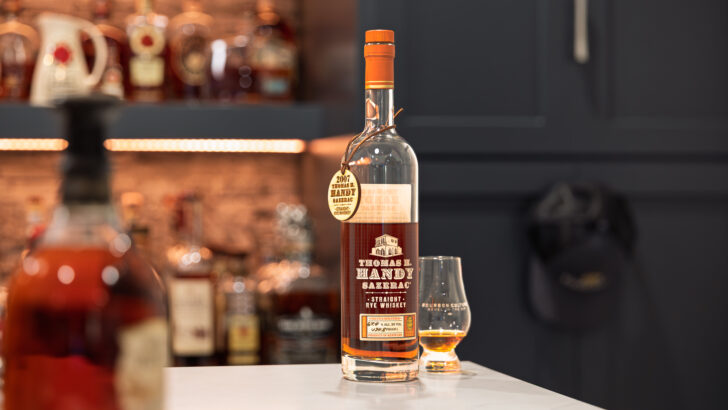
In the world of the Buffalo Trace Antique Collection (BTAC), the hype machine runs on high-octane FOMO. Now I’m not saying that the hype isn’t real, because each of the five (six?) labels are generally some of the best whiskey you can get your hands on that year, but there’s always one bottle that I never quite understood why it gets included into the group of 12 to 19-year-old bottles. The one I’m talking about is Thomas H. Handy Rye Whiskey.
“THH” (as it’s known among enthusiasts) has historically been the red-headed stepchild of the lineup. Why? Because it’s young. In a collection where double-digit age statements are the norm, a 6-year-old rye usually gets looked at with a raised eyebrow. I’ve never heard of Buffalo Trace try to justify why the age statement has basically been set to 6 years old and never changed, either. The whole reason it started so young in the first place was mostly because Buffalo Trace didn’t begin production of rye whiskey until 1997 at the earliest. So by time they started to expand the BTAC Lineup, that’s all they had available. I guess from that part on, they didn’t want to mess with tradition too much. By the way, did you know United Distillers seemed to invent the idea of the Buffalo Trace Antique Collection a decade before Sazerac/Buffalo Trace did? Read my article about it here.
The Death of the NDP Era: From Bernheim to Frankfort
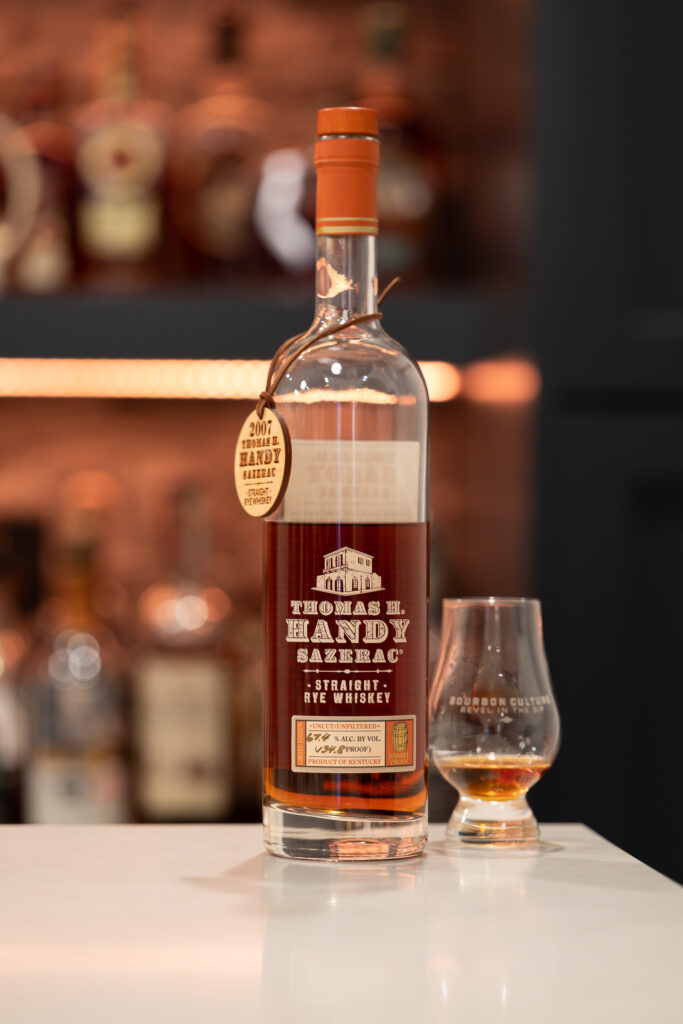
The bottle I’m reviewing today is the second Thomas H Handy ever bottled. But before I get into it, let’s rehash the events that took place before it was released. For starters, THH was not the first rye whiskey in the Antique Collection. Back in 2000 – when the BTAC first came out with its core three labels – it included Sazerac 18 Rye Whiskey. That one is the sophisticated older brother in the BTAC and was the darling of the rye world. But there was a dirty little secret behind those bottles: the barrels weren’t distilled at Buffalo Trace. Those stocks were sourced from the old Bernheim Distillery, distilled in the early 1980s, and eventually moved into stainless steel tanks to stop the aging process. It was a Non-Distiller Producer (NDP) move hidden inside a legendary brand. I go more in depth on that whole story here.
The introduction of Thomas H. Handy in 2006 was meant to pivot away from those finite, sourced stocks. But while the 2006 debut is considered more of a “transition bottle” (distilled in 1997 during the chaotic hand-off from the George T. Stagg Distillery to the modern Buffalo Trace era), the 2007 release is the first time we see the 100% in-house, modern Buffalo Trace rye whiskey (Sazerac Rye aka “Baby Saz” wasn’t released until 2010). So if you’re ever wondering why a secondary value price gap exists between the 2006 and 2007, that’s probably why.
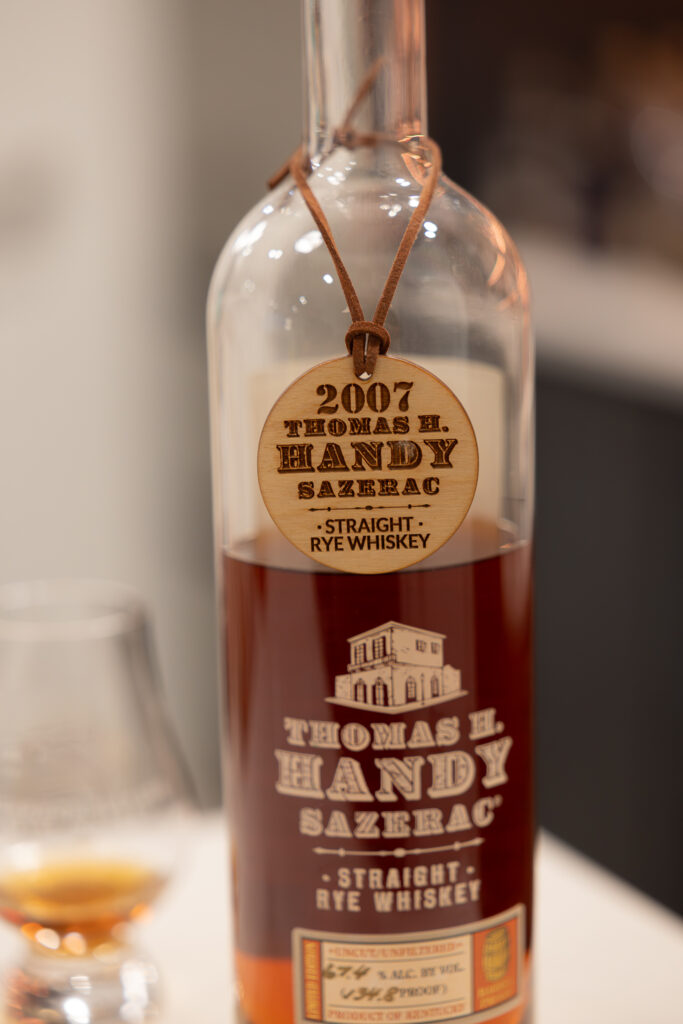
But let’s focus on the 2007 version. It was first distilled in the Spring of 2001 which makes this bottle six and a half years old. The recipe focuses on being a “barely legal” rye whiskey which probably means the use of 51% rye grain and a large amount of corn (my guess is 39%). The grains were also identified as coming from Minnesota (Rye), Kentucky (Corn) and North Dakota (Malted Barley).
Taken altogether, this was Buffalo Trace’s way of showing the world that it could make world-class rye whiskey.
The Physics of Warehouse L: 62% Evaporation Loss over 6 Years
If the 2007 Handy is the pinnacle of the brand, it’s because of a statistical anomaly that occurred in Warehouse L. In the world of whiskey, we talk a lot about the “Angel’s Share,” being a euphemism for evaporation. Usually, you’re looking at 10% in the first year with a 2% to 4% loss each year after that. For the 2007 Handy, the barrels decided to do their own thing rather than follow by these rules.
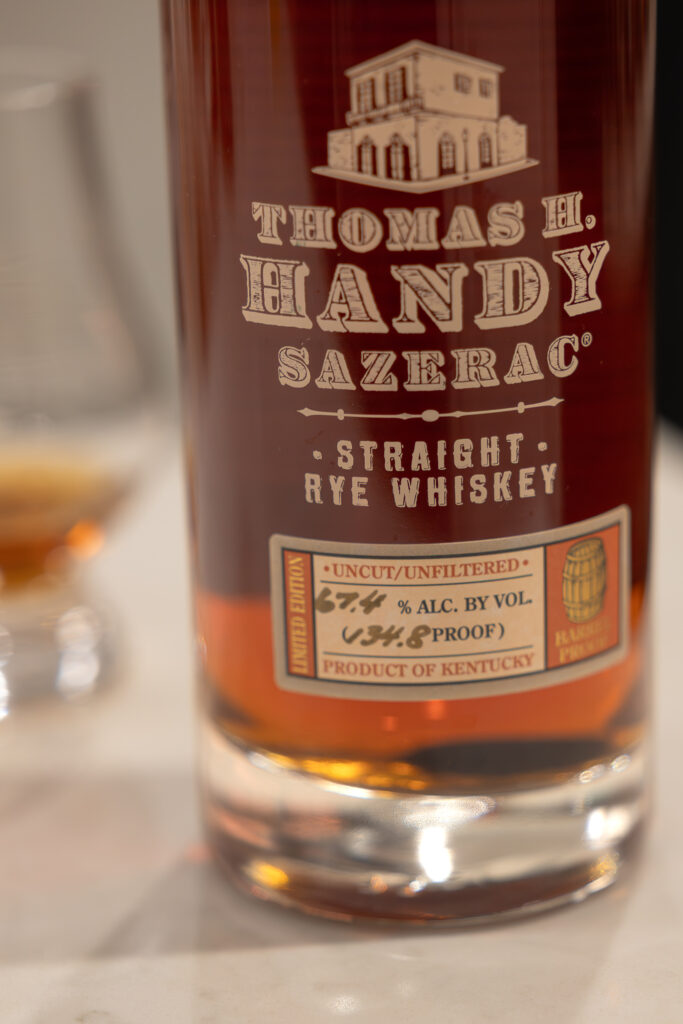
Maturing on the 5th floor of Warehouse L, the barrels must have been subjected to a brutal micro-climate of heat (Buffalo Trace warehouses are heated by the way, but not heat-cycled). This resulted in the 34 barrels (wait, is that all the more there were?!) shedding 62.53% of their volume through evaporation. I would expect that for a barrel of Sazerac 18 after maturing all that time, but I would never have guessed the average evaporation loss of a 6 years old barrel being more than 40%. What remained was a hyper-concentrated liquid with a combined proof (after being batched) of 134.8 proof. To this day, it remains the highest proofed THH ever bottled.
Still, for being 134.8 proof, THH was only the second-highest proof bottle in the 2007 BTAC lineup, eclipsed by the legendary 144.8 proof George T. Stagg. But the Handy has less bottles This level of concentration is why the yield was so pathetic—only 3,408 bottles were produced. That was even lower than the total number of bottles of Sazerac 18 in that same year (~3,800). In an era where Buffalo Trace now pumps out tens of thousands of BTAC bottles for each label, 3,408 feels like a drop in the bucket. This is truly a rare find.
So how does it taste? Let’s find out. Thanks to my friend Mike over at Mostly Peaceful Bourbon, I’m getting the chance today. I sampled this neat in a glencairn.
Tasting Notes
Nose: The first thing that hits you is the sheer density of the vapor released out of the glencairn. Instead of smelling like a typical 6-year-old rye whiskey, it balances notes of a spice market alongside a massive wave of candied orange peel and bright citrus oils that has kind of become a “Handy” trademark these days. It’s all backed by a heavy, decadent layer of Christmas fruitcake and deep caramel. Honey – a note that sometimes Handy has and sometimes it doesn’t – is rich and sometimes floral as well. Baking spices pack a punch with cinnamon and clove taking top spots. It’s all so strong, but never overpowers your nostrils.
Palate: The mouthfeel is almost distractingly oily. It lands with a heavy sweetness of toffee, orange marmalade and fig jam. Then, the rye character explodes on the mid-palate with cinnamon stick, black pepper, cloves and a sharp, minty rye punch that provides the contrast to the initial sugar. There’s a “fruit leather” note here which encompasses a bit of mango and jackfruit.
Finish: The finish is where the 134.8 proof nature finally shows its teeth, but in a very good way. It is exceptionally long and warming, radiating all the way down. It leaves a coating of citrus oils, cloves and cinnamon. There’s an herbal tingle—think eucalyptus – that lingers a little bit with what I swear to be tobacco leaf. That’s something odd that doesn’t seem like it would develop after 6 years in the barrel.
Score: 9/10
This is perhaps one of the most intense rye whiskies I’ve ever tried. The flavors deliver one haymaker after another to my senses. Don’t get it twisted that I’m telling you it’s hot – it’s actually unbelievably restrained for something this high proof. But the concentration of flavors and (what I presume to be) the selection process that the tasting team went through to only pick these 34 barrels makes it seem like they only accepted barrels that were the crème de la crème. Sadly, I don’t think that Buffalo Trace is as choosy with what goes into the BTAC these days. This truly represented their high-water mark of production.
It seems crazy to me that I awarded this bottle a 9 out of 10 when there are so many other fantastic rye whiskies that share a similar rating (certain batches of Kentucky Owl come to mind). But there is something here that is so complete that it allowed me to drift into whiskey nirvana with every sip. It’s not going to be win you over with mature oak notes (but does rye whiskey really need a lot of that anyway?) and it’s not going to be as herbal or spice-driven like rye whiskies with 80% or more rye grain in their recipes – but what it will do is provide an intensity and complexity that I think all of us look for when we drink whiskey of any kind. And for that, it earns this high score.
Final Thoughts
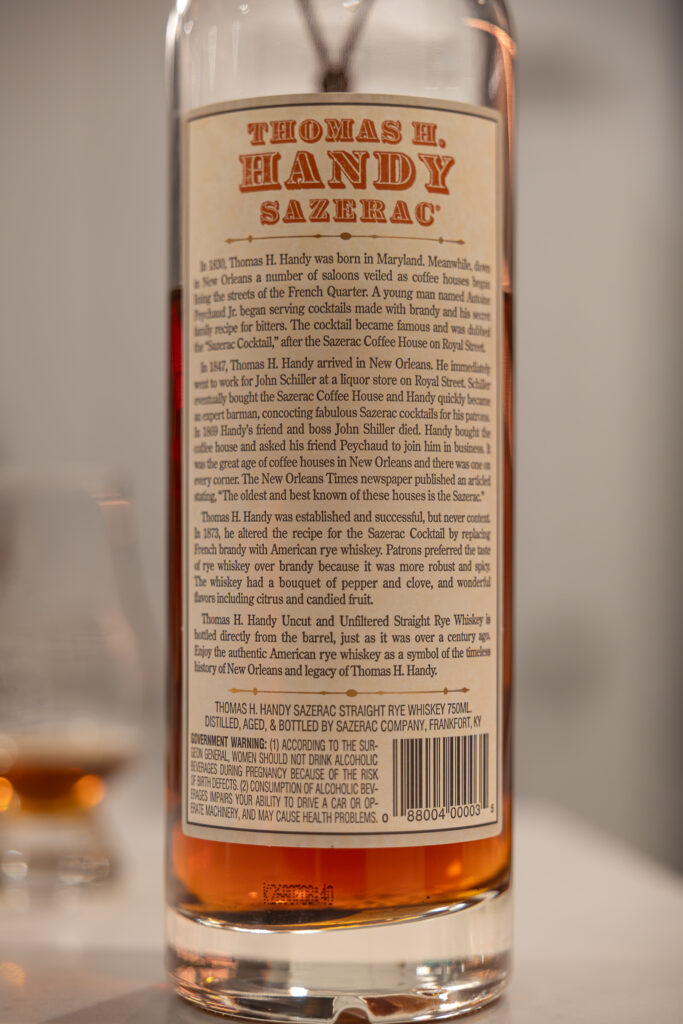
Let’s be blunt: I don’t think the secondary market knows what to do with a bottle like this. On one hand, I already laid out how few of these bottles were ever produced. So rarity is always going to be an issue. Secondly, I don’t think that we’re ever going to see a proof this high out of THH again. There are simply too many barrels being used in the modern batches to allow for the majority to have high evaporation rates and increased proofs. But people will always look at the label and say “yeah but it’s just 6 years old” and ignore all the other things that make this a very special bottle. That means currently, you can still nab these (when they come available like this one currently is) for probably less than what they should be.
Sometimes, releases within the Buffalo Trace Antique Collection don’t seem to pass the “common sense” metric. But for the 2007 THH, it possess a level of balance that modern releases – despite being excellent in their own way – simply cannot touch. Whether it was the specific climate inside of Warehouse L that year or the fact that Buffalo Trace was trying to prove a point with their first major in-house rye release, the stars aligned for this vintage. Let the Pappy chasers have their wheat. For me, I’ll always choose rye.
Manuel
Wednesday 25th of March 2026
I've never seen a 10/10 on your reviews... what is your 10/10 ? ... .... that way we know what your palate flavor seeks to rate
Mike & Mike
Wednesday 25th of March 2026
A quick and easy way to find them is to go to the homepage and at the top, filter reviews "By Rating." 10's are at the bottom. Cheers!