*Bourbon Culture is reader-supported. When you buy through links on our site, we may earn an affiliate commission.
| Don't like ads? | No ads |
The trajectory of modern bourbon brands often moves faster than the spirits can age. This has led to me watching the rapid ascension of new brands with a healthy dose of skepticism knowing that their good inventory is the first to be used up and is typically followed by younger stuff with questionable quality. Two such brands fit that narrative to a “T”: Smoke Wagon and Penelope Bourbon. Ironically, both were in the running to be bought out by Midwest Grain Producers (MGP) as a way to expand into the “premium” market. In the end, Penelope was their $105 million choice.
What started in 2018 as a New Jersey startup blending sourced Indiana whiskey had morphed into a juggernaut that was uniquely suited to attract new whiskey drinkers. Penelope didn’t look like your typical “Old ____” brand of bourbon or try to tie into modern rough-and-tough imagery. They embraced a softer, almost feminine appeal. This divided whiskey consumers who viewed it them as unserious, but nonetheless, it attracted many non-enthusiasts precisely because it was so different.

Since the acquisition in 2023, the brand has significantly accelerated its product pipeline. While there have been minor cosmetic updates to the packaging, the real shift is found in the sheer volume of new releases. Of course they now have access to more mash bills than ever before, but where they really seemed to shine was their experimental releases like Rio, Havana and Rosé Cask. And up until 2025, the base whiskey was always from the same distillery… until now.
Penelope using Heaven Hill distillate?!
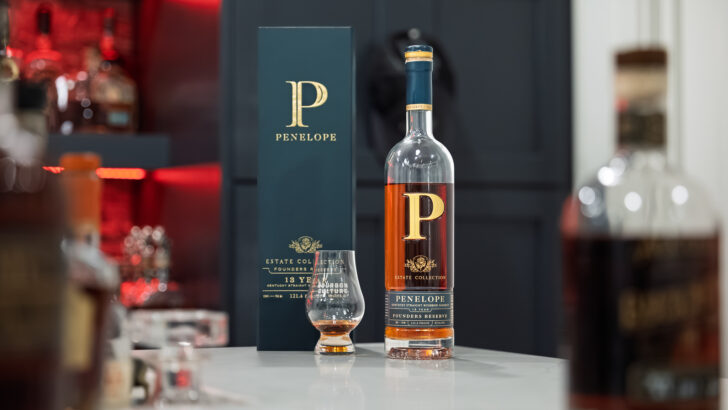
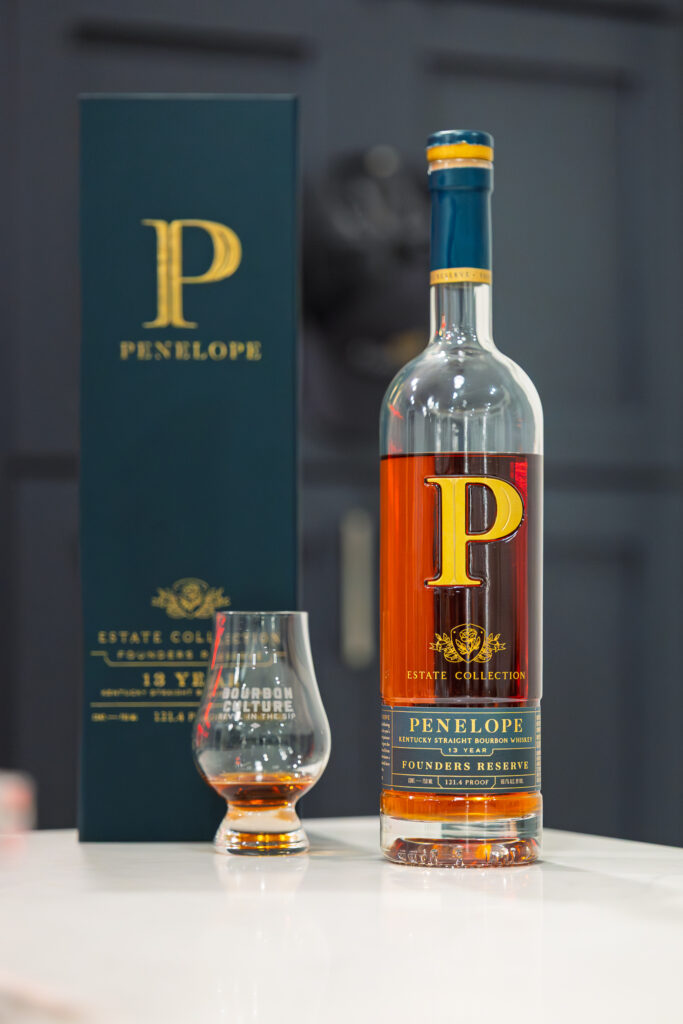
This brings us directly to the Penelope Founders Reserve 13-Year Kentucky Straight Bourbon that I’m reviewing today. It was a highly anticipated release within their 2025 Estate Collection and clocks in at 121.4 proof. The most fascinating aspect of this release is the origin of the liquid itself. For a brand owned by MGP, this bottle contains absolutely zero Indiana whiskey. Instead, this batch is the byproduct of a convoluted story within the whiskeyverse. Penelope never tried to hide the fact that the mash bill used in the first Founders Reserve release was 78% corn, 10% rye and 12% malted barley – a recipe that almost all enthusiasts surely know by now. It’s Heaven Hill.
Where did they get these barrels from? Some of you have already connected the dots, but I’ll just come out and say it: they’re from Luxco. In the spring of 2021, MGP had acquired that brand, too. For years prior to this, Luxco had been sourcing from – then distilling at – Heaven Hill. Their cooperation ended sometime around 2018 when Luxco’s own distillery in Bardstown was completed and they began to make their own distillate. Heaven Hill likely gave them the heads up years prior that their time cooking in their kitchen at Bernheim was running short, so they socked away as much as they could.

However, just because the partnership was over didn’t mean that all of the Heaven Hill barrels were used up quickly. Some still remain to this day and probably will be for the next 2-5 years. You’ll find them in Lux Row’s more premium age-stated releases. Apparently, these specific barrels were aged for most of their life in Heaven Hill rickhouses prior to being moved to the Lux Row Distillers campus. After all, there was about a ~6 year gap from the time this batch was distilled (September 2011) to when Luxco completed their first rickhouse – roughly 2017.
Let’s talk cooperage
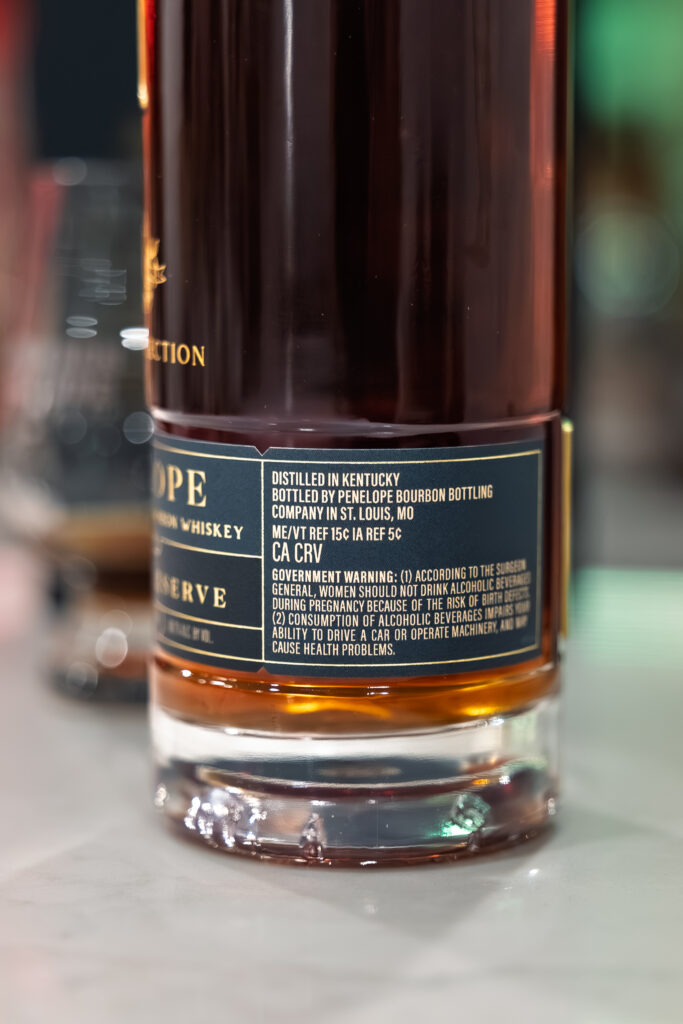
The “Whiskey Facts” table on the Founder’s Reserve back label shows the cooperage that was used was East Bernstadt Cooperage. This must be (or was) a supplier for Heaven Hill because Penelope typically likes to source their barrels from Speyside if they can. The char level that was used on them is #3 which is typical of Heaven Hill products. MGP will typically use a mix of #3 and #4.
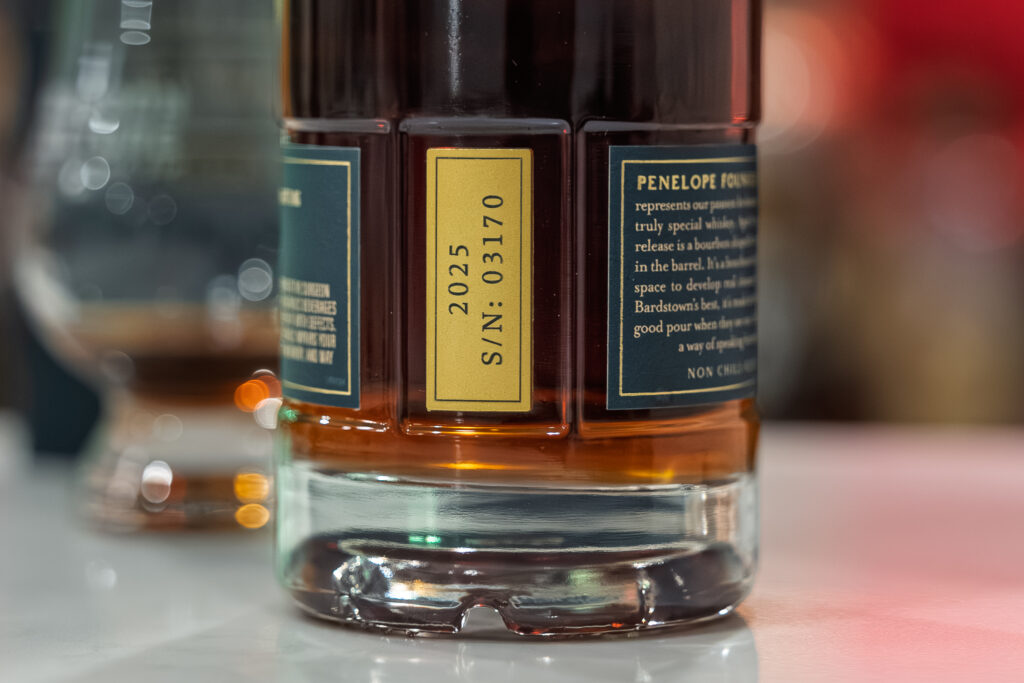
Once the barrels were selected and batched together for this release, the final bottle count was around 11,000. This makes it a fairly rare release.
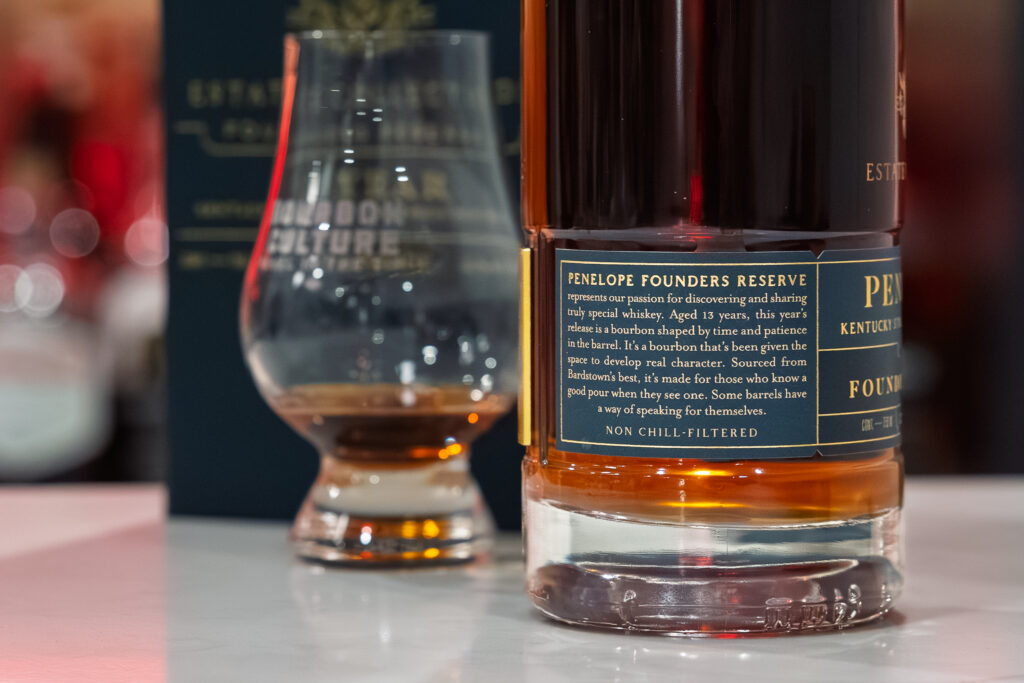
Now that I’m done with the backstory, let’s see how it tastes. Thanks to my good friend Mike over at Mostly Peaceful Bourbon, I was given the chance to taste this bottle. As usual, I sampled it neat in a glencairn.
Tasting Notes
Nose: If you thought that these tasting notes weren’t going to include Elijah Craig Barrel Proof comparisons, you’d be wrong. There are a lot of similarities here and only a few differences. On the side of similarities, caramel, vanilla, baking spices and oak seem to be at the forefront of every sniff. The oak does seem to be distinctly less prominent than your average ECBP but it does gain a leather scent which is not always something I’d find in Elijah Craig. Moving on, there does seem to be a touch more fruit than ECBP with cherry and orange zest revealing itself. Fruit notes can be rare in Heaven Hill products and finding it here makes me wonder if maturation location has anything to do with it.
Palate: As expected, this high-proof bourbon delivers a big punch of flavor. I’m finding caramel and crème brûlée along with honey-roasted peanuts and well-seasoned oak. Spice flavors like cinnamon, allspice and white pepper run circles on my tongue while a little bit of graham cracker and chocolate bar add to the experience. Citrus zest and cherry flavors make each sip more complex the longer I sit with the glass. The whole experience is just as I would expect: each sip is just as delicious as the last and nothing is out of place.
Finish: The finish is long, warming and velvety on my tongue. It leaves a lingering sweetness that Heaven Hill bourbon typically does. As the sweetness gradually fades, the oak, chocolate and leather still remain but never gets too bitter. The fruit notes also bow out early into the finish. What I’m left with in the end is primarily more of those caramel and vanilla crème brûlée notes along with a slight nuttiness that I found on the palate. Not a bad thing at all!
Score: 8/10
Penelope Founder’s Reserve is undoubtedly a full-flavored experience from start to finish. It has something for everyone and doesn’t come across as unbalanced or too hot. And if you’re waiting for the “But” statement, then here it is: BUT it doesn’t really do enough to separate itself from other barrel proof Heaven Hill offerings.
I know I’ve mentioned it almost ad nauseum at this point, but a bottle of Elijah Craig Barrel Proof is a third of the price of the Penelope ($200 MSRP) and just as good. And if you have a favorite ECBP batch that you’re a fan of (B518, C919, B520, etc), chances are high you can obtain it on the secondary market for a price that still undercuts the Founder’s Reserve.
Final Thoughts
If you purchased this bottle, then I don’t necessarily think you made an error with your wallet. It will get plenty of looks wherever you take it. You’ll also be fielding a lot of requests for pours. From its presentation to the liquid inside (who else has sourced 13-year-old barrels of Heaven Hill in their portfolio?), you’re still getting a fantastic product but I just don’t think its worth the price increase over ECBP.
I don’t know what the future of Founder’s Reserve holds and if they’re going to continue bottling Luxco’s old barrels or if they’ll move in a different direction. But I think they’re going to have to change it up if they expect to keep the price this high. I personally would want to see an elite-level MGP/Heaven Hill blend (kind of like the early Bardstown Bourbon Company Discovery releases) or maybe something finished for the 2026 release. As it stands, Penelope Founder’s Reserve has a hard time justifying its pricetag.