

| Don't like ads? | No ads |
Calumet Farm continues to shock me whenever I see another release in their series of highly-aged Kentucky bourbons. In the early 2020’s, they were pushing out sequentially older bourbons year-after-year. And to be completely blunt, I thought they got a little bit worse each time they released a new one. After the 16-year-old version was released in 2022, I thought that they were finished because surely they didn’t have that many barrels at their disposal, right?
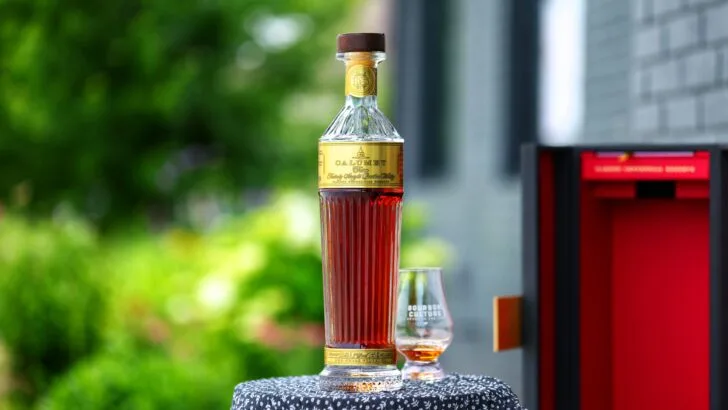
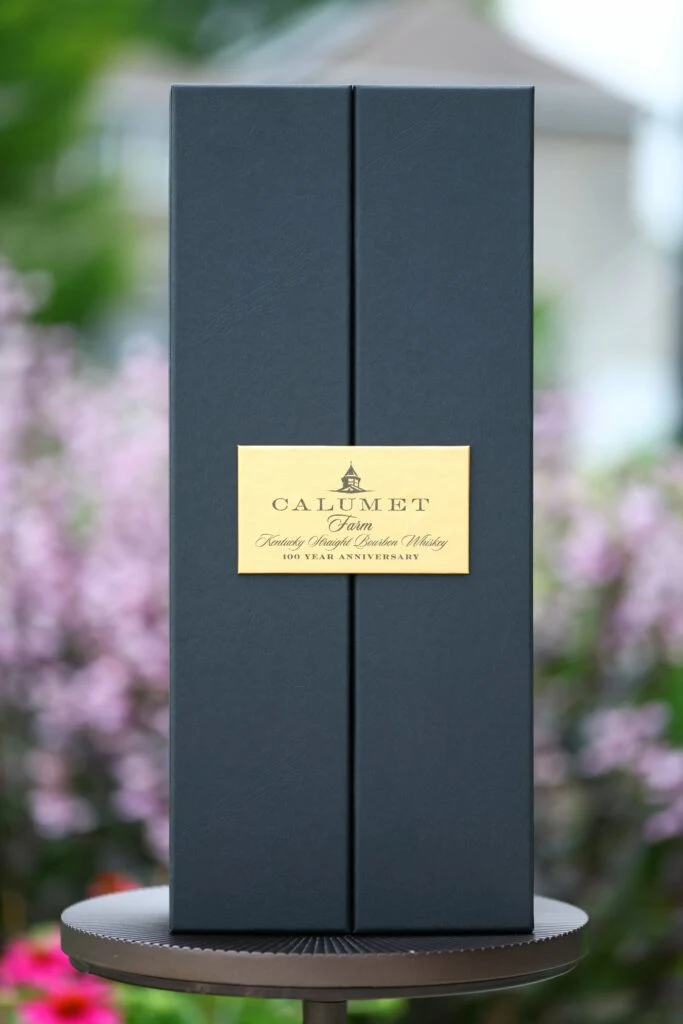
Well it turns out I was wrong. And if you’re like me, you might be wondering “wait, did I miss the 17-year-old release?” The answer is yes you did, but after I learned what it looked like and what the pricetag was on it, I didn’t feel like I missed a whole lot. The strange part was that the 17-year version came out this year along with the 18-year version that I’m reviewing today and even this throwback ceramic decanter. It’s all part of Calumet Farm 100th Anniversary of the famed horse farm of the same name.


Why was there a 24+ month gap between the 16-year-old release and these 17 and 18-year-old releases? My instincts tell me it’s because they recognized that many stores still had so many 14, 15 and 16-year old bottles left on their shelf that it would look unappealing to buyers who might wonder what was wrong with the bourbon inside if nobody was buying it. I think these releases were deliberately held back for 2 years in order for the previous bottles to eventually be sold.
Is Calumet Farm a Premium Bourbon Brand?
The craziest part about the whole brand up until the 17 and 18-year-old versions were released is that the retail prices for their releases seem solid on paper. $10 per-year-aged is completely normal in this industry – and that’s what they charged. But it took a long time for retailers to sell them all. I was observing stores in my area (and Kentucky) with shelves that still had the 14, 15 and 16-year-old bottles well into 2024.


But this year we’re now flooded with not one, but three new releases that all seemed to have jumped the shark in terms of pricing. The non-age-stated ceramic decanter is $300, the 17-year-old release is $400 and this bottle of 18-year-old bourbon is an eye-watering $500. None of these prices make sense in relation to their old pricing structure. These new prices feel like they were designed to see just how much consumers would be willing to pay for what boils down to “fancier” bottles.
Who does Calumet Farm source from?
Calumet Farm has sourced their barrels from Barton Distillery. They proudly list the same mash bill with every new release which is the exact same as Barton’s standard mash bill in every one of their products – 74% corn, 18% rye and 8% malted barley.


The brand was built on the back of a huge acquisition of barrels that was distilled in or around 2006. The story is that Calumet Farm purchased the barrels very early on and transported them to a warehouse in Bowling Green, Kentucky. As any non-distiller producer (NDP) would tell you, buying barrels when they’re young is a far cheaper way than buying very mature barrels from a producer. The main issue most NDPs have with doing it this way is having available storage space for thousands (or tens of thousands) of barrels.
Western Spirits Beverage Company’s (the brand behind Calumet) had a plan for storing them all along since they were already situated in a big enough footprint to house several thousand barrels. Their investment in those young barrels has turned out to be very profitable.

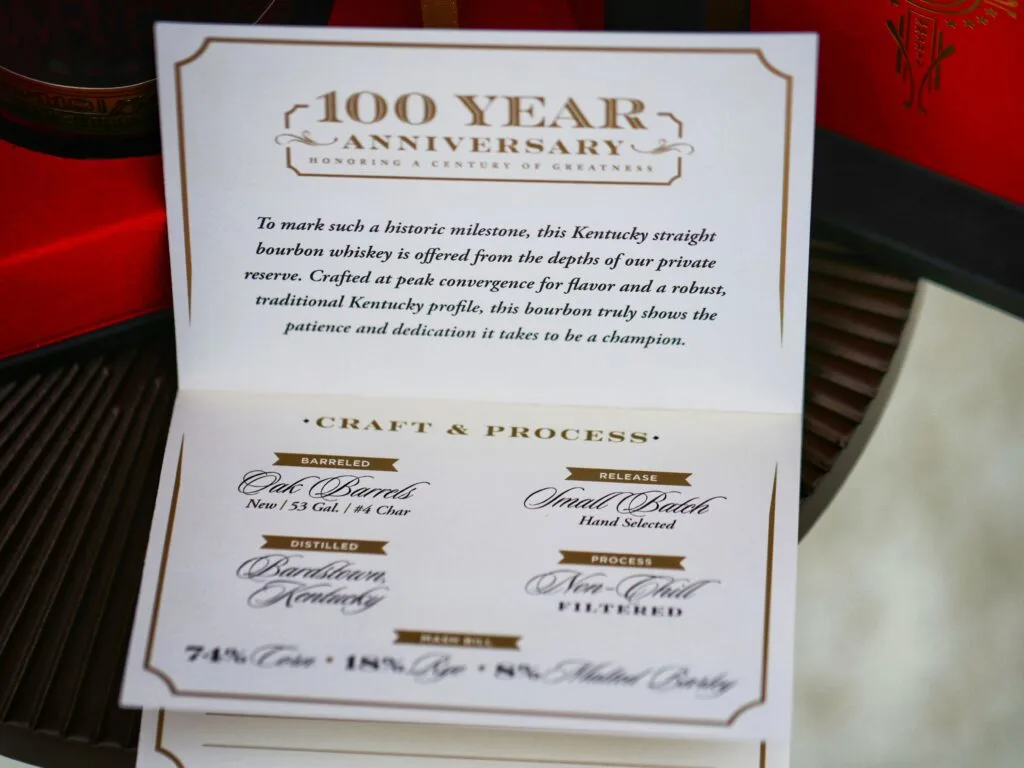
To touch on Western Spirits Beverage Company for just a minute, I want to point out that they are responsible for a few other brands you may have heard of like Sam Houston, Lexington Bourbon and Bird Dog. All of these have claimed to use Barton bourbon as well. They will inevitably taste different from each other based on how their blenders batch together the distillate, so don’t expect to get a bargain for the same product through one of their other brands.
A word about Barton Bourbon
I say this often in reviews where an NDP is sourcing bourbon from Barton, but I find that the bright, fruity character of Barton distillate begins to decline around the 10 years mark (give or take a year). Yes, this is what generally happens to all bourbon when it ages for more than a decade, but I find it to be especially prevalent in Barton and I’m not sure why. In previous Calumet Farm reviews, I could taste the absence of those fruit and bright high-rye notes. The older they got, the more one dimensional they would become.

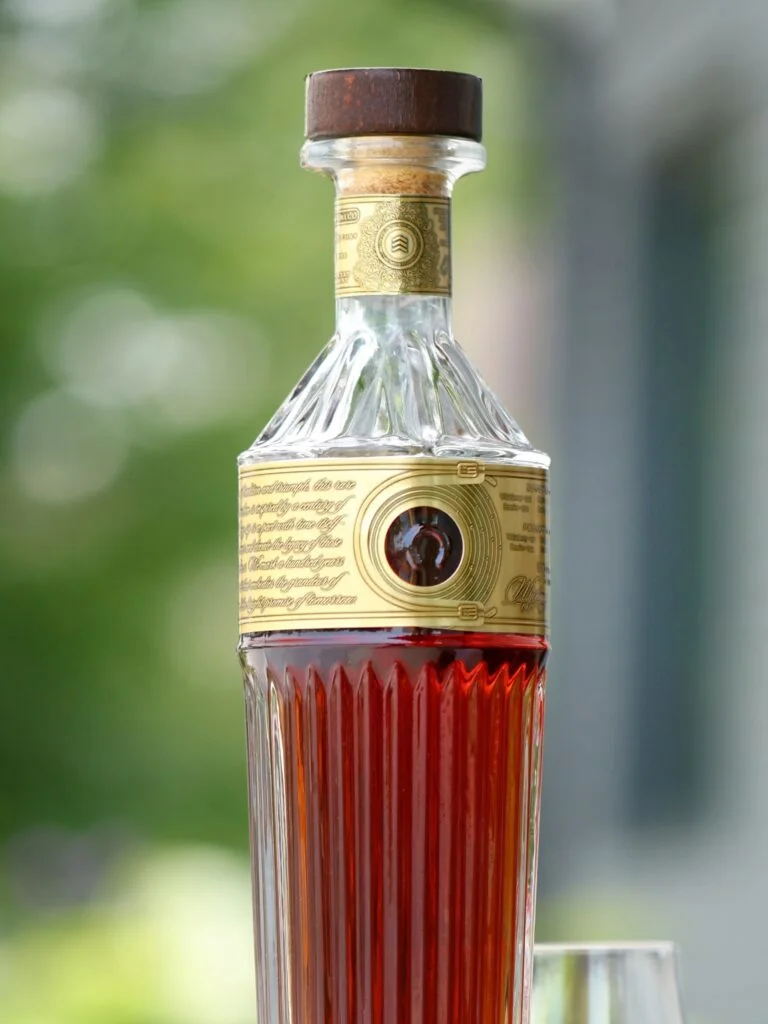
Would that be the story with the bottle I’m reviewing today? There’s only one way to find out. A very special thanks to my friend Mike over at Mostly Peaceful Bourbon for biting the bullet on this bottle and letting me try it. I must admit, if the expression “the first taste is with your eyes” is true, then I’m in for a treat. I haven’t seen a presentation this exquisite since Michter’s Celebration. I can only hope it will be that good. As usual, I sampled this neat in a glencairn.
Tasting Notes
Nose: The nose starts out with very classic bourbon tones underscored with dark, tannic influences. Up front I can find a heavy caramel and vanilla influence with brown baking spices that are slightly muted from their normal pungency. I think it’s the heavy oak and leather influence covering them up. The oxidized nature of the oak shows me that there is a little bit of the transformation of the liquid into a state that many dusty bourbons eventually fall into. It’s not as classic as they are, though. The fruit scents are also somewhat subdued with citrus peel and muddled cherry underneath it all.
Palate: One of my top three notes in bourbon – cherry cola – shows up on my tongue (the other two are blackberry and butterscotch, fyi). What a great way to start of the palate. The tannic notes like leather furniture, oak and varnish aren’t far behind. This is a dark bourbon as far as the mood it sets on my tongue. I find vanilla in decent amounts like the distillate sucked every last bit of it out of the wood staves over the last 18 years. As the session goes on, more spice notes begin to appear in the background like cinnamon and clove. These are not spicy at all and tend to add just a little bit of character. I’m also surprised that the rye influence is held at bay – despite 18% of the mash bill containing it. The barrel notes have slowly smothered them all.
Finish: Exquisite oak exemplifies the finish – which means it tastes refined, not bitter. I get some additional tannic notes resting on the tongue like crushed walnuts and Barton’s telltale leather note. Fruits have mostly disappeared with the exception of some slight orange peel. Baking spices have pretty much disappeared and vanilla and caramel ground the whole finish in a way that you can pick up on them, but they don’t make the finish as sweet as you’d think.
Score: 8.1/10
If you’re not a person who looks back at my previous reviews from the same producer, then let me just tell you that the score I gave this bottle of Calumet is one of the highest scores I’ve given for the brand. However, some of you may have caught on that the score isn’t higher than, say, an above-average batch of Barrell Bourbon or bottle of EHT Barrel Proof or even many of the most popular single barrel options out there (Four Roses, Russell’s Reserve and Old Forester). This is because that while I thought that Calumet Farm 18 Year was extremely poised and polished, it lacked a lot of the “wow factor” that makes it stand out in my deep index of bourbons I’ve tasted.

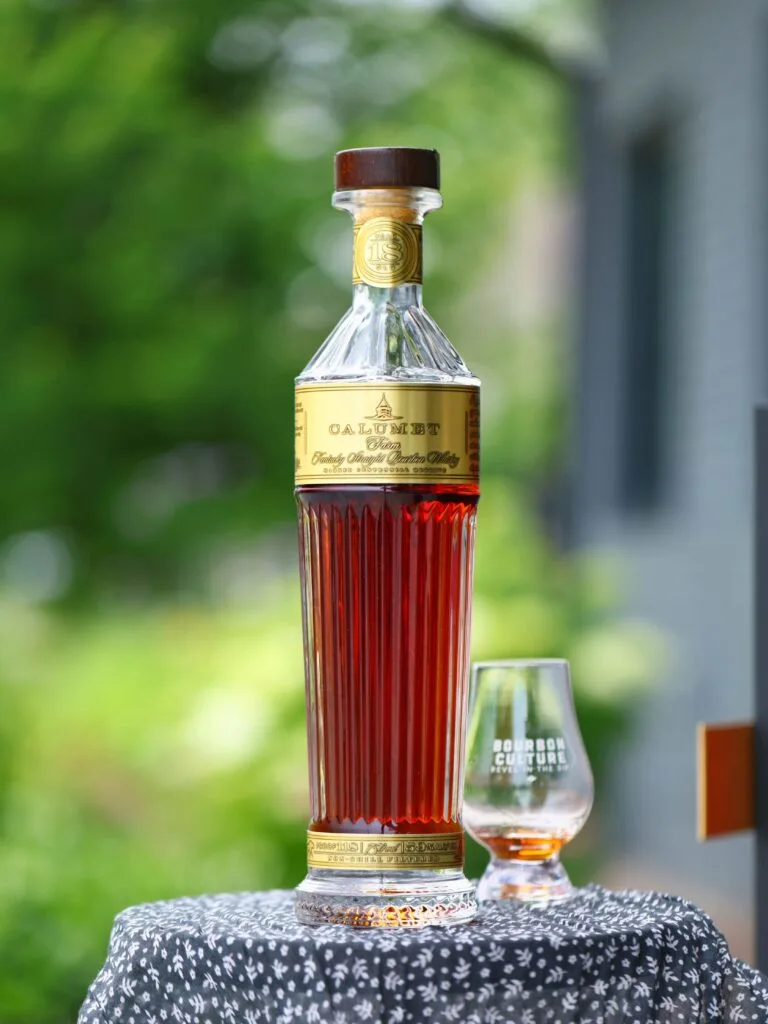
Drinking a highly proficient bourbon is always going to be a great thing. Wearing fancy packaging can make a special occasion feel even more special. But in order to truly deliver the ultimate whiskey drinking experience, you need to have a trait (or traits) that separates you from the pack. I felt like Calumet 18 lacked in that aspect which is why it won’t ever be more than just an excellent bourbon to me.
Final Thoughts
This “Final Thoughts” section might seem like I’m going off on some kind of weird tangent, but hear me out. By now you should realize that I’m going to tell you that the value proposition of Calumet 18 makes it a “do not buy” in my eyes. But the thing that I want to point out is that what Calumet 18 – and the Calumet Farm brand as a whole – shows us is that you can only make truly special products when you have an entire distillery’s-worth of barrels to pick the best from. It’s very clear that Calumet bought a large stock of barrels and batched them up according to a planned release calendar. In essence, they use what they have because it’s all that they have.
The big distilleries have the luxury of tasting their way through tens (or hundreds) of thousands of barrels to find the best and brightest in order to make truly special products. This is why they can command the highest prices – or at the very least, a highest values. But to think that a brand can pool together a few thousands barrels, age them for 18 years, batch them up and have the final product be just as exquisite as something like BTAC, Birthday Bourbon or Small Batch Limited Edition… well that’s not how it works. Congratulations on West Spirits Beverage Company for creating a product that’s reached this milestone of age, but not all 18-year-old bourbons are worth the money that their pricetag says they are.

david
Monday 7th of July 2025
Just another MGP supplied product trying to create a story at $400 per bottle.
max
Monday 7th of July 2025
@david, Calumet is sourced from Barton which is owned by Sazerac, not MGP.