

| Don't like ads? | No ads |
Barrel finishes give us plenty to get excited about before we’ve tasted a drop. Sherry sounds promising. Port might bring the dark fruit we’re looking for. Add Cognac and Amaro to the mix and now there’s enough going on to make us wonder how someone put it all together.
But does a longer list of finishing barrels make the whiskey better?
Looking back through my reviews of Barrell Whiskey Batches 002, 003 and 005, the answer is pretty clear: you can’t count your way to a better bottle.
These releases used one, two and four finishing types, respectively. Yet the scores didn’t climb with the number of casks. More interestingly, each whiskey ran into a different problem.
Batch 002 needed more body. Batch 003 had body, but I wanted better balance. Batch 005 had plenty of flavors, although heat made some of them hard to enjoy.
That’s where this gets more useful than simply comparing scores.
What barrel finishes tell you before the first sip
Finishing gives a matured whiskey additional time in another cask. Knowing what that cask previously held gives you a reason to expect certain flavors. It doesn’t tell you how well those flavors will fit the whiskey.
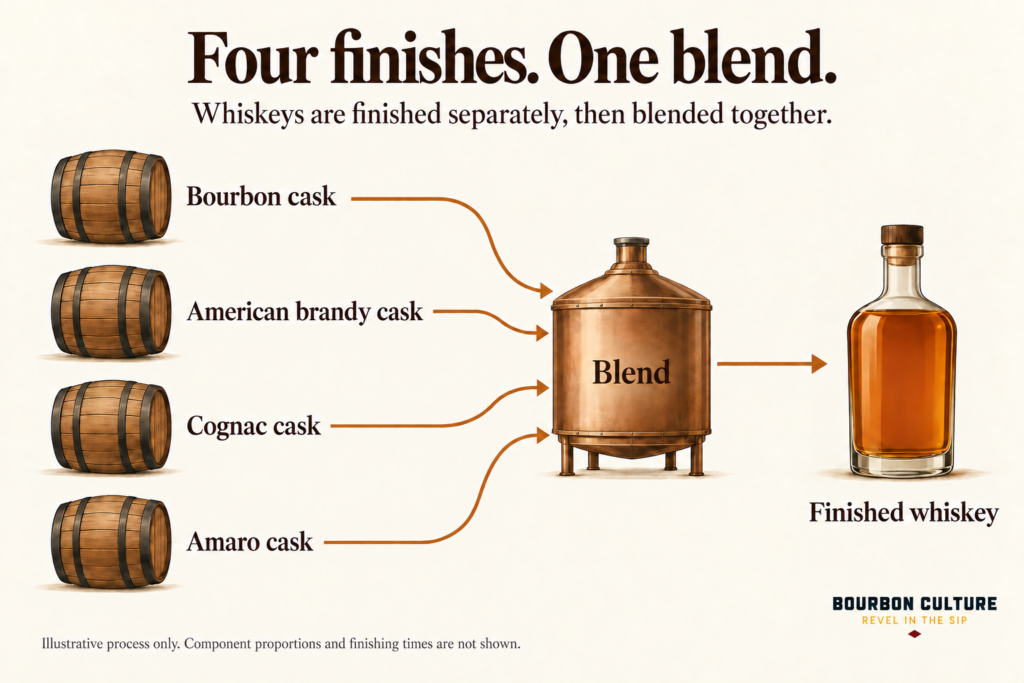
There’s another detail that can get lost when the label lists several barrel finishes. It doesn’t necessarily mean the same whiskey passed through every type of barrel.
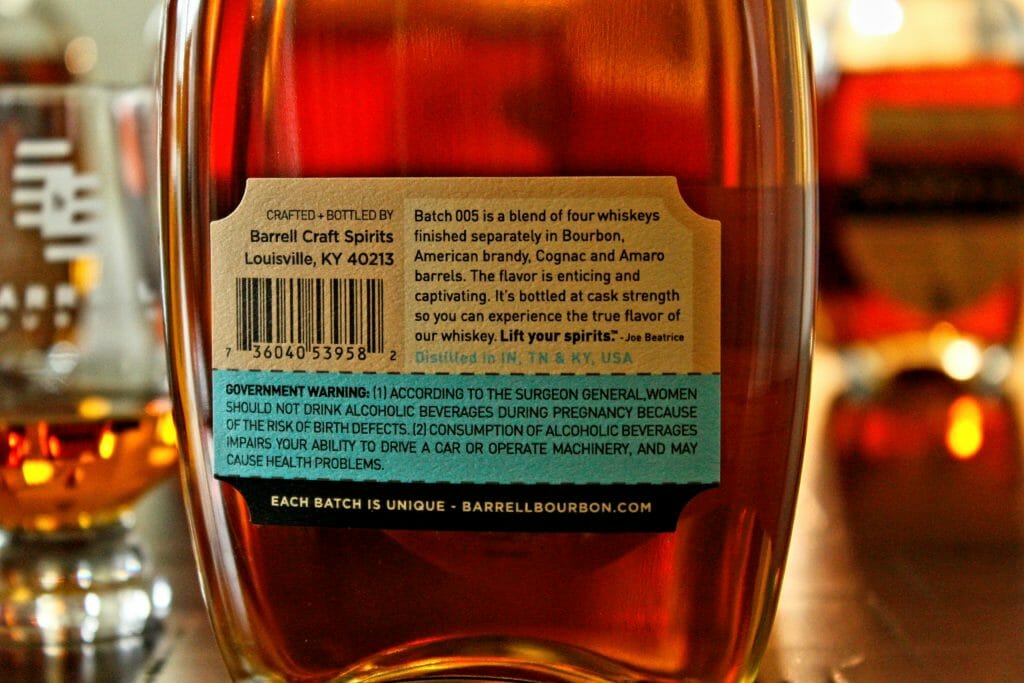
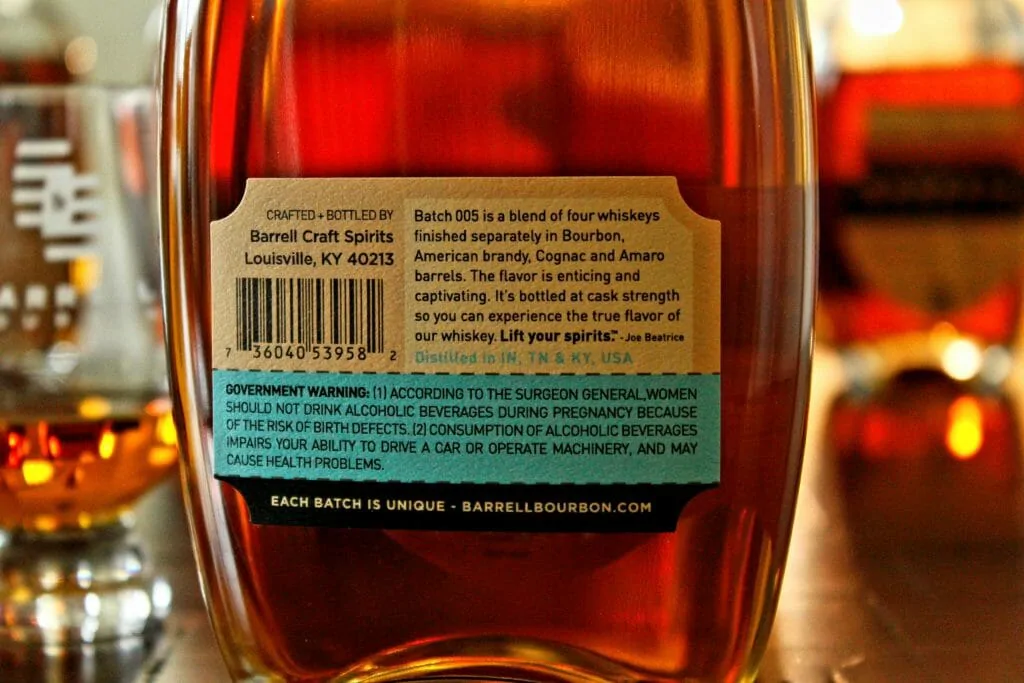
Take Batch 005. Its rear label describes four whiskeys finished separately in bourbon, American brandy, Cognac and Amaro barrels. The finished components then became part of a blend.
That’s different from moving one whiskey through four casks in a row. Barrell’s historical whiskey descriptions provide more background on those releases.
It also means the blender has decisions to make beyond choosing interesting barrels. How much of each component belongs in the bottle? Which ones work together? At what point does one start taking over?
The label gives us the list. It doesn’t give us those answers.
Three bottles, three different problems
First, these are Barrell Whiskey batches, not the similarly numbered Barrell Bourbon releases. That distinction matters if you’re looking up the bottles.
These scores come from our original reviews, published between December 2019 and February 2020. This is a look back at those tastings, not a new side-by-side comparison.
| Whiskey | Finishing types described | Original score | What held it back |
|---|---|---|---|
| Barrell Whiskey Batch 002 | Sherry | 7.5/10 | A thinner palate than I wanted |
| Barrell Whiskey Batch 003 | Sherry and port | 7.1/10 | Sweetness that needed more contrast |
| Barrell Whiskey Batch 005 | American brandy, Cognac, bourbon and Amaro | 7.5/10 | Heat that obscured finer details |
The base whiskeys differed, so this isn’t a controlled test of finishing methods. We can’t blame a score on the number of cask types involved.
What we can examine is whether the finished whiskey delivered what its description led me to hope for.
Where barrel finishes left me wanting more
Batch 002 saved its best work for the finish.
My Barrell Whiskey Batch 002 review found a sherry-finished whiskey with some enjoyable fruit and confectionery notes. There was honeyed sweetness on the palate, along with chocolate and smaller touches of spice.
Then the finish took a turn that I really liked. It reminded me of thick, aged balsamic vinegar, with dried fruit, pepper and tobacco adding to the experience.
That might sound odd if you haven’t encountered it in a whiskey, but it was the most interesting part of the pour.
The trouble was getting there. The palate felt thin, and the sweeter flavors covered much of the spice. I wanted more weight and depth beneath the sherry influence.
So this wasn’t a case of the finish failing to add anything. It added quite a bit. The whiskey still didn’t feel as complete as I wanted.
Batch 003 had the weight. It needed something else.
The Barrell Whiskey Batch 003 review described a blend of sherry- and port-finished whiskey. Its thick, sticky mouthfeel was a noticeable change from Batch 002.
There were molasses-cookie notes, fruit preserves and chocolate. On paper, that sounds like a pretty good dessert.
But as I kept drinking, I wanted more spice to break up the sweetness. The wine influence did a lot of the talking, while a lingering graphite-like note took something away from the finish.
This is why “thick mouthfeel” isn’t enough to sell me on a whiskey by itself. Batch 003 supplied the body I wanted from Batch 002, yet it scored lower.
For my palate, it leaned too far toward syrupy sweetness. Someone who enjoys that style might find much more to like. Still, adding another finishing type hadn’t solved the balance problem.
Four finishes couldn’t settle the heat
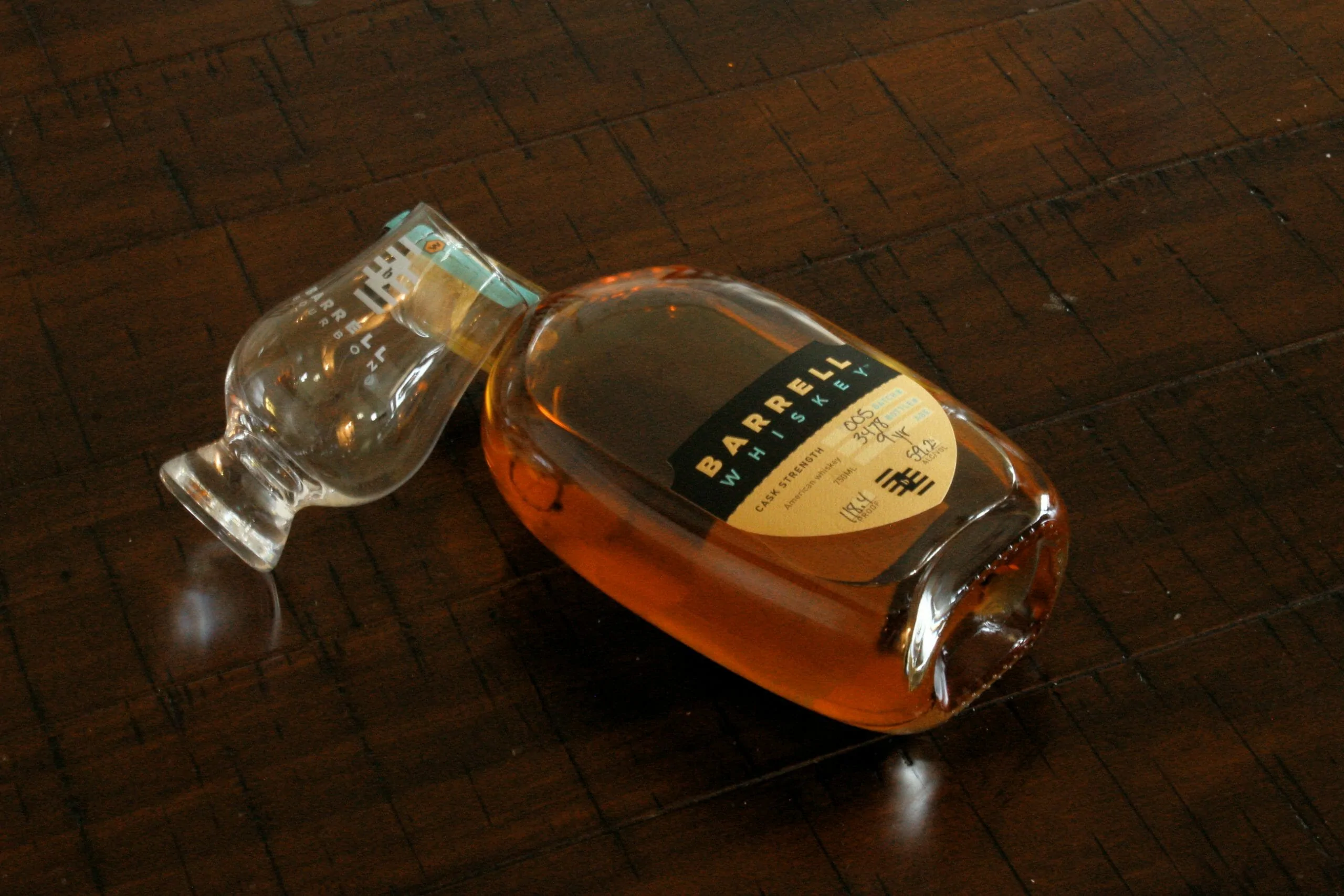
Batch 005 brought the longest list: American brandy, Cognac, bourbon and Amaro.
And yes, Amaro is different from Amaretto. I admitted in the original review that I initially read it wrong, so I can’t give anyone else too much trouble for doing the same.
My Barrell Whiskey Batch 005 review found a nose worth spending time with. Maple syrup, almond-cookie aromas, plums and grapes made for an unusual combination that I enjoyed.
The palate continued in that sweet direction, with candy-like flavors and occasional herbal bitterness. Unfortunately, heat kept getting in the way of the smaller details.
I liked what I could taste. I wanted to taste more of it without working around that heat.
Batch 005 earned 7.5/10, matching Batch 002 despite taking a very different route. That doesn’t make the extra finishes pointless. Its unusual character was part of the appeal.
It does show that variety and balance are separate things.
I also couldn’t say exactly how much the Amaro contributed. The review considered whether it helped round out the sweetness, but that remained a guess. I hadn’t tasted the components separately.
Knowing an unusual barrel was involved doesn’t mean every unusual flavor came from it.
How to judge barrel finishes when you read a review
These bottles give us three useful things to look for beyond the cask names.
First, pay attention to texture. Batch 002 offered interesting flavors, but the thinner palate limited my enjoyment. A review that describes mouthfeel tells you something a long list of tasting notes might miss.
Next, look for contrast. Batch 003 had plenty of richness. What I wanted was more spice to interrupt the sweetness. If you prefer sweet, heavy pours, that same description might make you want a bottle.
Finally, notice what the reviewer could taste around the heat. Batch 005 wasn’t short on ideas. However, its intensity made some of the finer flavors harder to pick out.
None of those questions gets answered by counting barrel finishes. Nor does a higher score automatically mean a bottle fits your taste better.
If Batch 003’s thick, sweet profile sounds good to you, its 7.1 may be less important than the description that explains it. That’s why the tasting notes deserve more attention than the number at the bottom.
Would another cask have fixed any of these?
Looking back, I don’t read these reviews and think any of the bottles needed one more finish.
Batch 002 needed a fuller palate. Batch 003 needed more contrast. Batch 005 needed its heat to leave a little more room for everything else.
Each offered something worth trying, and none of this argues against ambitious blending. Batch 005’s strange combination was a big part of what made it interesting in the first place.
But if a bottle asks you to pay more because it involves several barrel finishes, the list alone isn’t much of an explanation.
I’d rather read that the flavors worked together than count how many barrels it took to get them there.