*Bourbon Culture is reader-supported. When you buy through links on our site, we may earn an affiliate commission.
| Don't like ads? | No ads |
Over the course of many reviews, I’ve talked about the legend of MGP bourbon distilled in 2006. What was it about this specific year that has become legendary? Was it the head distiller at the time (Larry Ebersold, the Godfather of Rye)? Was it the grain that was being sourced by Pernod Ricard? Was it older equipment that had not yet been upgraded at the half-century old plant?
My theory is that something or someone took off the handcuffs at the old Seagram’s plant in that year and laid down a lot of excess whiskey that year. This ended up being gradually sold off throughout the years to the likes of Old Scout, Blaum Bros, Boone County, Belle Meade and so many other Non-Distiller Producers (NDPs). So it wasn’t about the distillate being magically better as it was the fact that there was more opportunities for something really good to reach the shelf in well-aged, cask-strength form.
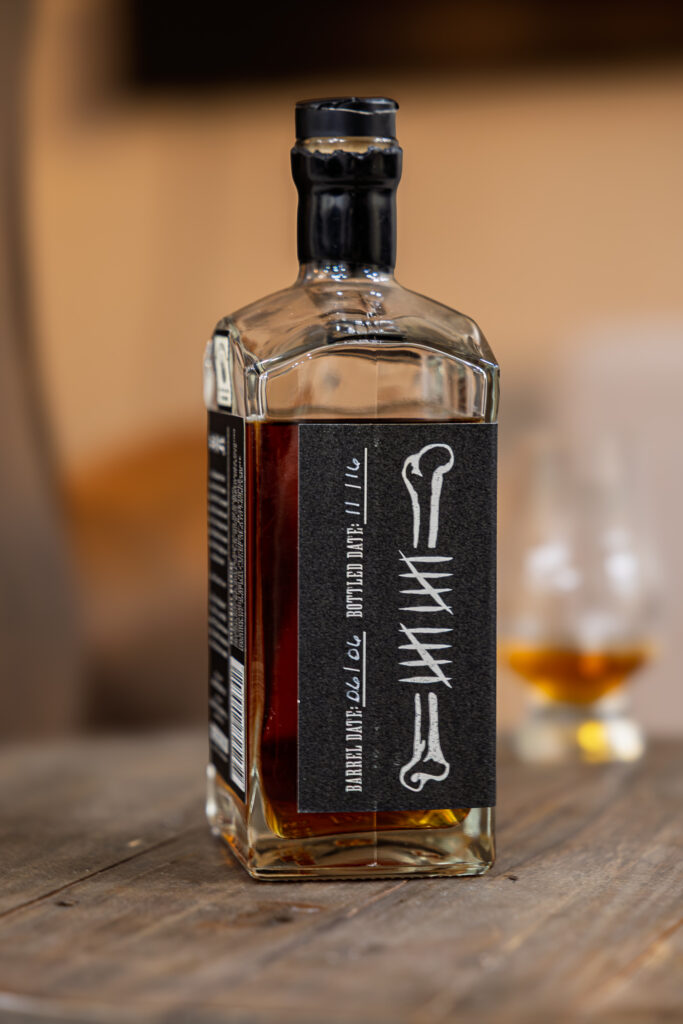
Today I’m reviewing one of those producers that doesn’t get half the spotlight that those previously listed ones do: Backbone Bourbon Company. Located just a couple hours north of Lawrenceburg, Indiana, Backbone moves the barrels they procure from the warehouses of southern Indiana to their own location in Indianapolis. They do their own blending in-house and even have a bottling line. Speaking of bottles, you may have seen these rectangular shapes in use by dozens of other producers. This may be why Backbone’s products don’t stand out on a shelf too much. Personally I like them because they’re compact enough to fit a lot of them on your shelf without taking up too much space. But you’re not reading this review to know more about the bottle, you want to know about the bourbon inside. So let’s talk about that.
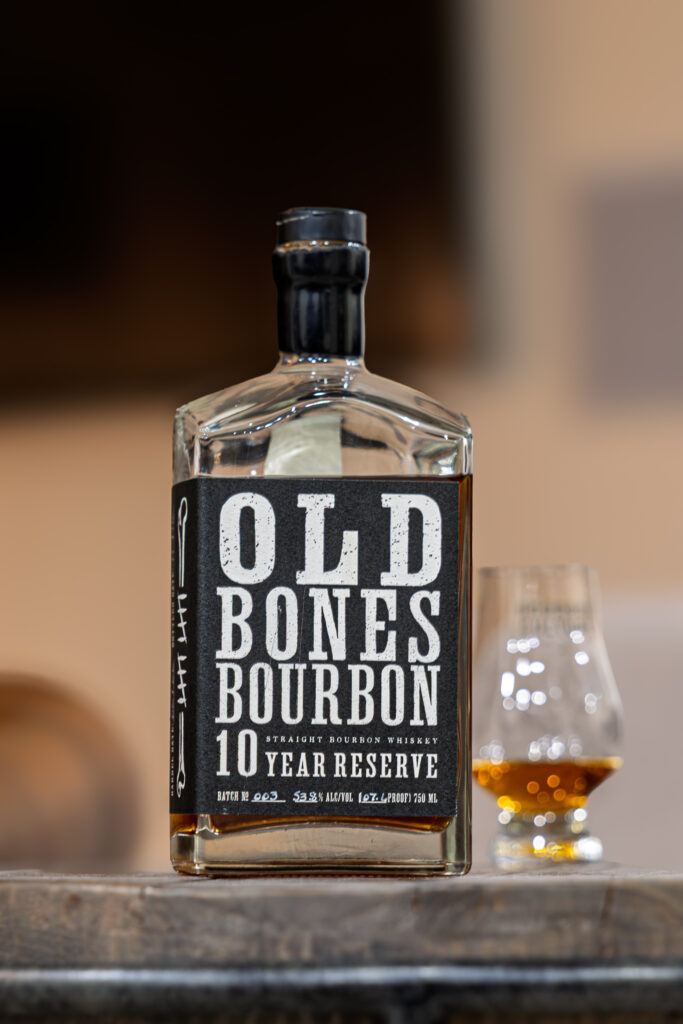
Backbone creates “Old Bones” for their oldest distillate.
At its heart, Backbone Bourbon is what I would call a “budget” brand. I don’t mean that with any disrespect, it’s just a matter of fact that they were selling cask strength MGP bourbon for under $10/per year aged when hardly anyone else was. But every brand knows there is money being left on the table if they don’t try to find some way to give consumers a more premium choice. Backbone’s answer was to create the label “Old Bones.” This label would be reserved for bourbon (and later rye whiskey) that was 10 years old or more.
The first Old Bones release – Batch 001 – was the little bottle that could. It was priced at an unbelievable $89 around the Indianapolis area, yet it still managed to set on some shelves for years. There was absolutely no reason for this other than other producers captured consumer’s attentions with their flashier labels. Old Bones just didn’t have the star power.
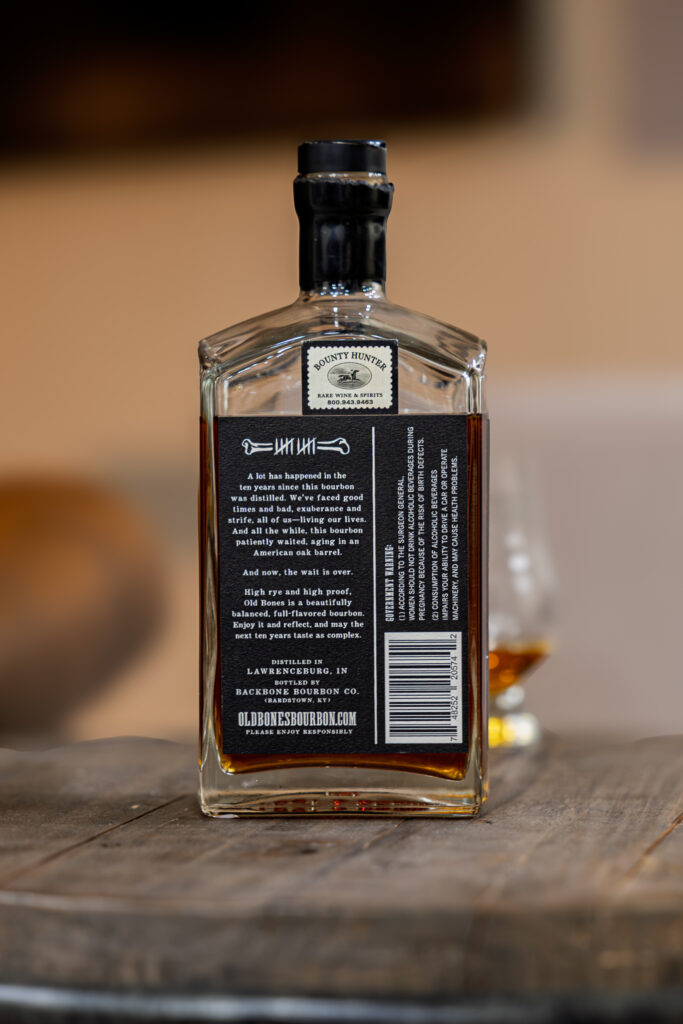
I’d also like to add a personal story about the brand that might also put things into perspective for this bottle. As I observed the various batches being distributed, I seemed to recall there being a trend that each batch lost some proof. Keep in mind these weren’t ever labeled as barrel proof or cask strength, so that meant that Backbone was almost certainly proofing down these batches. That’s not a big deal to me, but when Batch 006 came out with a paltry 90.6 proof – and for the same price as previous batches – that’s when I kind of wrote off this label. Backbone seemed to succumb to the same thing that Old Scout and Belle Meade did where they had run out of all the good, high-proofed stocks early on and were now scraping the bottom of the barrel as MGP stocks ran out nationwide.
I’ll finish my story by adding that Old Bones has since bottled Canadian Rye Whiskey (that high-corn Valleyfield stuff) and Beam Totes (that wear red wax instead of the black wax seen here) before reverting back to what I believe is once again Indiana distillate. And if you’re wondering which bourbon recipe Backbone primarily uses in this bottle, I believe it’s the low-rye LESV recipe (75/21/4).
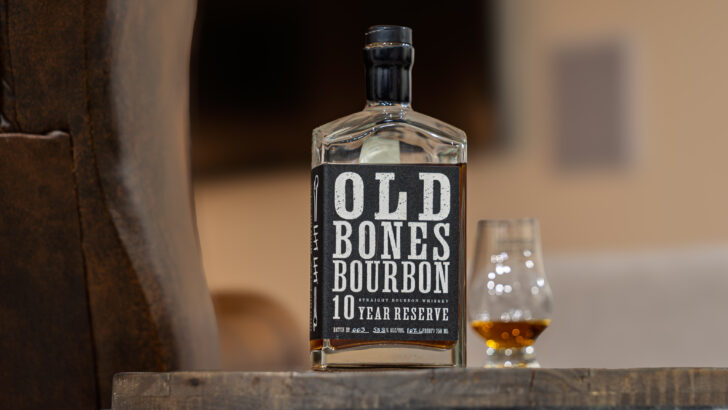
The question I hope to answer today is “were these Old Bones batches ever really worth it?” Thankfully, a member of the Crane Whiskey Society brought one to a bottle share this past winter and I’m getting a chance to try Batch 003. I know it’s not fair to base all previous and subsequent batches off of this one, but I’d like to think it will point me in a general direction for my opinion. So without any further ado, let’s get started. I sampled this neat in a glencairn.
Tasting Notes
Nose: The initial aroma is heavy with a dark, concentrated sweetness. This is classic Seagrams/LDI/MGP. I immediately pick up notes of brown sugar, followed by a lovely hit of oak tannins. The oak is neither bitter smelling nor too woody. It’s just right. I can even find some dried tobacco leaves at times. Spice scents present themselves as cinnamon, vanilla and a touch of clove. Fruit notes like baked apples and a bit of toasted cherry pop tarts give a nice contrast the darker notes.
Palate: From my first sip to my last, I can find that hint of melted butter that many people would argue isn’t actually there. But if it’s not butter, then there is something on the tongue that makes it feel very oily. Spice notes follow with peppercorn, ground cinnamon and a bit of clove. Fruit notes like toasted citrus peel and cherry are accompanied by something almost like a flat Ginger Ale. Sweetness comes from the aforementioned brown sugar and a bit of caramel. Tannins come from oak and tobacco leaf. This is really well-rounded. I only wish something from any of these notes stood out in a way that made it more interesting. As it stands, this feels like a bottle you could chug because it goes down so effortlessly. Just don’t tell Dan Kidd I said that.
Finish: The finish is very long and evolves in stages. It begins with a lingering rye spice and a touch of drying oak. As the spice fades, it leaves behind a sweet, sugary notes like caramel and Luxardo cherry syrup. Minutes after the sip, I can still taste a faint hint of orange zest and barrel char. The finish lasts moderately long and never turns bitter or astringent. This is has the perfect amount of age.
Score: 7.9/10
Sweet? Check. Oaky? Check. Oily mouthfeel? Check. Spices and some fruit? Check and check. This 10 year release has everything you’d want from a bottle of Indiana bourbon. I did ding it a tenth of a point only because I feel like it lacked that bit of extra “wow” that would have made it stand out from the crowd. But for the price (basically $10 per point), that’s still pretty darn good.
I love that Old Bones 10 Year Reserve delivers much of the same experience that the other NDPs of the time once did. The only difference is that unlike those brands which all went through a period of losing their identity, trying to create a new one and stumbling, Backbone seemed to keep it real right where they were. Old Bones bourbon didn’t have to keep gaining years of age or undergoing exotic finishes, it just simply was.
Final Thoughts
And as I’ve mentioned before, this bottle represents a phenomenal value proposition for those that bought one. Hell, it’s 2026 and I bet I could still find one of these batches collecting dust at some rural liquor store in Indiana. They were always slept on. And if you decide to travel around the countryside to find one for yourself and come up empty, these are still easy and cheap to find on the secondary or one of the many auction sites. Enthusiasts stubbornly undervalue them, but I think they deserve more love. But maybe the best form of love you can give one of these is to just open one. That’s how I got my first taste of this bottle and it was a surprise hit that night. The proof and age are both in the sweet spot and best of all, nobody will feel bad that they cracked the seal. 2016 truly was the golden year of great releases and this bottle of Backbone shows us why.