


| Don't like ads? | No ads |
Yesterday I went into detail on the history behind a bottle of Old Overholt rye whiskey that was bottled by Jim Beam in 1991. In it, I was almost certain it contained rye whiskey produced by National Distillers prior to their acquisition by Beam. However, by the mid-1990’s (I’m not sure of the exact year), those barrels of rye whiskey ran out. This meant that Beam had to begin using their own rye whiskey for the label instead. My opinion on the biggest change between these two styles is that the Beam one uses corn – and if it is ever revealed what the original Old Overholt recipe was, I bet we’d learn it has no corn in it.
Over the next few decades, Beam left this once storied brand to languish on the bottom shelf of liquor stores across the country. They made it as cheap as they could and at one point, the age statement even dropped to 3-years-old. Sad times, indeed.
What happened to Old Overholt?
Starting around 2020 (but really more like 2023), Jim Beam begam revitalizing many of their neglected brands collectively known as “The Olds.” These consisted of Old Grand-Dad, Old Crow and Old Overholt. Old Grand Dad had been slowly sneaking its way into Hardin’s Creeks releases (Jacob’s Well 184 and 211 month aged bourbon) and a few of the Bardstown Collection releases. But the one I’ll be focusing on today Old Overholt.

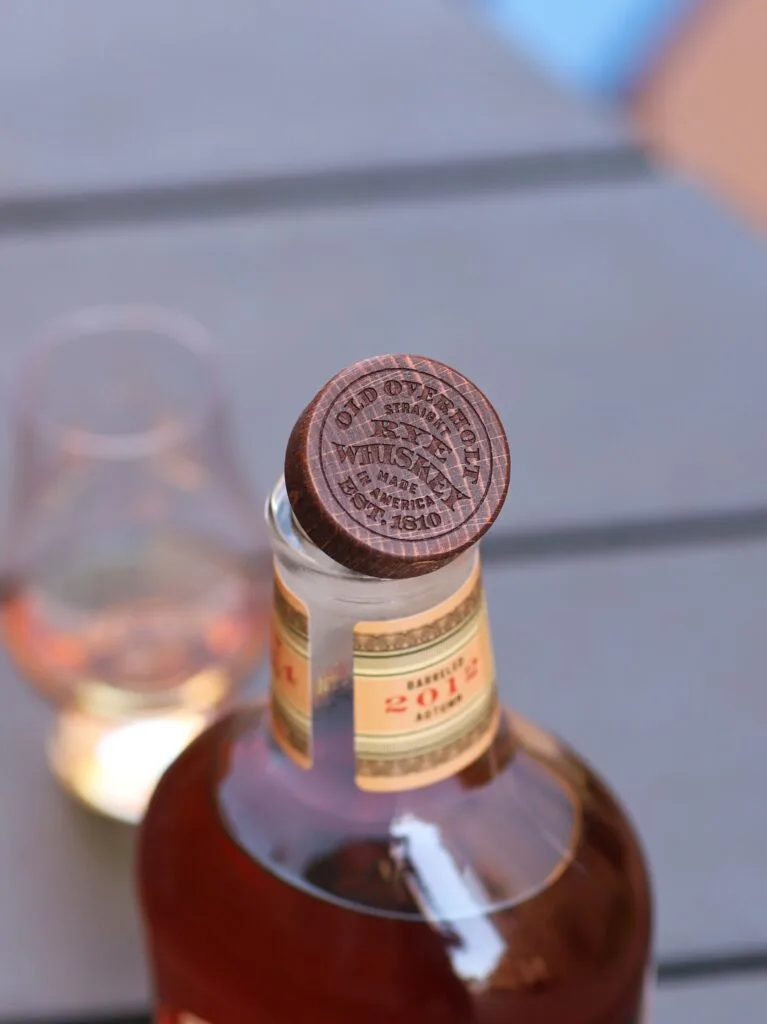
Old Overholt was an extremely successful and well-known Pennsylvania rye whiskey back in the 1800s and early 1900s. But like so many other producers of rye whiskey, they found it difficult to turn a profit after World War 2 was over. Part of the reason was the public’s general distaste for brown spirits – particularly rye whiskey. A large part of it was due to being absent from the shelves for almost two decades (Prohibition + World War 2). And as you might know from your own experience with falling in love with whiskey, rye whiskey can take a while to warm up to. The drinking public never really gave it a shot after being away for such a long time.
With hardly anyone buying rye whiskey, the original distilleries in Pennsylvania and Maryland slowly went out of business. These supply chain disruptions began to impact Kentucky producers because many of them purchased rye whiskey from those states rather than retool their operations to distill rye whiskey for a few days out of the year. But when the final distillery fell silent in 1989 (Michter’s of Schaefferstown, PA), Kentucky producers were on their own.
Beam’s slow crawl to rebuild its storied brands
To continue the story I started with at the beginning of the review, the head office at Jim Beam began to recognize a thirst for premium spirits with ties to historic brands. The Olds was the perfect place to test plans for premiumization. To test out if a rye whiskey could be successful, they originally dropped an 11-year-old, 92.6 proof version of Old Overholt to Ohio and Pennsylvania in 2020. This shocked enthusiasts by showing them what Beam was capable of, but stopped just short of excellence due to its low proof. It also used Jim Beam’s rather unremarkable rye whiskey recipe – a far cry from the Pennsylvania-style rye of yesteryear.

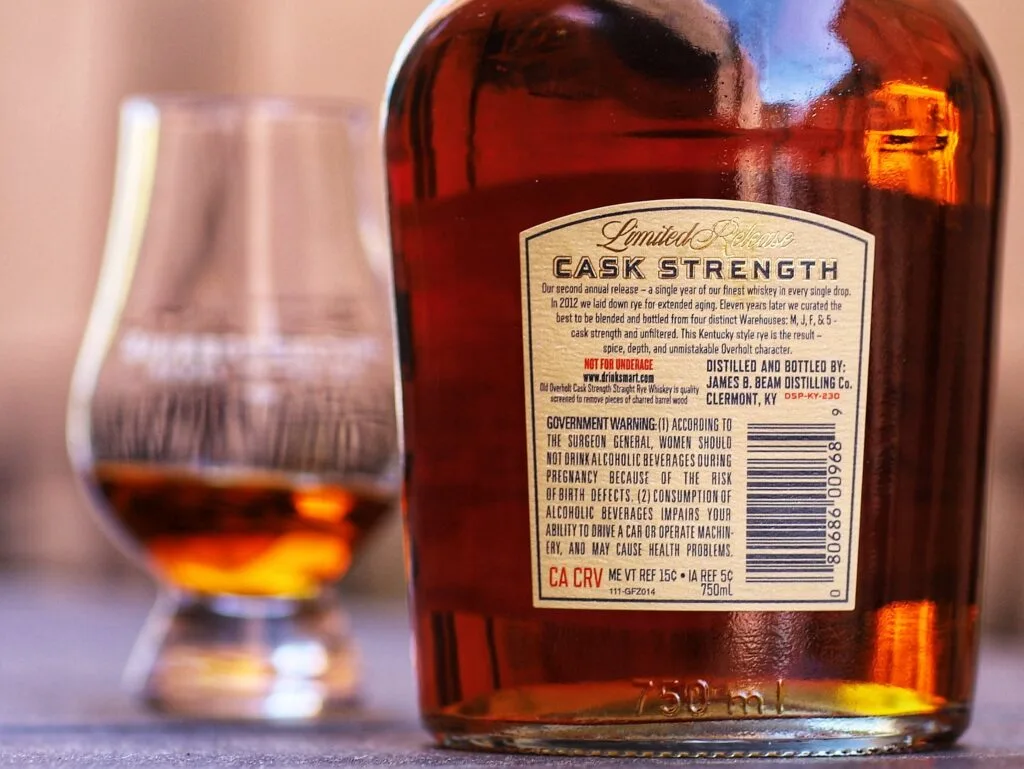
Things changed yet again in 2023 when Beam rolled out with a cask strength, 10-year-old Old Overholt. Then came the news that this would be an annual review where the age should continue to increase.
For the 2024 release (this bottle), the age gets bumped up to 11 years and the barrels used to make this batch come from four warehouses instead of one (Warehouse V) like the first release. The warehouses were M, J, F and 5. And since the final proof is so low, we can assume these barrels were put below the middle floor of those warehouses. In the future, I hope to share a map showing the exact location of each of these warehouses and their construction.
The 2023 release was made up of 170 barrels and I have no reason to think this release deviates too far from that volume. So while this was certainly allocated when it came out, it wasn’t impossible to find, especially at its retail price point of $100. So how does it taste? Let’s find out. I sampled this neat in a glencairn.
Tasting Notes
Nose: Fruity scents initially stand out among the array of notes floating up to my nose. Picking them apart shows me mostly stone fruits (cherries and sweetened apricots) as well as a little bit of citrus. These are accompanied by some brown spices in the form of cinnamon raisin toast and anise. The typical Beam nuttiness is present as well, although less so than their bourbons. Sweetness comes from molasses pound cake, caramel and a bit of vanilla.
Palate: I’m finding flavors more compatible with a bourbon than a rye whiskey on the tongue. There’s caramel, vanilla, classic Beam nuttiness and a moderate amount of underlying oak, but it’s the fruit, licorice and spice notes that subtly hint that this is a rye whiskey underneath it all. Sweetened stone fruit, cinnamon, chili oil and red pepper flakes stand out the most. There aren’t many green notes (the herbal kind, not the youthful kind) and I kind of look forward to those the most in a rye whiskey. It’s beautifully rounded with very few flaws but it’s not as exciting as it could be.
Finish: The finish is moderate to long in length and provides a sweet, pleasant ending to the dram. The baking spice and chili/pepper spices become more subdued after the sip is complete while caramel, vanilla and oak keep it all a pretty standard affair. Overall the finish is mellow and well constructed and shows no real flaws.
Score: 7.8/10
By no means is this a poor whiskey. It’s wholly competent and drinks like a high-rye bourbon rather than a rye whiskey. And that’s not a dig at it! I’m only mentioning it for the rye enthusiast audience out there so that maybe they will pause before purchasing a bottle. If viewed in that context, then what we were given by Beam is a flavorful whiskey with a great mouthfeel that’s a little more complex than their bourbons at this age.


Final Thoughts
Much of my indifference to these recent Old Overholt releases rests on the fact that I know they have better stuff coming soon. Last year I tasted the A. Overholt Monongahela Rye and was very impressed for a 4-year-old rye whiskey. It doesn’t use corn in the mash bill and I think it will ultimately mature into a better final product than their current slate of double-digit aged rye whiskey.
So by all means, continue to buy these Old Overholt releases when they come out (I still think they’re a very good value), but don’t try to put them on the same pedestal as other great rye whiskies out in this space. It’s good for what it is, but the best is yet to come.