
*Bourbon Culture is reader-supported. When you buy through links on our site, we may earn an affiliate commission.
| Don't like ads? | No ads |
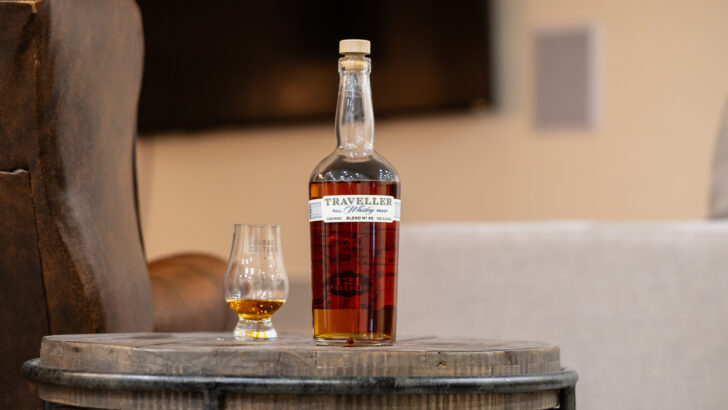
One of my “Top 3” most read reviews on this website had to do with my reaction over Chris Stapleton putting his name on a bottle of whiskey. This was back in January, 2024 and my fury was directed at the fact that he had previously talked about his problem with alcoholism and how he was now sober. I pointed out the fact that either he was no longer sober or he was just putting his name on a product that he had nothing else to contribute to. Several months later, over a ton of backlash, he clarified what his definition of “sober” actually meant. Basically it boiled down to “Sometimes I drink and sometimes I don’t.”
But even looking past Christ Stapleton’s inconsistent messaging, Traveller Whiskey is just as complicated. Sazerac is attempting a massive initiative to rehabilitate the category of “Blended Whiskey.” I suspect this is less of a genuine effort to innovate and more of a clever way to monetize the cheaper whiskies (more on what those would be in a minute) by wrapping it in a “premium lifestyle” cloak. And for all intents and purposes, it might be working.
Beware, a lot of detailed info about the makeup of Traveller Whiskey lies ahead
If you came to this review looking for some tasting notes and a rating, then I suggest you start scrolling now. I go into quite the exposition on the makeup of Traveller Full Proof that expands on my previous review. But if you want to learn more, then buckle in!
Sazerac wants to convince the drinking public that a blended whiskey can be a top-shelf product. Yet to enthusiasts like you and me, the very foundation of this category is to be a sort of “cost-saving” and “minimal waste” exercise. To get around this, they’ve dressed it up in a semi-attractive bottle with celebrity marketing. Sazerac has tried to get in front of the critique of using cheaper distillate in this product by saying they used zero grain neutral spirits for this brand in the press release. And in my opinion, they have hinted that they are using straight whiskeys and high-quality “light whiskeys” (I was told earlier that those light whiskies were from Canada, but this appears to be wrong unless Sazerac is lying to the TTB).
These whiskies are pulled from the massive Buffalo Trace and Barton 1792 inventories. The marketing narrative centers on the prestige of the blending process, but skeptics will often associate the word “blended” as a tool for volume and consistency rather than creating an elite flavor profile. Sazerac even secured high-profile partnerships like the one with Major League Baseball making Traveller their “official whiskey.” I dislike when brands do this, but I guess I understand why. All of this hubub is designed to cement the idea that this liquid is designed for the masses rather than the enthusiast.
The TTB Loophole and the 2.5% Question
Let’s talk about the historically murky state of the American Blended Whiskey category for a minute. For decades, the TTB classification of “Blended Whiskey” has carried images of bottom-shelf plastic handles collecting dust in shady liquor stores and dive bars. Blended Whiskey’s ugly secret was that it could contain up to 80% Grain Neutral Spirits (GNS) by volume. The remainder needs to be whiskey aged for at least 2 years. If you’re a fan of Tommy Wiseau’s “The Room,” then you’ve probably laughed out loud at the absurdity of “Scotchka” but that’s basically what Blended Whiskey could be.
I can appreciate that Sazerac didn’t want Traveller to be just another Seagram’s 7 alternative, so the fact that they didn’t include GNS is a blessing. But their lack of transparency over what kinds of whiskey is inside of Traveller doesn’t really alleviate our fears that this could be bottom-shelf swill.
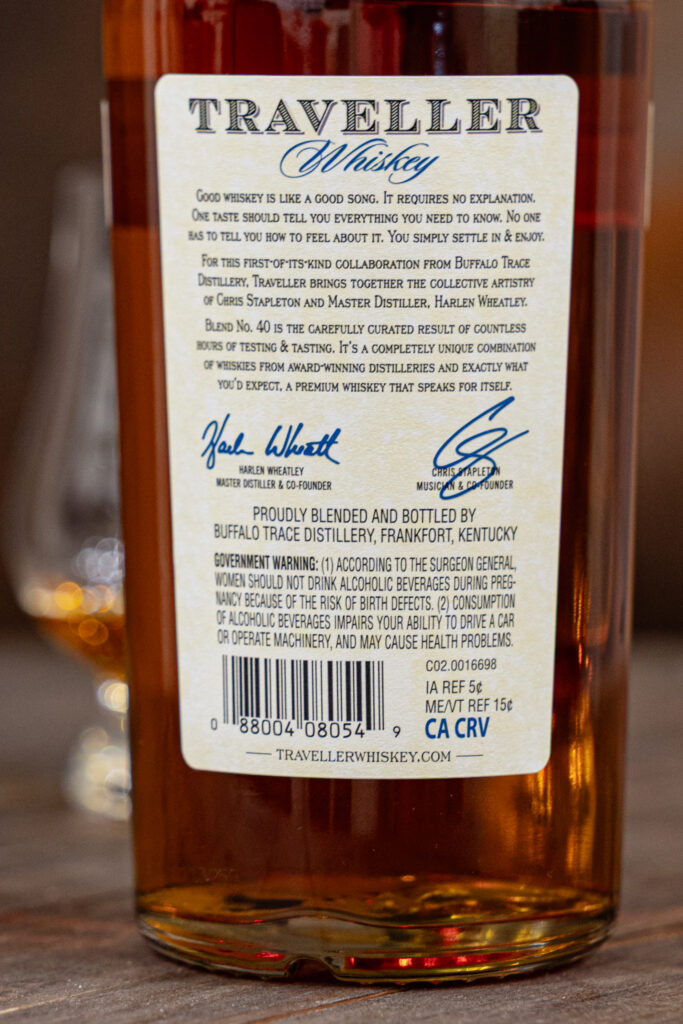
I have a couple friends who are really well versed on how TTB label laws work and one of them pointed out to me that Traveller Whiskey Full Proof is categorized specifically as a “Class 4 American Blended Whiskey.” That class has a fascinating regulatory loophole that is mostly ignored, but it basically states that producers of blended whiskey can add up to 2.5% “harmless coloring, flavoring, or blending materials” (HCFBM) without having to disclose them on the label.
You might be starting to piece together where I’m going with this. Since Sazerac went out of their way to say they don’t use any GNS in Traveller, that left the door wide open to classify it as “A Blend of Straight Whiskeys.” That term, by the way, would imply they blended together pure straight bourbons, straight whiskies and rye whiskies. But since they intentionally chose the broader “Blended Whiskey” classification, they left the door open for using HCFBM such as E150a (which is a kind of caramel coloring). This is similar to what the blended Scotch industry does as well to ensure every batch looks identical on a retail shelf. It might be accepted in Scotch circles, but it remains a divisive topic in American whiskey where the “Straight” designation is a sacred badge of purity. The skeptical side of me always questions why a giant distillery chooses a blended classification over a straight blend designation. It allows for a level of “polishing” that ensures the liquid remains inoffensive and uniform, even if that comes at the cost of the raw, unfiltered character that bourbon drinkers typically crave. So maybe Sazerac decided that creating a Full Proof version would give it some kind of street cred?
A word on Sazerac’s use of “Light Whiskey”
So far, I’ve pointed out that Traveller does not contain Grain Neutral Spirits, but it does likely contain coloring agents. It also contains some bourbon, but if it only contained that, it would be too expensive for its price point. The last part of the puzzle as to what makes Traveller so cheap is its use of Light Whiskey.
For a long time, I did not realize Sazerac made a Light Whiskey, but it’s not like they go around advertising it like MGP does. If you’re unfamiliar with what Light Whiskey is, the law says it’s a distillate made from grain that is distilled between 160 and 190 proof and enters a used oak container at 140 proof. When you place that high-proof distillate into depleted wood that has already had its primary vanillins and tannins extracted by a previous batch of bourbon, you don’t exactly get a whiskey that takes on as much of the wood influence.
Using second-fill barrels serves a very specific strategic purpose for a mass-market blend. Used wood minimizes the aggressive wood tannins and heavy barrel spices that characterize fresh oak aging. This yields a softer, highly approachable spirit driven by sweet vanilla and candy corn notes (since most Light Whiskies utilize grain bills almost entirely of corn). However, this production choice inherently strips the whiskey of any traditional “straight bourbon” identity. The four to six years of aging in used wood does not provide the same structural complexity as it would in new oak. Instead, it serves to mellow the high-proof heat of the light whiskey without adding much in the way of depth.
Sazerac creates an inoffensive, mellow profile designed specifically to cater to mainstream drinkers who find flagship bourbons too oaky or hot. The bean-counters of these big distilleries might praise this as a masterful technique to balance out rough edges, serious bourbon drinkers might view it as a clever way to stretch inventory using less expensive, reused cooperage. For Traveller Full Proof, Sazerac claimed that they do not chill filter this whiskey in order to maintain richness and preserve essential oils. I think it’s a stretch to believe that a blended whiskey like this really benefits that much from it and it feels like an attempt to add “craft” credentials to a product that is fundamentally designed for high-volume efficiency.
The “Full Proof” Marketing Play
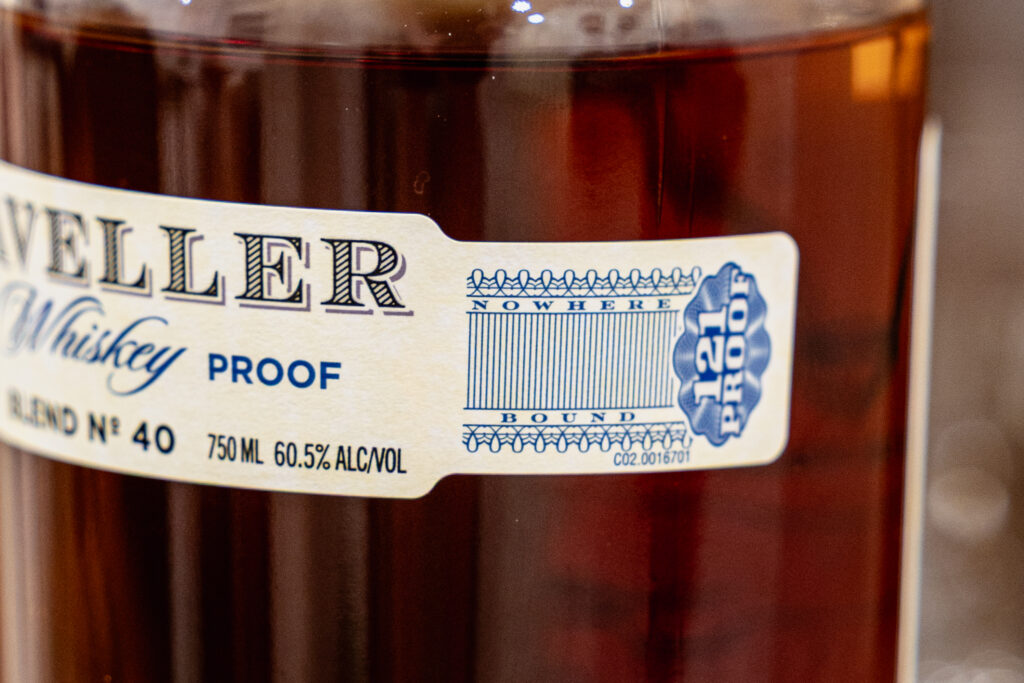
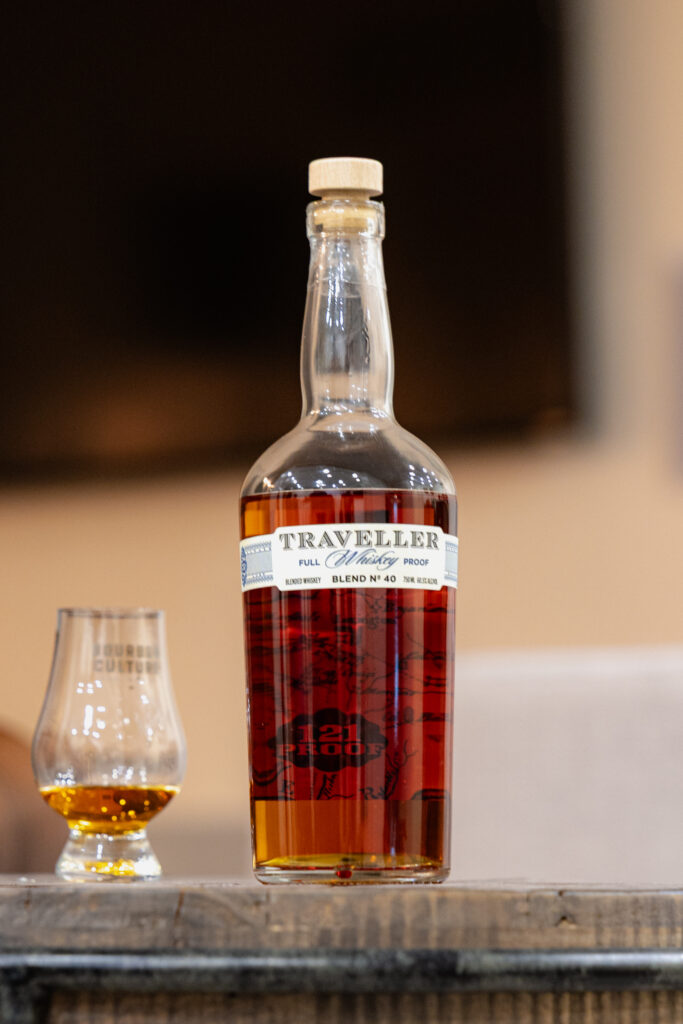
The original 90-proof Traveller received a fair amount of criticism from the enthusiast community over the last eighteen months. Many seasoned drinkers found the flagship expression thin and severely muted. To correct this perceived flaw, Sazerac released the 2025 Full Proof expression. Master Distiller Harlen Wheatley stated this new release was meticulously formulated to showcase the full intensity and depth of the aged stocks that Stapleton and his team actually preferred during private tasting sessions. Here is where Sazerac’s unique terminology really comes into play. In the broader whiskey world, “barrel proof” usually means the exact proof the liquid is dumped from the barrel. Sazerac uniquely defines “Full Proof” as the proof at which the distillate initially entered the barrel. For Traveller, that entry proof is 121.
By applying the “Full Proof” nomenclature to this brand, Sazerac is directly targeting the modern whiskey enthusiast market. These consumers prioritize high proof and intense flavor, but we have to ask if a 121-proof blend is actually what an enthusiast wants. Is the high ABV just a distraction from the blended nature of the product? Yep. But if the hardcore market generally avoids light whiskey and blended classifications, why does this bottle exist? The answer lies in the “gateway” or “lifestyle” purchase model. This bottle is not necessarily for the rabid enthusiasts who spends their weekends hunting for allocated bottles. Instead, it is for the Chris Stapleton fan who wants to feel like they are graduating to something more serious. It leverages the singer’s brand of rugged authenticity to sell a product that is actually quite processed and engineered. It is a bridge for the casual drinker to enter the world of high-proof spirits without having to tackle the complexities of a true barrel-strength straight bourbon. The 121 proof provides the “burn” and the “kick” that people associate with premium whiskey, even if the flavor profile remains relatively one-dimensional compared to real bourbon.
But enough about the backstory, let’s see how it tastes. I sampled this neat in a glencairn.
Tasting Notes
Nose: A very gentle and pleasing nose that doesn’t do the theatrics of a bourbon. There is hardly any spice or tannins. All I get is a dark, caramelized sugar, Halloween Candy Corn and maybe a bit of Werther’s Originals left in the cupholder of a car on a hot day. The sweetness certainly draws you in, but it’s not overwhelming me with much else. Hiding beneath the sweetness, I do find a bit of floral scents mixed with some cinnamon powder and maybe a touch of toasted oak (odd, there were no toasted barrels used to my knowledge). The ethanol is kept in check for the most part, but I want you to keep in mind I’ve been sniffing and sipping high proof stuff for almost a decade now. If that describes you, you’ll be just fine nosing this glass.
Palate: The high proof delivers a remarkably easy sipping experience. More candy corn notes travel from the nose to the tongue and Cow Tales candies follows close behind (both are similar). I’ll be honest, the mouthfeel is thicker than I expected, but there is something a little bit artificial about the way it comes off. Is that because of the additives? Cinnamon sugar flavors a bit of liquid cherry juice gives a couple of interesting layers to dissect while I roll it around on my tongue. There is even a bit of citrus zest found within.
Finish: The finish is longer than I expected and gives a nice Kentucky Hug. Lingering notes of caramel candies and a bit of fruit leathers lead the way and the toasted oak note returns. There is nothing outwardly bitter or youthful about any of this liquid, a surprise for around $40 and no age statement. The finish is pure vanilla.
Score: 6.5/10
For as much time as I just spent trying to poke holes in any argument that Traveller Full Proof Whiskey had for even existing, it’s a perfectly fine whiskey. The increase in proof removes my previous gripe about the 90 proof version of Traveller had with tasting too watery. The uptick in those flavors I did find was also more noticeable. Proof sting was minimal and last but not least, the price point makes it really damn hard to not get curious enough about to snag a bottle just to try.
I do have to keep reminding myself this isn’t actual bourbon because I keep wanting to say this is an excellent value. If it met all the specs of a bourbon, that would be true. But in reality, it’s competing more against bottles like Penelope Light Whiskey and whatever other brands are putting out Light Whiskies on the cheap (Bull Run?). The complexity just isn’t there in a product like this meaning that while you could theoretically “sip and chill” with a glass of this in your hand, you’re wasting your time by trying to extract notes to ponder over.
Final Thoughts
Hardcore enthusiasts are going to find their expectations unmet if they buy this bottle. It’s going to get relegated to the bar shelf in the hopes that somebody, someday will ask for a “really stiff cocktail.” New drinkers will try to use this bottle as a way of showing they have the chops to hang with the beforementioned enthusiasts because they can drink something above 120 proof. But that’s just an illusion of what would happen.
Sazerac certainly succeeded in making a much better, amplified version of Traveller, but the premium blended category still has a very long way to go before it truly wins over the seasoned bourbon purists who value the liquid over the lifestyle.
Jason Gerace
Tuesday 21st of April 2026
You're the best, man. Thanks.
Scott White
Sunday 22nd of March 2026
I found this bottle in South Carolina a few weeks ago. I was excited to get my hands on this. But…. It left me underwhelmed at best. I felt the higher proof exaggerated the oily taste it left on my tongue. Lots of old sugary notes. It was not what I was expecting at all. To the bottom of the bourbon shelf it goes.
Sam DeViney
Wednesday 18th of March 2026
Never have seen it before, but I'd try it.