


| Don't like ads? | No ads |
Little Book has been anything but boring over it’s last eight iterations. This is the label that has brought us whiskies made with different grains, different mash bills and even some Canadian whiskey thrown in the mix. That’s to be expected from a product that’s essentially Freddie “Little Book” Noe’s playground.
Last year’s “Chapter 8: Path Not Taken” release came tantalizingly close to claiming the top spot on my Top 10 Most Memorable Whiskies of 2024 list. I made sure every friend of mine knew just how good it was. Jim Beam was hitting everything out of the park last year and their recently reinvigorated rye whiskey program included two new mash bills (Monongahela Mash and a revival of the recipe used in Booker’s Rye) that helped make that release easily one of the best examples of Little Book since Chapter 3.

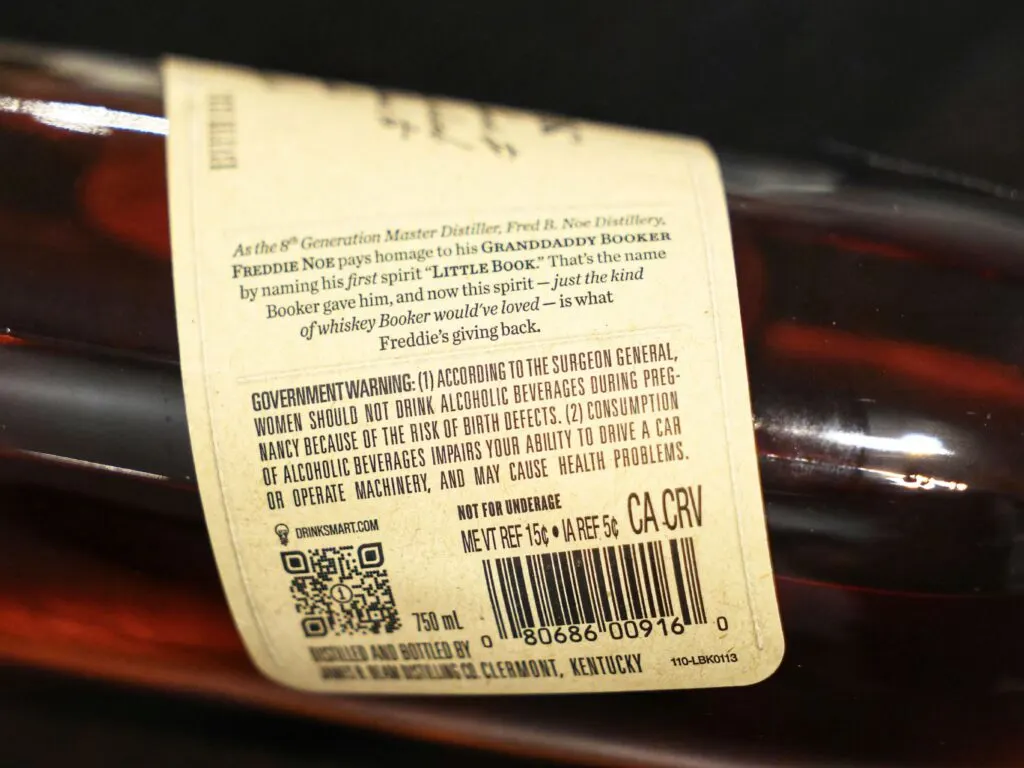
Outwardly, Chapter 9 looks like a complete reversal of what Freddie did with Chapter 8. Instead of all rye whiskies and one bourbon, this year’s batch is made up of all bourbon and one rye whiskey. The literature that came with this release lays out the direction Freddie wanted to go with this release: “As possibilities were explored and foundations were laid, a certain profile began to emerge: one built on brown sweets, the comforting warmth of vanilla, creamy caramel and big oak.”
What I feel like I’m hearing is “I made a whiskey that tastes like our standard bourbon.” Beam’s profile already tastes like the quintessential American Whiskey. In fact, I bet if I took a bourbon from every major producer and blended them all together, it would probably taste like Jim Beam. Just kidding? But Beam is known for being not too oaky, not too fruity, not too spicy and having just the right amount of sweetness. I guess I don’t see why blending rye whiskey and brown rice bourbon together with three other bourbons to make it taste like a – ?bourbon? – makes much sense. But Little Book needs a story and I guess this is the story they’re giving us.
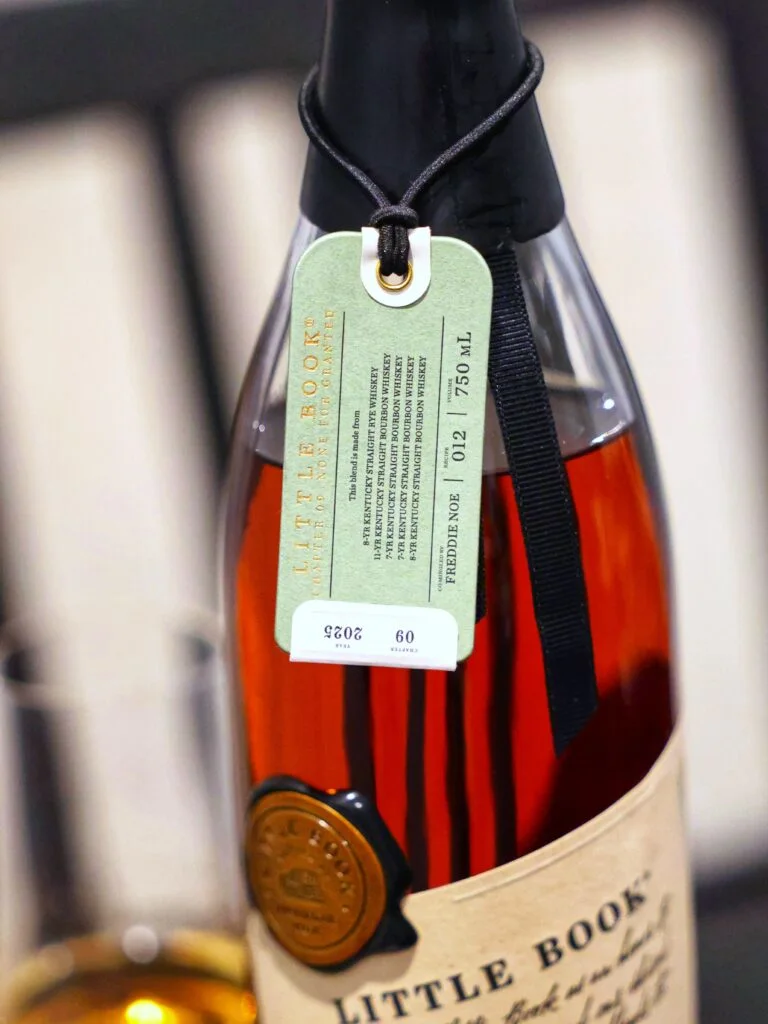
The makeup of Chapter 9
Here’s the makeup of the 2025 release of Little Book Chapter 9.
11-Year-Old Kentucky Straight Bourbon Whiskey
8-Year-Old Kentucky Straight Rye Whiskey – Brown Rice Bourbon barrels from Chapter 4
8-Year-Old Kentucky Straight Bourbon Whiskey – Standard Beam Rye Whiskey (51% rye)
7-Year-Old Kentucky Straight Bourbon Whiskey – 5-Day Fermentation instead of 3 and distilled to a low proof
7-Year-Old Kentucky Straight Bourbon Whiskey – Finished in toasted barrels
A couple of quick things to note from this batch:
- It doesn’t look like we’ve seen the last of the brown rice bourbon. This is now the fifth time (by my count) we’re seeing it. If you’re wondering what else it was in, this list should refresh your memory: Jim Beam Signature Craft Brown Rice 11 Year Old, Jim Beam Distillers’ Share ‘Toasted Brown Rice’, Little Book Chapter 4 and a portion of Jim Beam Sunshine Blend.
- The 7-Year-Old Kentucky Straight Bourbon finished in toasted barrels seems like the leftovers from last year’s Jim Beam Winter Reserve which was 6-years-old when it was bottled.
- The other 7-Year-Old Kentucky Straight Bourbon supposedly uses 5 days for its fermentation cycle in an effort to improve the fruitiness of the distillate. They have also said it was “distilled to a low proof.” In my opinion, this is Old Grand Dad (or Basil Hayden) and here’s why: Those two high-rye bourbon’s are supposedly distilled to around 120 proof – just like National Distillers did back in the day. Beam has said they copied their process to continue producing it, but it’s not widely known. I also know this part is going to shock a lot of you because I don’t think anyone has covered it before – but in my interview with a man who used to work for National Distillers, he told me that their fermentation length was 5 DAYS! So now that I’m putting it all together, I’m guessing that Beam has also utilized that step in the process of making OGD/BH. The thing that’s bothering me is why they didn’t elect to use the description “High-Rye Bourbon” instead? My guess is that they wanted to make it sound as exotic as possible. But I think I uncovered the truth.
- The 8-Year-Old Kentucky Straight Rye Whiskey appears like it’s nothing more than Beam/Knob Creek Rye with a barely legal 51% rye ratio in the mash bill.
- If somebody’s taking bets on the original intent of the 11-Year-Old Kentucky Straight Bourbon, my money’s on it being intended for Knob Creek.

So there you have it, five different styles of Beam all blended into one. Freddie commented how it took him 18 months to piece together this blend. I know I’m giving a lot of opinions in this review already, but when I hear it took 18 months to get it right, that sounds like he was struggling. It also sounds like Chapter 9 was intended to be Chapter 8, but he couldn’t get it to come together by the deadline and had to put it on the backburner until this year.
So how does Chapter 9 taste? Thanks to my good friend Benji, I’m getting that opportunity today. I sampled this neat in a glencairn.
Tasting Notes
Nose: True to form, the scents on this one are full of lots of “brown sweets.” I can find the traditional caramel very easily with some brown sugar being a little bit less so (I think this stems from the brown rice bourbon). There is also a little bit of toffee if you really dig deep. As far as fruit notes go, I’m getting a small amount of orchard fruit and catch-all red fruits. Don’t mistake me for saying that this is a fruity nose, because it’s not. The vanilla on the nose is cranked up to 11 and I think that the toasted barrel component has a lot to do with it. I can’t think of a more vanilla-forward nose that I’ve had in a recent whiskey, so if you like that, you’re in for a treat. Tannins though? Not as much. I think Beam really has to get high in age for those rich oak and tobacco notes to develop, so don’t expect too much coming into this.
Palate: Sweet oak, a viscous mouthfeel and lots of toffee. Just like the nose, the vanilla is a standout on my palate. There’s a hint of chocolate and some cinnamon-sprinkled baked apples that converge with a bit of cherries. Beam’s classic “melted candy bar” flavors emerge with nougat, caramel and even some (hazel)nuts. The palate is delicious, no doubt, but I’m not finding a lot of excitement in my glass. I was hoping the high proof would make this a pretty punch pour, but much to my surprise, it drinks like a well-aged Knob Creek with maybe a little extra rye.
Finish: Charleston Chew with cinnamon and a little bit of barrel char. The proof ensures this finish lasts longer than just a moderate amount of time. Vanilla begins to fade to the background first while the sweets keep going in your mouth. Fruits are touch-and-go with weak cherry notes after some sips and weak baked apple notes after other sips.
Score: 7.7/10
My experience with Little Book Chapter 9 didn’t exactly blow me away. Sure, it had a lot of great, sweet notes and was overall very well-rounded, but lots of Beam on the shelves is already this way. I get almost as much enjoyment out of a single barrel of Knob Creek compared to this bottle – and those are about a third of the price.


I still find it odd that Freddie went out of his way to essentially create a whiskey that tastes and smells like a bourbon. Surely the creative suggestion box hasn’t run out of ideas yet, right? I think Beam should concentrate more on their high-rye and rye whiskey profiles, but I understand if they think that doing it too much would be overkill. But there has to be more than this. I know they’ve delved into cask-finishes back when they were rolling out with their Barreled and Boxed subscription service, so why not expand on that?
Final Thoughts
Last year’s release was so good that it made me want to buy backups for my backups. This year’s release is more subdued and less interesting. Honestly, it felt like a continuation of the Little Book The Infinite series (only less exciting) rather than something that fit the trend of typical Little Book release.
Beam special releases are nice, but they’re getting a bit pricey to keep buying every time they come out – especially if they’re not going to show you anything new. All of that leads me to recommend that you skip this year’s release and use that money for what is (hopefully) a good “The Infinite” second release that’s due any day now.
Last year, Little Book, Booker’s The Reserves and Little Book Infinite Series hit it out of the park in terms of quality and flavor. This year, they’re 0-2, so all we can hope for is that The Infinite is a success. Time will tell.