


| Don't like ads? | No ads |
This review is a little bit dated, but one that I think is becoming more pertinent in today’s environment of a growing American Single Malt Whiskey subset of whiskey. No, the 12th release in the Master’s Collection series is not an American Single Malt, it’s still a bourbon. But it’s close. This release summons a large amount of cherry wood smoked barley into a mash bill whose only other grain is corn. The official ratio is listed as 70% corn and 30% malted barley. As you can see from the name, cherry wood was the fuel used to produce heat under the malting floor to stop the enzymatic process.
Cherry Wood Smoked Barley?
I thought maybe I could expand on the story of where this malted barley was sourced from – as it’s really the star of the show – but alas I found that information to be non-existent. At first I wondered if Woodford Reserve had their own malting floor, but this article says that Chris Morris constructed one on site only to find out it didn’t work how he intended, so it was abandoned in 2011. A fair assumption would be that it came came from a malt producer operating in the United States. But which one?
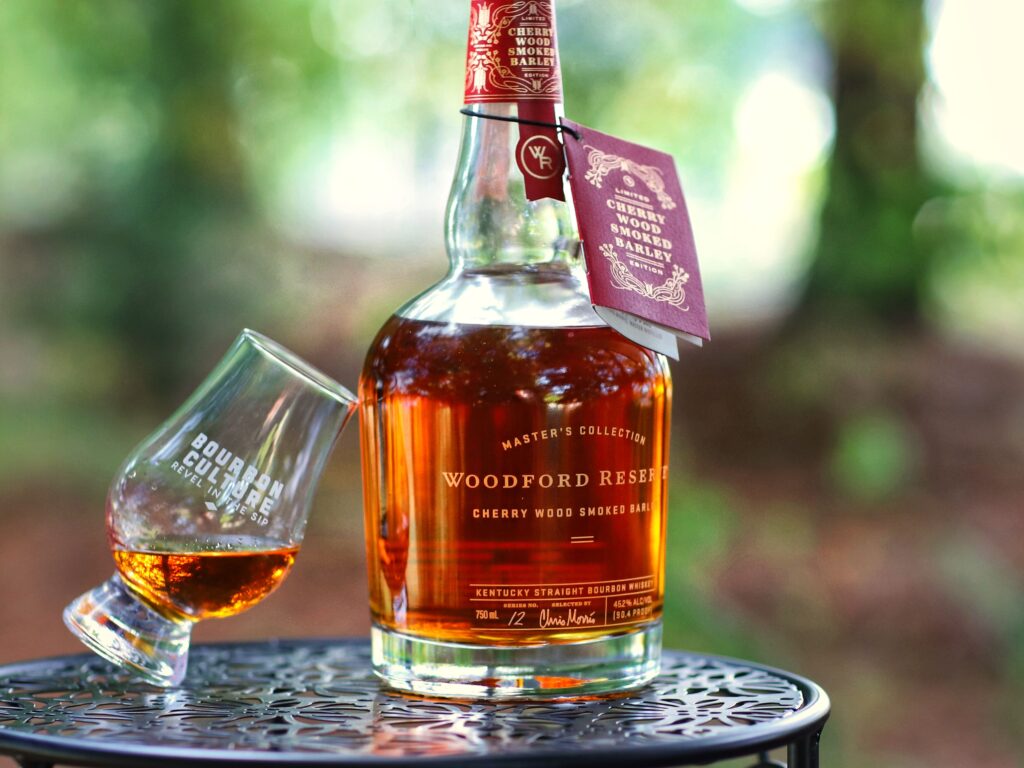

After looking up who even produces cherry wood smoked malted barley, I kept getting hits on a company called Briess located in Wisconsin. They first rolled out with a cherry wood smoked malt in 2009 and seem to own that corner of the market. I say this because every other big malt supplier in the US stocks Briess’ version in their inventory. That timeline would also line up to roughly the same year (give or take) that this bourbon was probably distilled.
Anyway, the act of imparting smoke onto malted grain is nothing new. The Scots have been doing this for centuries with peat. The only difference here is that wood smoke is probably a more recognizable to American whiskey drinkers than decomposing organic matter (peat) dug up from the ground. So putting it in a whiskey with no small grain (flavoring grain) should make it stand out a lot.
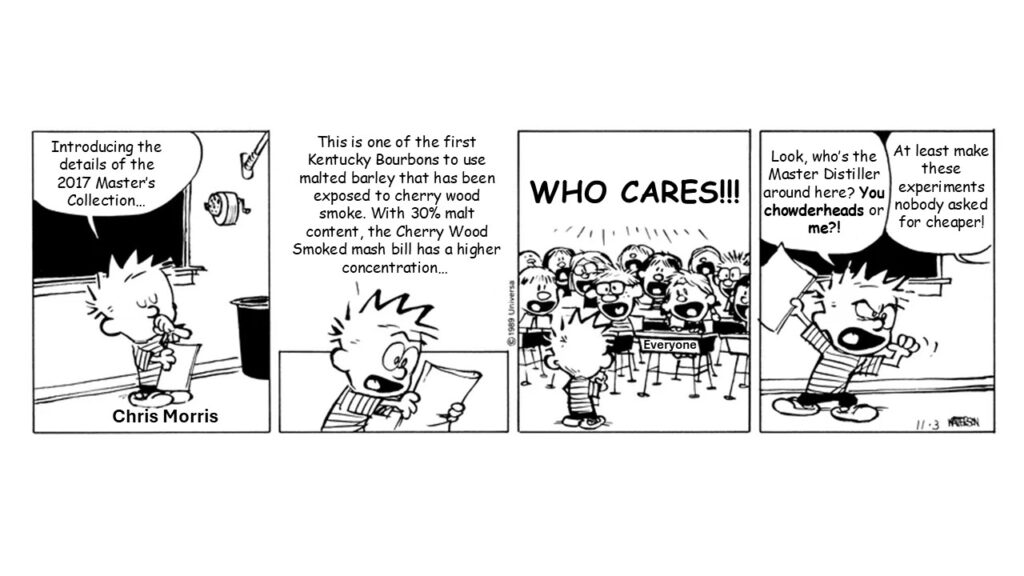
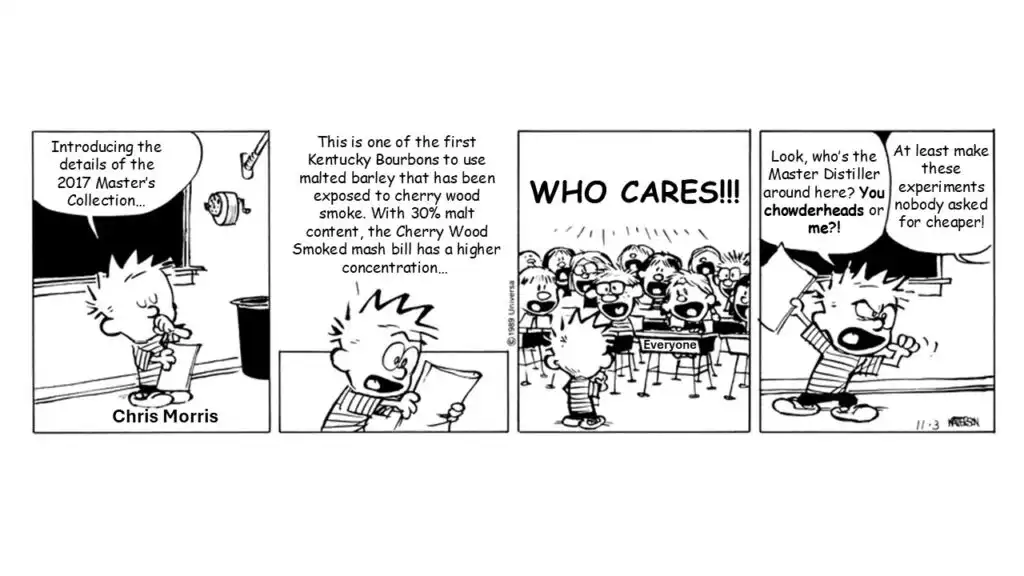
Finally, seeing as how this is a Woodford Master’s Collection product, that should imply that all of the whiskey is made on Woodford’s enormous pot stills. This probably means a distillation proof of 156 and a barrel entry proof of 110. I have no official confirmation on this, but that’s what Chris Morris has previously stated for standard Woodford bourbon. He also mentions that it’s customary for Woodford distillate to be aged for 7 to 8 years. Now that you know the details, how does it taste? Let’s find out. I sampled this neat in a glencairn.
Tasting Notes
Nose: The nose is much more malty than the 30% ratio of the mash bill would have you believe. If you’re a malt whiskey lover, this one is for you. Otherwise, a wet cardboard scent lurks throughout and kind of ruins the fun on this one. It’s not all doom and gloom as caramel, vanilla and a very soft amount of oak make their way through the light haze of smoke. That smoke does carry some cherry scents, but some of it might also be from the distillate. I can also find a not similar to grape jolly ranchers – strange.
Palate: Cooked grains combat cheesecake for supremacy on the tongue. There’s a touch of chocolate syrup, soggy pretzels and cherry licorice throughout. I also find off-notes like wet cardboard and wet oak. What is it with this “damp/wet” flavor throughout? The low proof is really making everything come at me in equal amounts. The burn is very low on this one and comes mainly from the baking spices of cinnamon and allspice.
Finish: The finish comes off as more straightforward than the palate. I truly am only finding cherry, “wood” and malt notes. I pick up traces of spices and grainy notes here and there. However, after each sip is an overwhelming desire to not want another sip. It’s not terrible, it’s just terribly forgettable.
Score: 5/10
I love rewarding unique whiskies with good ratings, but this one struggles to tell me what it is. I feels like it’s too “malt-forward” to be a good bourbon and too grainy to be a good malt whiskey. As for the cherry wood smoke, it’s certainly there, but what it imparts onto the whiskey doesn’t make it better.
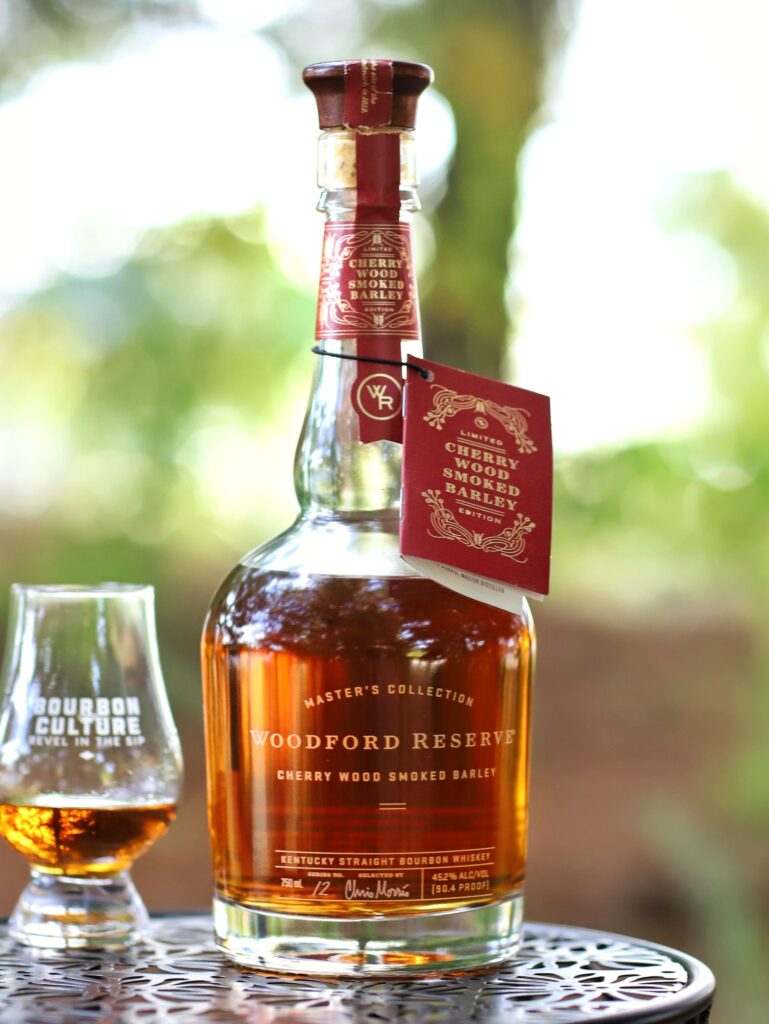
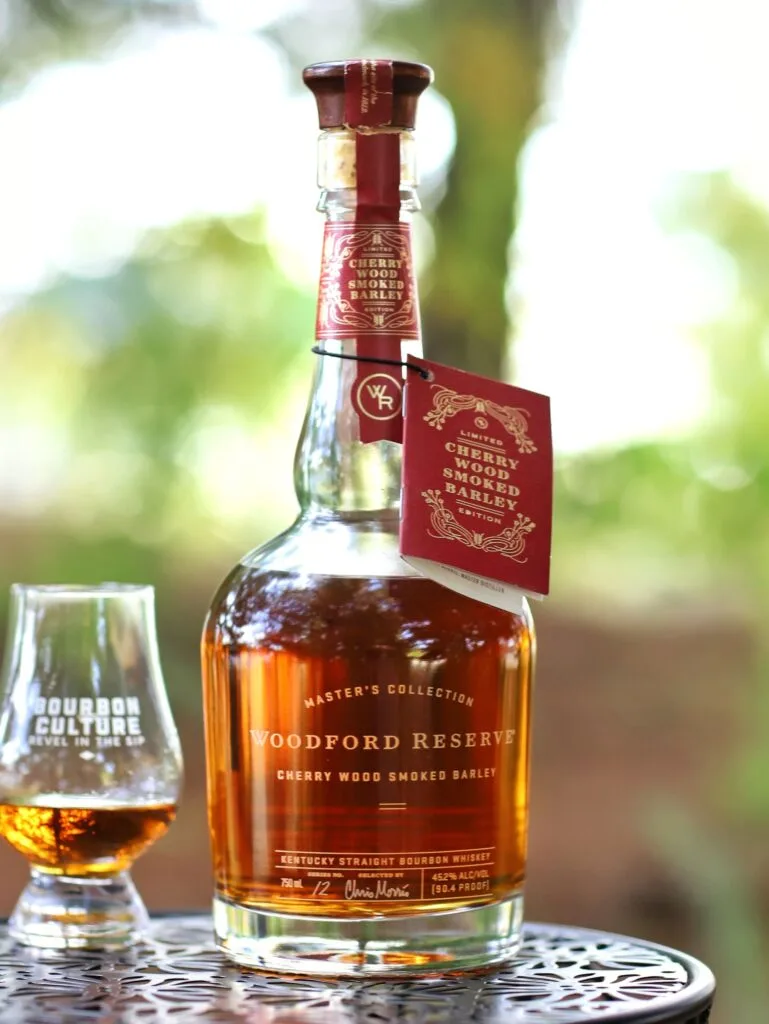
I said in my introduction section that Woodford typically uses whiskies aged 7 to 8 years in their Master’s Collection releases (at least that’s what we’re led to believe), yet there is a youthful off-note of cardboard (sometimes wet) found within. I don’t understand how that happened with that much age on the barrels.
Final Thoughts
Everything aside, this isn’t an undrinkable whiskey. It just has too much going on to make me want to keep drinking it. This isn’t the first time I’ve said that about a Master’s Collection product and now that I think about it, most of the ones I’ve disliked have had heavy malted barley influence. But with Chris Morris controlling the program with an iron fist over the past two decades, we’re going to keep getting malt experiments like this until probably 2031. Can Elizabeth McCall turn this ship around? I hope so!
I think I speak for enthusiasts in general when I say that Woodford needs to cap the price on these experiments at $100. Woodford’s Master’s Collection are some of the lowest-regarded releases in the bourbon enthusiasts scene for a reason – their price does not reflect their quality. If they’re going to give us wild experiments like this, at least make the price of entry easier to stomach. Until then, this is a bottle that you don’t have to feel bad about missing in your collection.