*Bourbon Culture is reader-supported. When you buy through links on our site, we may earn an affiliate commission.
| Don't like ads? | No ads |
The last time we had a three-part Hardin’s Creek series was in 2023. Back then the schtick was showing us how the same bourbon matured differently across three different campuses (Clermont, Boston and Frankfort). That was a fascinating experiment and one that was made even better for enthusiasts when Beam rolled out with the three-pack so you could taste them all. The bourbon for that three pack came in 200ml bottles which allowed the price to remain affordable and obtainable. A win-win.
I mention this because Beam is back at it again with another three-part release – only this time I don’t see any hint of them releasing the full set in a smaller format. I’m not sure how the marketing team neglected that angle, but Beam is doing some strange stuff right now so I guess it’s par for the course.
The concept behind Hardin’s Creek “Warehouse Series”
Whether you’re a novice to American Whiskey or a seasoned enthusiast, you probably realize that the location of a barrel in the warehouse can dictate several things about its character. Barrels aged on the bottom floors tend to be more mellow, lower in proof and have less evaporation than barrels on other floors.


Barrels aged in the middle floors of the warehouse are in this sort of “Goldilocks” zone where the temperature remains more consistent relative to the outdoor temperatures. These barrels tend to have more barrel influence than ones aged on lower floors, but not as much as those aged on the top floors. They’re kind of the perfect middle-ground for producers who want to age their spirits to have less evaporation loss over a longer period of time but also want the complexity that comes with fluctuating temperature moving the liquid in and out of the wood.
Barrels aged on the top floors are akin to cooking your food on high heat. While there is always a risk of overdoing it and ending up with over-oaked, overly bitter whiskey, it can also create some of the deepest, most concentrated flavors. But aging it for too long has a higher chance in runaway evaporation which can sometimes lead to empty barrels after 8-10 years of age.


As you can expect, the aim of the Warehouse Series was to allow enthusiasts to explore the differences between all three zones of a typical aging warehouse. To keep things consistent, they identified barrels that were all distilled, filled and harvested within a very short timeframe of each other. The difference was where in the warehouse they were aged.
I do have one complaint to the committee that came up with this release’s concept – why didn’t you use barrels from the same warehouse? Wouldn’t that have reduced more variables in this experiment? I guess their thought process was to pick warehouses and locations that really exemplify the point they’re trying to make. Take Warehouse G, for instance. It’s a freakin’ 9-story warehouse that has no equal in the bourbon world. In fact, I read there’s a building code in Kentucky that states any new barrel aging warehouses can’t be over 7 floors tall, so this one is special.
But the other two Hardin’s Creek Warehouse Series releases are a little more strange to me. Take “The Mushroom” for instance – it’s a single story warehouse (R) albeit 12 ricks tall (most single story warehouses are 6 ricks tall). It’s supposed to showcase the cooler climate of a bottom floor of a warehouse. So why not just pick one from the bottom floor of an actual multi-floored warehouse? There’s also “The Beaver” which plucked its barrels from the middle floor of Warehouse W (which has 5 floors). It’s designed to be the jack-of-all-trades of Beam bourbon. I get that they had to create a third bottle that acts as a kind of “control subject” for the trio, but does anyone really want to buy this one if they have only have funds for one or two bottles? I wouldn’t.


All of this is to say that “The Owl” seems like the most interesting pick out of all three. Everyone loves a good, high-tier bourbon with some age to it. That’s what made releases like Parker’s Heritage Promise of Hope, Jack Daniel’s Heritage Barrel (2018 and 2019) and Weller CYPB so great. The summer heat turbocharges maturation and concentrates its flavor more than ever.
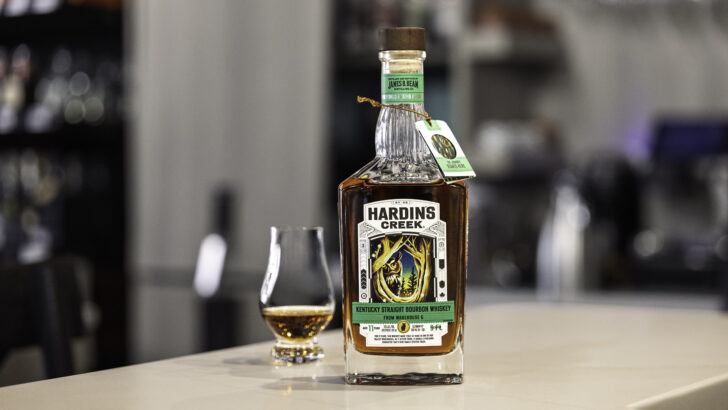
So what surprises does “The Owl” hold? Let’s find out. I sampled this neat in a glencairn.
Tasting Notes
Nose: I’ll start off by saying that one of the most interesting notes I get on the nose is this essence of smoke. The reason why that’s odd is that bourbon doesn’t typically have a smokey nature, but in retrospect I do find that barrels that have had a lot of heat influence throughout their life can contain this note (which is why I find it the most in Woodford Reserve and Old Forester products). Moving on from that, other scents include a sizable amount of vanilla and toffee. There are also some nutty scents that couple with oak. Basically, this is a slightly more pungent standard Beam nose profile.
Palate: Sweet toffee coats my tongue while cinnamon candies add a layer of spice that really livens up the sip. Normally, Beam lacks spice for me, so it’s a nice change of pace. Then there’s a layer of nougat that’s hard to miss. I don’t believe I’ver tasted a bourbon with this much nougat. Together with cinnamon, these are the two primary flavors I’d say. Other sips deliver a small nutty note and some oak. Still, for 11 years in a barrel and being aged on a high floor, I’m surprised that the oak isn’t stronger than what it is while I’m holding it in my mouth.
Finish: The big three linger for some time after the sip is done: nougat, toffee and oak. The spice kind of levels out and the nuttiness is nowhere to be found.
Score: 7.8/10
I won’t sugar coat my feelings on this one – this is another pretty good Beam release that doesn’t move the needle one way or another for the brand. While I always appreciate experiments and allowing the consumer to experience something different, there just wasn’t enough here to set it apart from – say – your run-of-the-mill Knob Creek Single Barrel.
In fact, if you prioritize value in your brown water, you should probably stick with Knob Creek picks. They’re $30+ cheaper than this bottle and only about one year younger and 10 proof points higher. But just for the record, Knob Creek typically comes from the middle floors of Jim Beam’s warehouses which makes it more in line with “The Beaver” release.


Final Thoughts
There’s not much more to expand on here, so I’ll just say this. Hardin’s Creek Warehouse series had a lot of potential, but doesn’t deliver. I like the fact they tried something new, so I won’t say that it should be completely avoided, but there are so many more good releases from this past year to track down rather than this.
I also hope that whoever is making the decisions at Beam will remember to create a 3-pack for releases like this so that more people can experience it. I understand that packaging restrictions might make this a non-starter for retail sales but there’s gotta be some way to get around it. Stack them vertically so that they’re the same height as an Eagle Rare bottle or something.
If you’re a fan of Jim Beam products and are on a budget, consider getting this year’s Little Book Infinite II instead of all 3 bottles of Hardin’s Creek. It’s much more enjoyable.