

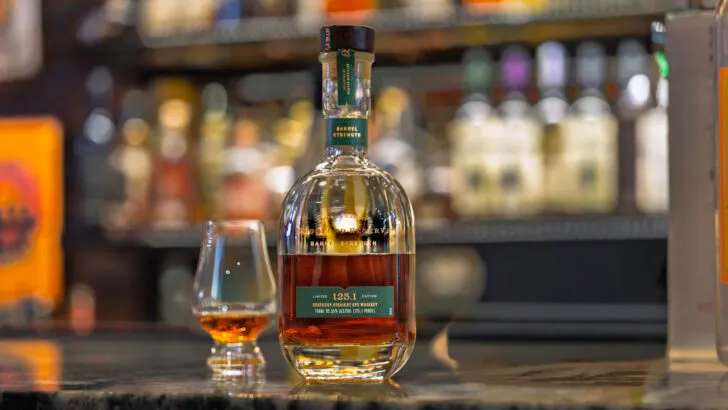
*Bourbon Culture is reader-supported. When you buy through links on our site, we may earn an affiliate commission.
| Don't like ads? | No ads |
Finally, a product that I have dreamed about for years… a higher-proofed version of Woodford Reserve’s Rye Whiskey. And while I started to write a full paragraph as to why I was disappointed it’s taken them this long, I calmed down a bit and reminded myself that rye whiskey sales are only a fraction of what bourbon sales are. This means that rolling out with new rye whiskey products simply isn’t as much of a priority to American whiskey companies.
If you’re reading this, then maybe there’s still a chance that rye whiskey can eventually share the spotlight with bourbon. But if it’s going to grow, that means that Kentucky distilleries have to start pushing it more. Beam, Heaven Hill, Buffalo Trace, Bardstown Bourbon Company/Green River, Michter’s and Wild Turkey are doing their part, but it feels like Brown-Forman has been dragging their feet. Old Forester didn’t release their first rye whiskey until 2019 and Woodford Reserve wasn’t too much before that. Both originally had low-proof offerings and only in the past 3 years have we seen Old Forester launch a barrel strength version.

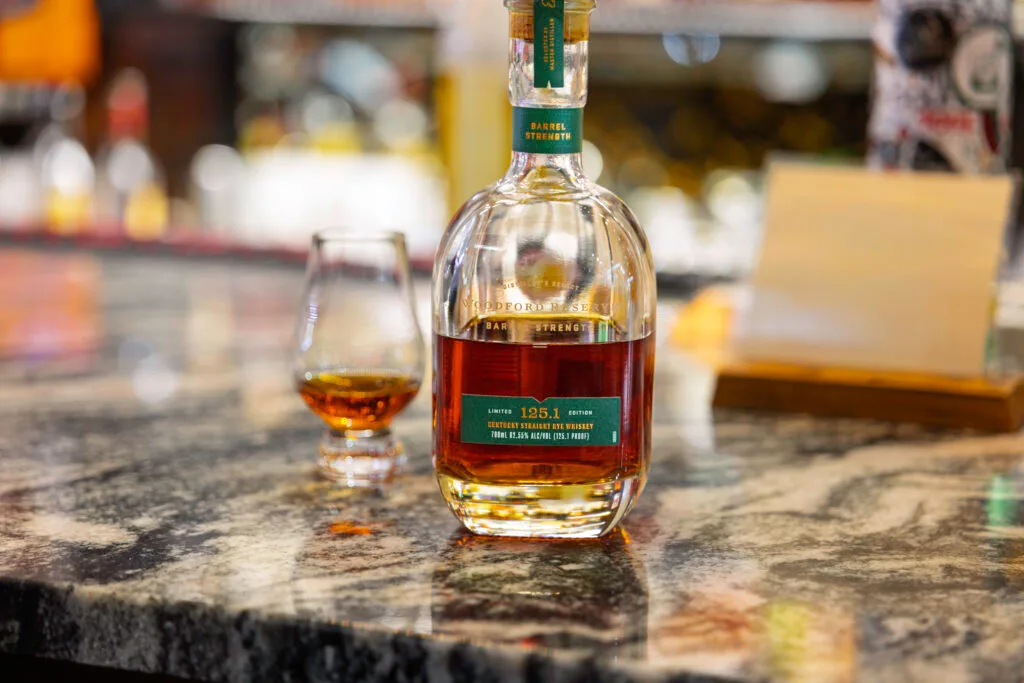
Now it’s Woodford Reserve’s turn. This past fall saw the release of their first Batch Proof…err, scratch that, “Barrel Strength” (why did they not stick with the “Batch Proof” name?) Rye Whiskey. As far as I can tell, they still use two different distillates. One component is made on their giant pot stills in Versailles and the second component gets made on a giant column still at the Brown-Forman Distillery (formerly the Early Times Distillery) in Shively.
The differences between those two types of distillates – at least as far as the bourbon was concerned – extends beyond the type of still they were produced on. Woodford Reserve has a much higher still proof – somewhere between 156 and 158 proof. Old Forester has a still proof between 138 and 140. The barrel entry proof for both distilleries is also different with Woodford using 110 proof and Old Forester using 125. Even the yeast strain is different with Woodford Reserve using a derivative of Old Forester’s “1B” yeast known as “72B.”
The reason why I am bringing these things up is because I believe all of these principles apply to Woodford’s rye whiskey. I don’t know that to be true, but it’s true for almost every other distillery out there – barrel entry proof and still proof don’t change based on what you’re distilling with the exception of Buffalo Trace and Jim Beam.
Woodford Reserve’s rye whiskey has a sibling – and it’s not who you think
Many people might believe that Woodford Reserve’s rye whiskey is the same as Old Forester’s rye whiskey. It’s not. Woodford Reserve’s had been produced first using the internal name known as “Old Watermill” and Old Forester’s is known as “Normandy.” The mash bills are also very different with Woodford’s known to be 53% rye, 33% corn, and 14% malted barley and Old Forester’s using a 65% rye, 15% corn and 20% malted barley recipe.


A little known secret of the industry is that Michter’s actually had Brown-Forman contract distill the Old Watermill recipe for them back as early as 2004 up until 2011. The only difference between the two would be that Michter’s had the specification that the barrel entry proof would be 103 proof instead of 110 or 125. So if you’re wanting a cool tasting experiment, try to side-by-side a bottle of Woodford Barrel Proof Rye and Michter’s Barrel Proof Rye and see how different they can be.
Now that all of the background info is out of the way, how does this rye whiskey taste? Let’s find out. I sampled this neat in a glencairn.
Tasting Notes
Nose: Notes of sweet honey and cigar wrapper make their way up to my nostrils and are followed by the telltale signs of it being a rye whiskey by the generous amount of herbal notes and rye spice (which is kind of green and spicy if that makes sense). The herbal notes are closely followed by a kind of perfume-y note which I think also could be sort of botanical if I was smelling it on a different day. There’s also a background note of bubblegum.
Palate: The nose may have had a honey sweetness to it, but those notes quickly fade away on the tongue. Instead, the sweetness is tamped down and replaced with a sort of burnt caramel note. The burned part leads to other notes like chocolate bitters and a bit of astringency. The oak influence is a bit more aggressive than I figured it would be. I find the herbal notes from the nose still hanging around and accentuated by this sort of “Forest Floor” note that is earthy and green at the same time. As the session goes on, the heat becomes increasingly noticeable with cinnamon Red Hots candy and red pepper flake reminding me it’s 125 proof.
Finish: A very spicy “Kentucky Hug” follows each sip. It’s like i downed a handful of those cinnamon Red Hots. There are other lingering notes like candy cane and various green herbs which help offer some contrast. Otherwise the finish is somewhat simple.
Score: 7/10
While I didn’t find this rye whiskey to be my most favorite offering, I’m not going write it off just yet. I think that – just like Woodford’s Batch Proof Bourbon – there will be good and not-so-good years. Unfortunately, the time to show enthusiasts what you got is usually in the very first release. I don’t know of many people who have been overly impressed with this first batch, but I’m hoping that they just keep getting better.


Final Thoughts
I’m hoping for more balance and more sweetness in the next release. That’s something that Woodford is known for when it comes to their bourbon. I don’t think it’ll be too hard to adjust it either. But Woodford also must adjust the price to meet the market. They’re currently at $130 MSRP with many retailers charging much more. I don’t know why everyone wants to mark up Woodford Reserve’s limited edition products – especially since they never really hold much secondary market value – but seeing these at stores for $200 is an instant “No.”
I’m excited that Woodford seems to be embracing things the market wants (more barrel proof offerings), but I’m going to chalk this one up to growing pains and tell you to wait until next year to buy a bottle. Until then, try it at a bar and tell me what you thought of it.