
*Bourbon Culture is reader-supported. When you buy through links on our site, we may earn an affiliate commission.
| Don't like ads? | No ads |
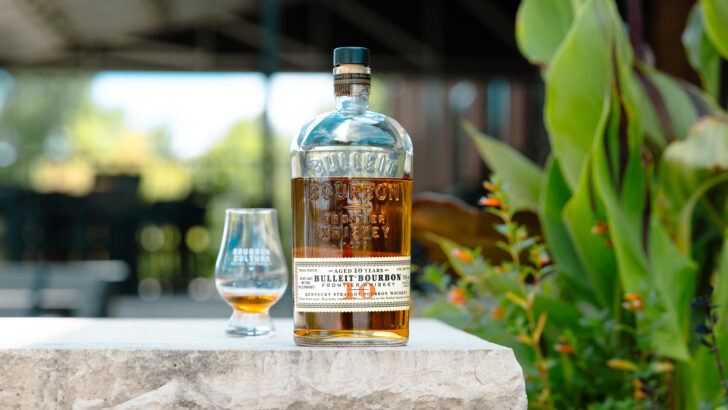
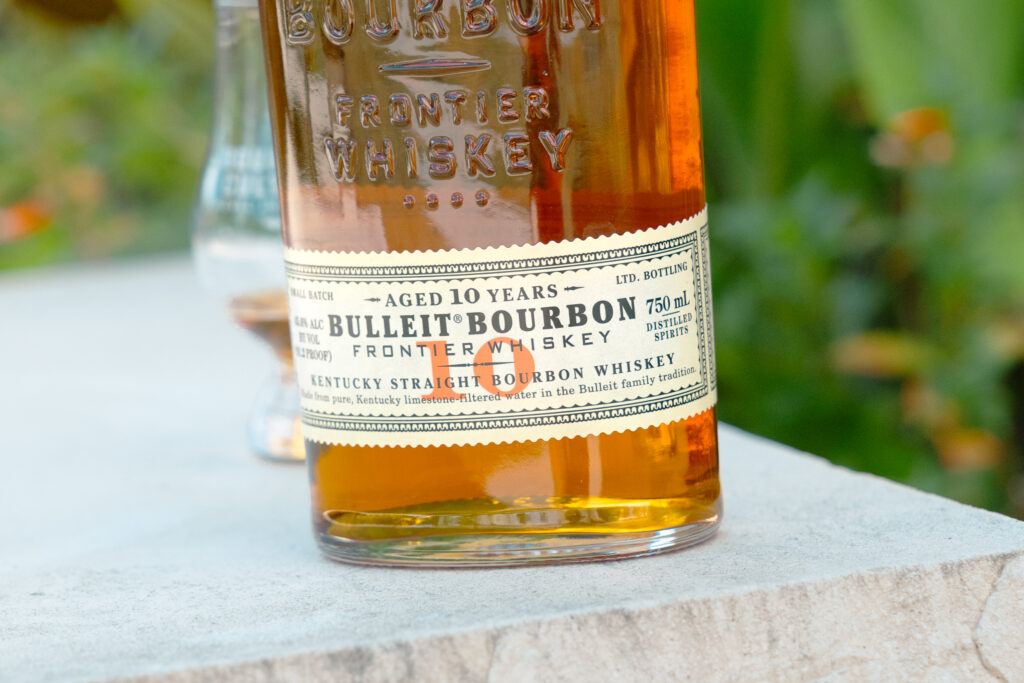
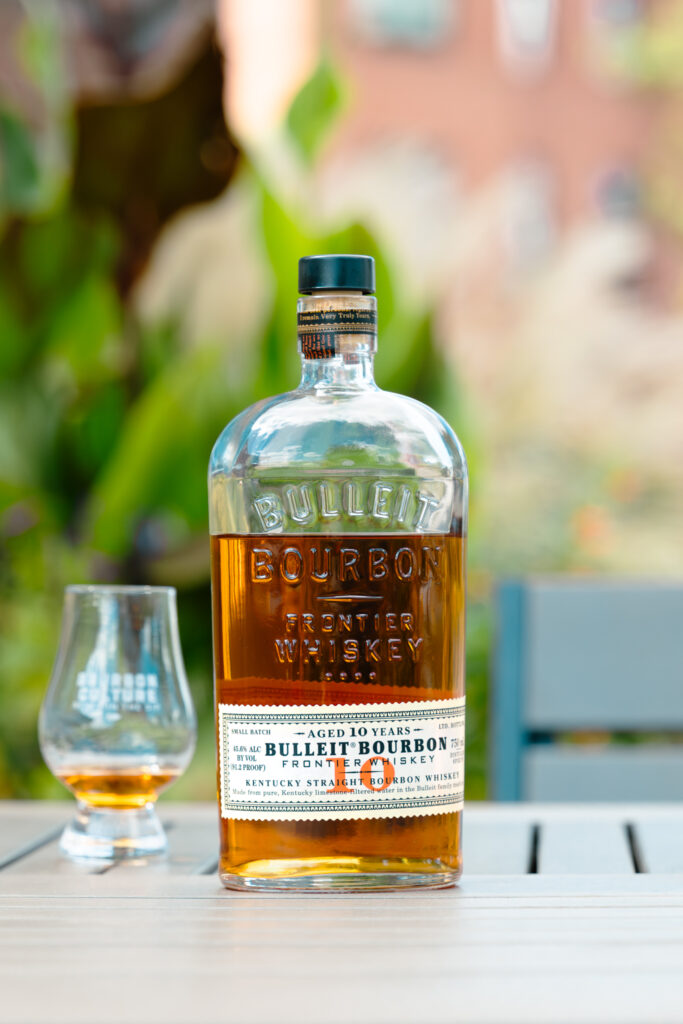
If you walk into any bar or liquor store in America, you are guaranteed to see this apothecary-style bottle of bourbon before you today. But wait a minute, this isn’t the standard 90 proof, bright orange label Bulleit Bourbon. The lighter label and the big number “10” is an upgrade over the that other bottle. It still has that enduring “Frontier Whiskey” in raised glass lettering in the middle of the bottle, permanently burned into the collective consciousness of anyone who has stared at a shelf of liquor bottles.
Many enthusiasts know that Bulleit Bourbon was a “Non-Distiller Producer” (NDP) almost since the first bottle hit the shelves in 1995. For decades, they utilized contract distillation and massive blending operations to fill its bottles. Following the brands acquisition by Diageo in 1999, Bulleit was said to rely almost entirely on the Four Roses Distillery to produce its distillate. Bulleit liked the high-rye profile of their bourbon and had been blending together both “B” mashbill (35 percent rye) and their lower-rye “E” mashbill (20 percent rye) to achieve a bourbon with 28% rye in the final ratio.
When bourbon exploded in the early 2010’s, Four Roses regained a popularity they hadn’t seen since…forever. Their bourbon was becoming so in demand that they quietly informed Diageo in 2013 or 2014 that they could no longer be their sole source for distillate. I assume the people that worked at Bulleit at that time began to panic.
Where did Bulleit get their bourbon after Four Roses?
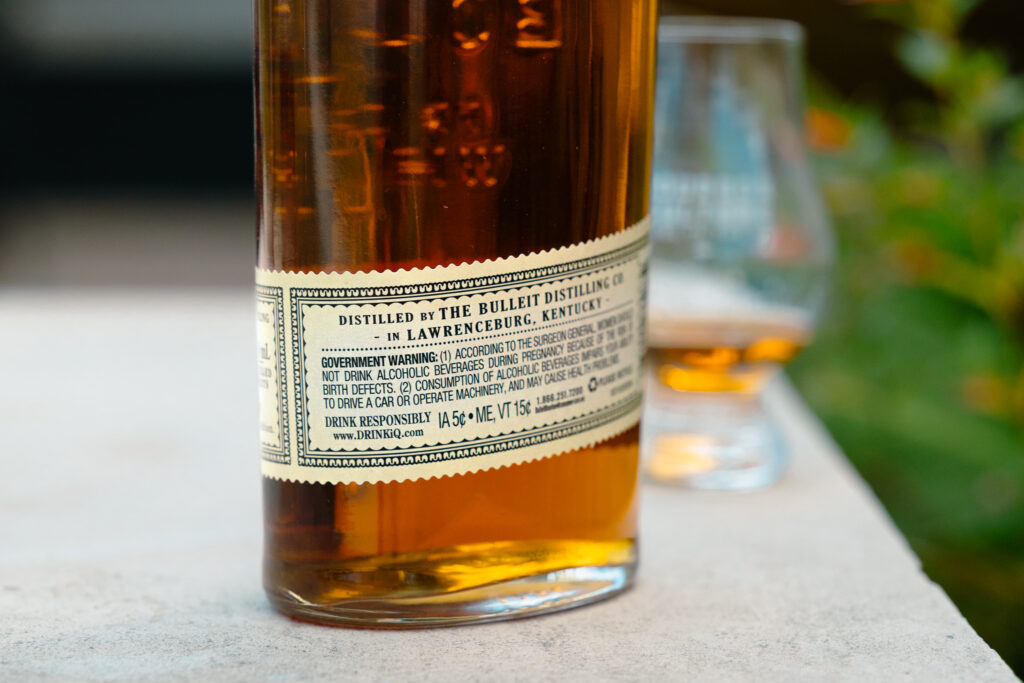
Most of you know by now that Bulleit does have their own distillery today. But it didn’t open until 2017 when the aptly named Bulleit Distilling Co. filled its first barrel in Shelbyville, Kentucky. This massive, state-of-the-art facility was planned and built with the goal of self-reliance. No longer would Bulleit be held to the whims of another distillery. Well, kind of. They still haven’t figured out how to make rye whiskey at their new location, so they continue to source it from MGP.
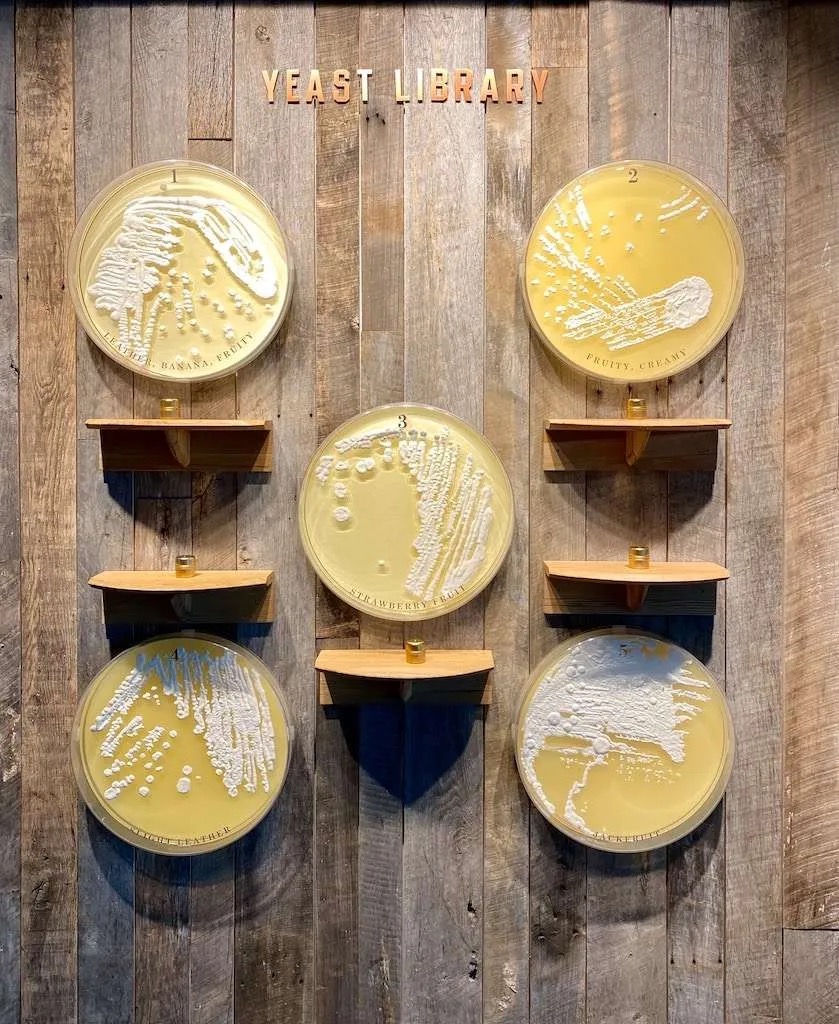
Bulleit decided to continue using the successful Four Roses model of using five different yeasts and 2 different mash bills to maintain the classic Bulleit flavor profile. In fact, they even showcase the characteristics of their five yeast strains at their distillery today for the public to see during their tours. On their wall are what appears to be what the yeast looks like when cultured in a petri dish. The five yeasts aren’t given a letter designator to my knowledge (like Four Roses F, Q, V, K and O), but they are given flavor characteristics like “Leather, Banana, Fruity,” “Fruity, Creamy,” “Strawberry Fruit,” “Slight Leather” and “Jackfruit.”
But if the distillery wasn’t making bourbon until 2017, then where did the bourbon in this 10-year-old bottle come from? Diageo sucks at transparency, but throughout the years we’ve had many clues as to its source. The two culprits that we know of that were contracted to continue production were Brown-Forman and Barton. Bulleit likely had some fermentation experts assemble five yeasts that closely resembled the ones from Four Roses and gave them to their contract distillers to use.
I also want to add that I’m almost positive Four Roses requested (whether it was legally requested or a gentlemen’s agreement) that Diageo create some separation between the two distillates by not using their same recipe ratios. So Bulleit adopted recipes that outwardly look like MGPs (75/21/4 and 60/36/4) instead of Four Roses (75/20/5 and 60/35/5). This is why they now claim their final mash bill makeup is 68/28/4.
Bulleit aged these barrels originally in the warehouses at the Stitzel-Weller campus until they were ready to blend. When their Shelbyville facility was build, the barrels moved away from being aged in a horizontal “ricked” position to a palletized (upright) position. The warehouses they use now are apparently climate controlled, but I don’t know what that entails exactly. Do they heat them? Do they heat-cycle them?” Or do they just open some doors/windows whenever they feel like it?
This bottle was purchased in 2023 which means that it could potentially contain bourbon from the Four Roses time period. There’s also the chance it could contain bourbon from the early days of when other distilleries like Early Times (Brown-Forman) and Barton distilled bourbon for them. I guess only taste will tell. So enough about the backstory of this 10 year bottle. I imagine what a majority of the readers want to know is how does it taste? Let’s find out. I sampled this neat in a glencairn.
Tasting Notes
Nose: Nosing the glass reveals a sweet, fruit-forward bourbon with hints of floral notes in the background. I can smell plenty of caramel, honeycomb and cherries. There are other fruit notes wafting in the air like berries, plum and a bit of strawberry. Vanilla and cinnamon contrast nicely while leather and oak make an appearance – the latter being an odd thing to find in Bulleit. Don’t take this as me saying there was a lot of oak to be found, but it did bely its age nicely. Soft floral notes (rose petals, mums) and some herbal-forward scents can also be found. One of the stranger notes to me was kind of like a “clarified butter” note which I found to be very nice.
Palate: The mouthfeel has respectable viscosity for something that I’m sure has been heavily filtered. The appearance of the liquid isn’t as dark as you’d think it would be for something that’s 10 years old, but that’s likely the result of an even-keeled maturation and also proofed down to 45.6% ABV. The caramel in each sip is darker and more complex than the standard Bulleit Bourbon and the fruits are the same way. I can find citrus, cherry, strawberry and some dehydrated apricot. Pepper, cinnamon and a bit of the floral notes I found in the nose are on hand to let me know this has a high rye content. The proof never gets aggressive and the leather and oak notes add some complexity without being taking over the rest of the notes. The one thing I’ll say about this bourbon is that for all of its good qualities, I don’t feel like anything makes this stand out from the crowd.
Finish: As the sweetness of the caramel and cherries begins to recede, the finish leans heavily into a fruit leathers and dry baking spices. Cinnamon, clove and a dusting of nutmeg. The oak and leather are present, but hardly assertive. This finishes very pleasant and has almost zero burn.
Score: 7.3/10
Admittedly, I wasn’t expecting much from Bulleit 10 Year. But I did find a bottle that punched above its weight class. For the price, I would almost say that there’s no shame in having this be your “house” bourbon for guests to enjoy and to mix with. I think it is a little bit too nuanced and complex to get mixed into a cocktail, but for its price, I guess it really could help to elevate it rather than go to waste. I know it’s easy to dunk on anything with a Bulleit label, but what I found here was an approachable, multi-layered bourbon without many faults.
Final Thoughts
Throughout this review, I kept comparing this bottle to its little brother, but there’s another bottle that’s as close in price to Bulleit 10 that the standard one is: Bulleit Barrel Strength. In fact, that bottle may deserve your attention more if you can’t get past the 10 year’s low proof. I know I would probably pick the Barrel Strength if I only had money for one bottle or the other. See my review here if you’re curious what exactly it does better.
With a price slightly under $50, Bulleit 10 Year used to be an easy suggestion to those who wanted a bourbon with a double digit age statement. But these days it’s getting easier to find bottles on the shelf with age statements and proof that is comparable. For instance, Henry McKenna Bottled-in-Bond could be a viable alternative nowadays. Same with Eagle Rare. So for me to recommend Bulleit 10 Year, you’d have to be the kind of person who enjoys a high-rye bourbon that concentrates more on fruit and floral notes rather than the previously mentioned ones which rely more on what they have extracted from a barrel. If that sounds like its in your wheelhouse, then this is a bottle you should buy.
Howdy Gaskill
Tuesday 26th of May 2026
Smoooooooooooooth !