

| Don't like ads? | No ads |
Old Forester has been producing quality bourbon and whiskey for over 150 years now. They are one of the most fascinating brands in Kentucky because of their history that dates all the way back to 1870. When you’re a brand as old and experienced as they are, you can imagine that they’ve mastered the art of every style of whiskey. But up until 2019, there was always one gap in their portfolio: a rye whiskey.
Old Forester creates a new rye whiskey from an old recipe
In 2019, Old Forester launched a 100 proof rye whiskey. It was immediately a hit among enthusiasts (and bartenders) for its great flavor and affordability. The rye whiskey mash bill was said to be from an old recipe that was used from a brand that was acquired by Brown-Forman in 1940 called “Normandy Rye.”
The purchase of this company was initiated by Owsley Brown (son of George Garvin Brown) who continued to make the rye whiskey for a few more years afterwards until it eventually disappeared into the ether. The recipe remained with Brown-Forman in their archives. It specified a mash of 65% rye and 20% malted barley – an amount far higher than normal. The remaining 15% of the mash was corn for added sweetness.
Old Forester didn’t create a rye whiskey for themselves for decades until they generously offered their services to make Rittenhouse Rye from 1997 to 2008. This came about after Heaven Hill’s disastrous fire that destroyed their own distillery in 1996. Old Forester and Jim Beam shared duties of making bourbon for Heaven Hill for a few years after the fire as well.
I mistakenly believed that Michter’s Rye used the same recipe as Old Forester Rye in their contract with Brown-Forman from 2004 to 2011, but it turns out that what they were having distilled for them was closer to the recipe used for Woodford Reserve’s Rye Whiskey which is known internally as “Old Watermill.” That one uses a mash of 53% rye, 33% corn and 14% malted barley.
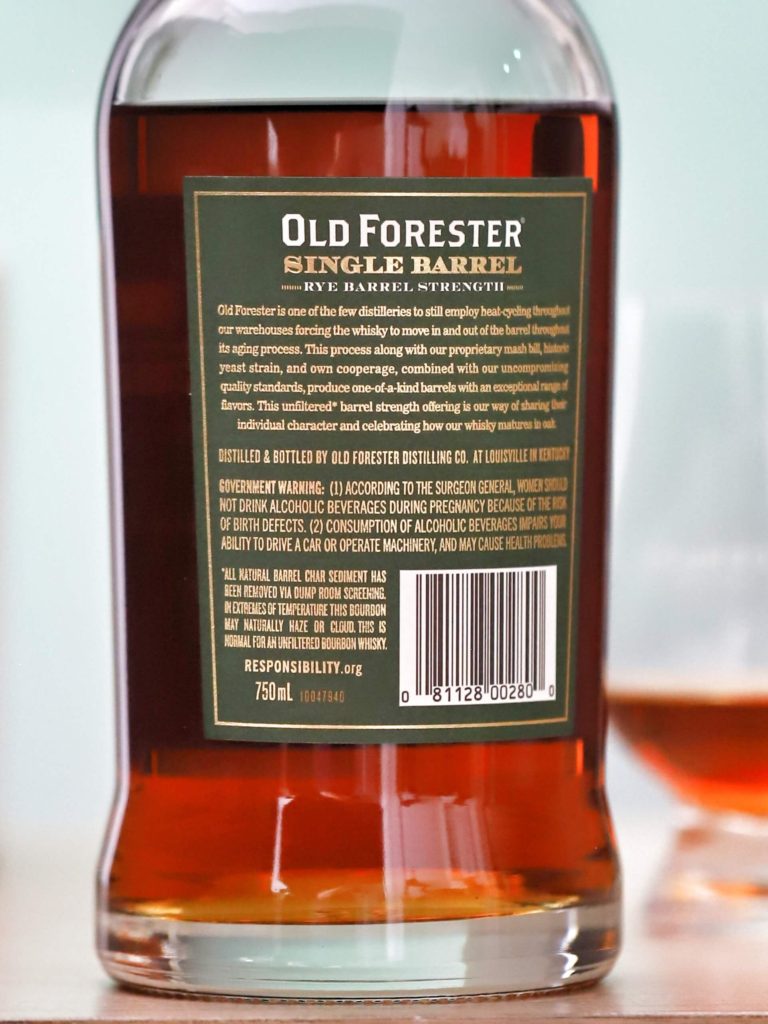
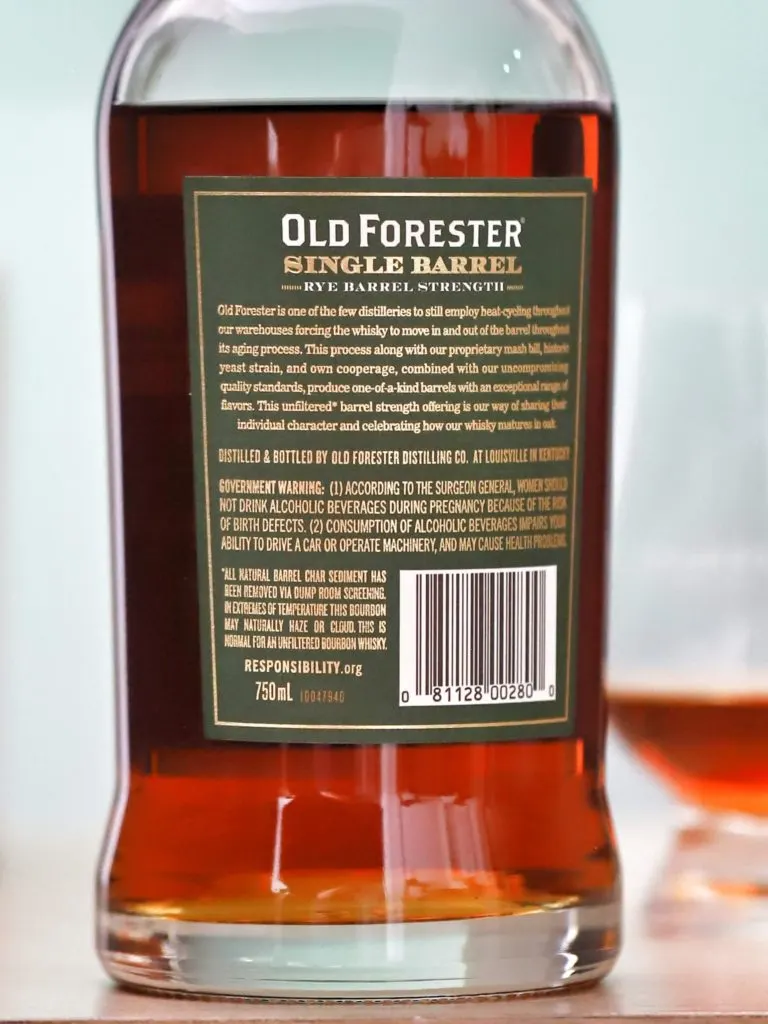
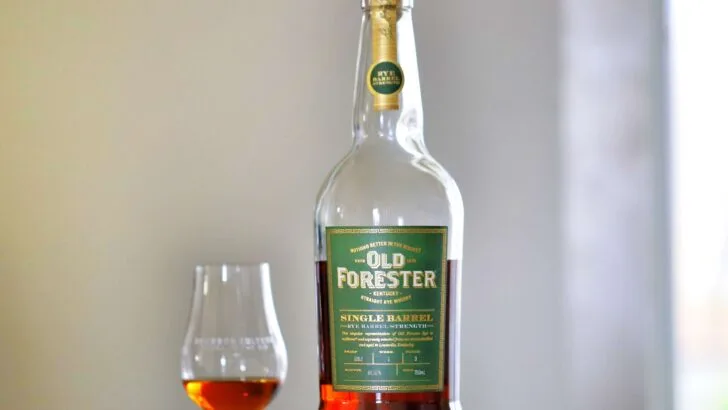
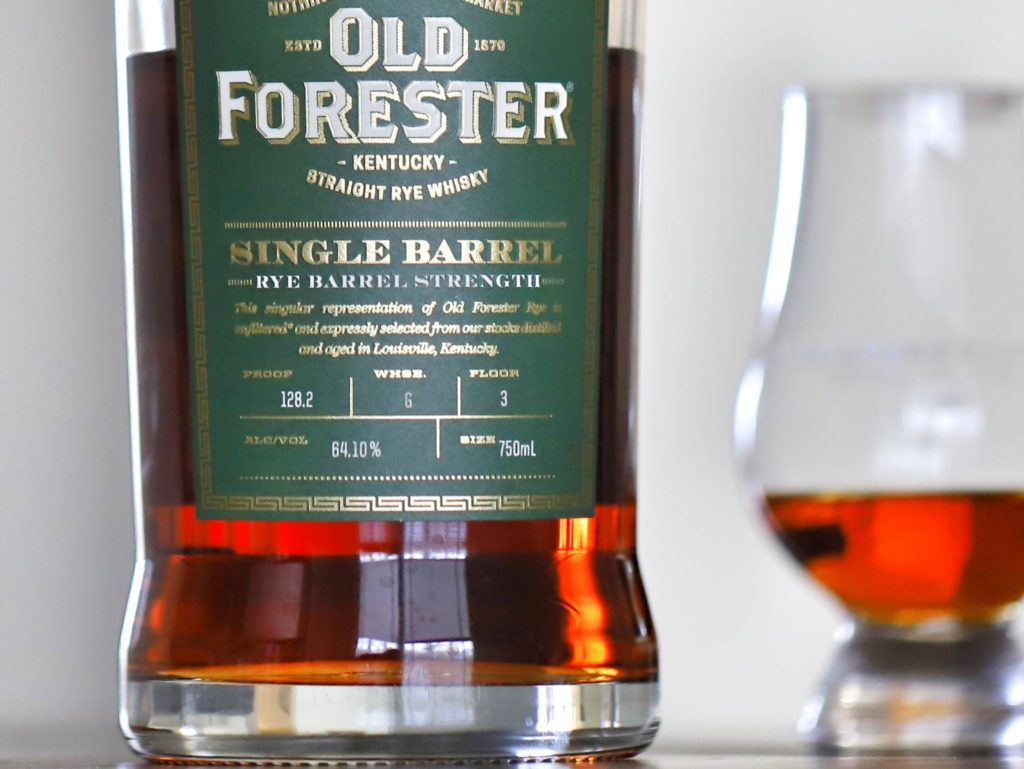
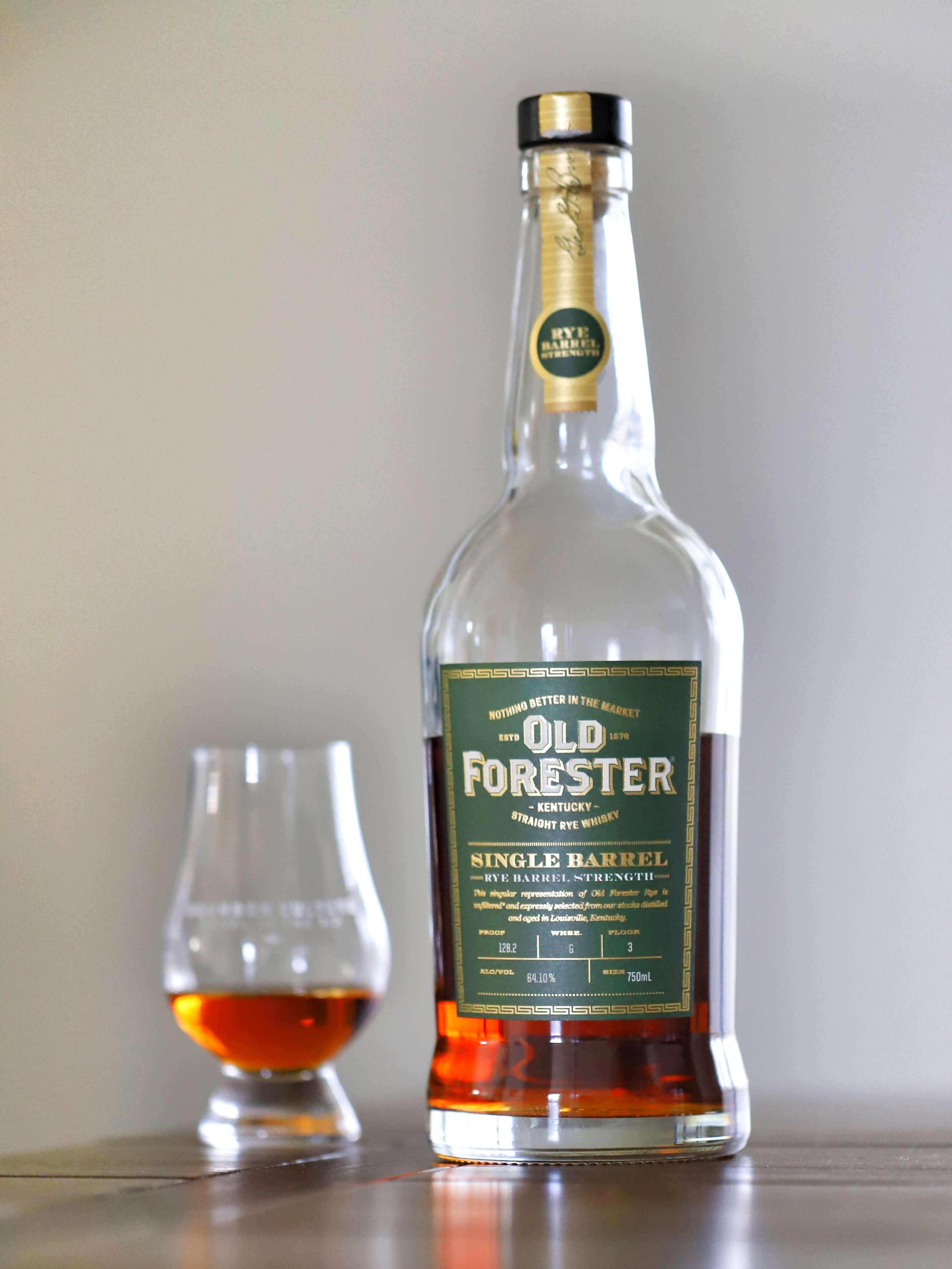
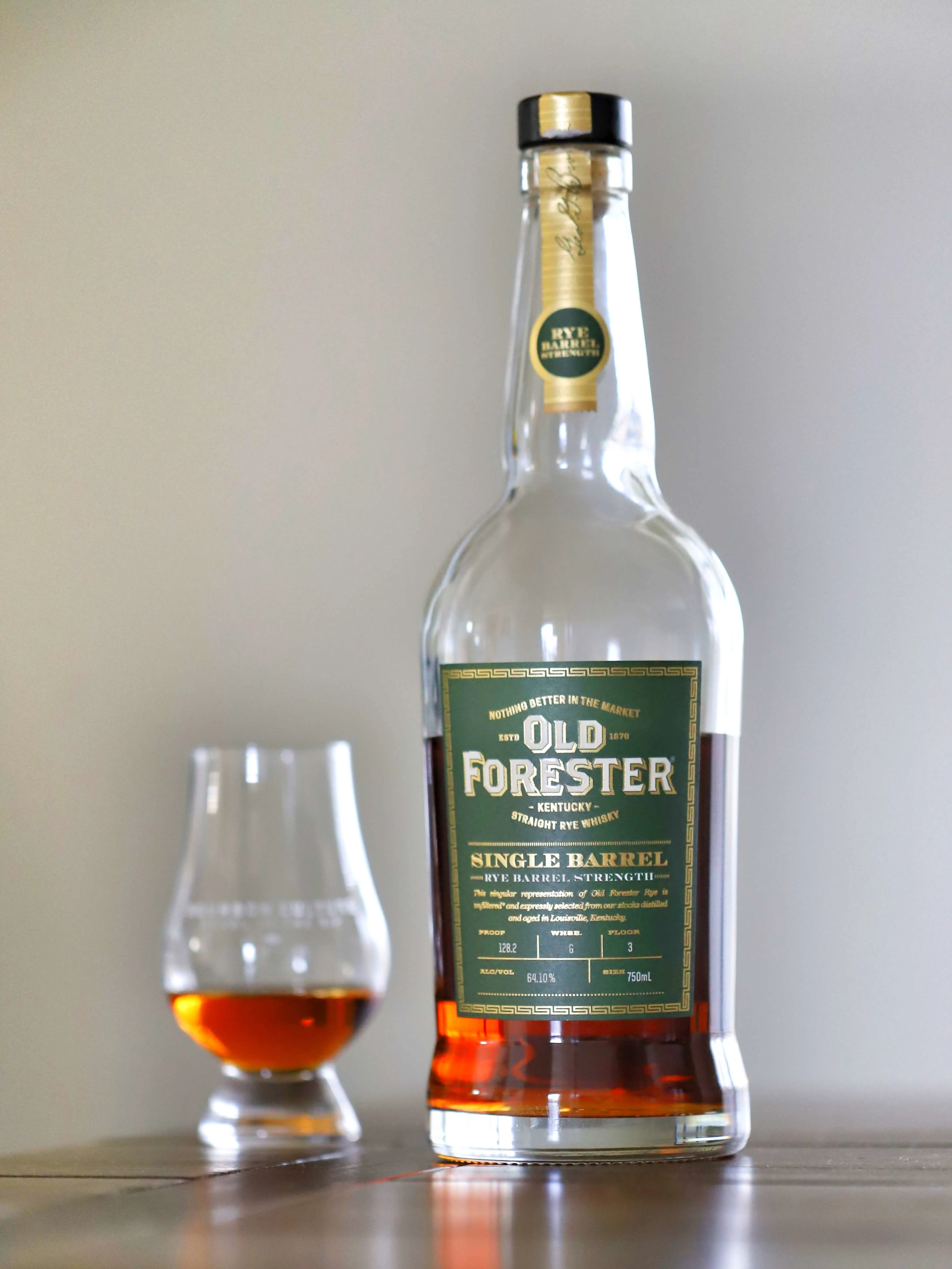
All of this leads us up to 2021 when Old Forester began to release single barrels of rye whiskey at barrel strength. Enthusiasts had anticipated this move after Old Forester began to release single barrel bourbon at barrel strength the year prior.
Initially, the new rye whiskey was not going to be sold as store picks (just yet). Old Forester claimed that they did not yet have enough product to begin a single barrel program and that only 50 barrels or so would be released in the initial batch. No age statement was provided but if we are to do the math on the fact that their own 4-year-old rye whiskey came out in 2019, then we can imagine this is right around 5-6 years old. Keep in mind that 5 years is not 5 years in “Old Forester-speak.” Their heat cycled warehouses should make this rye whiskey taste around 7 years old. Is that the case then? Thanks to two gracious friends, I was able to get a taste for myself.
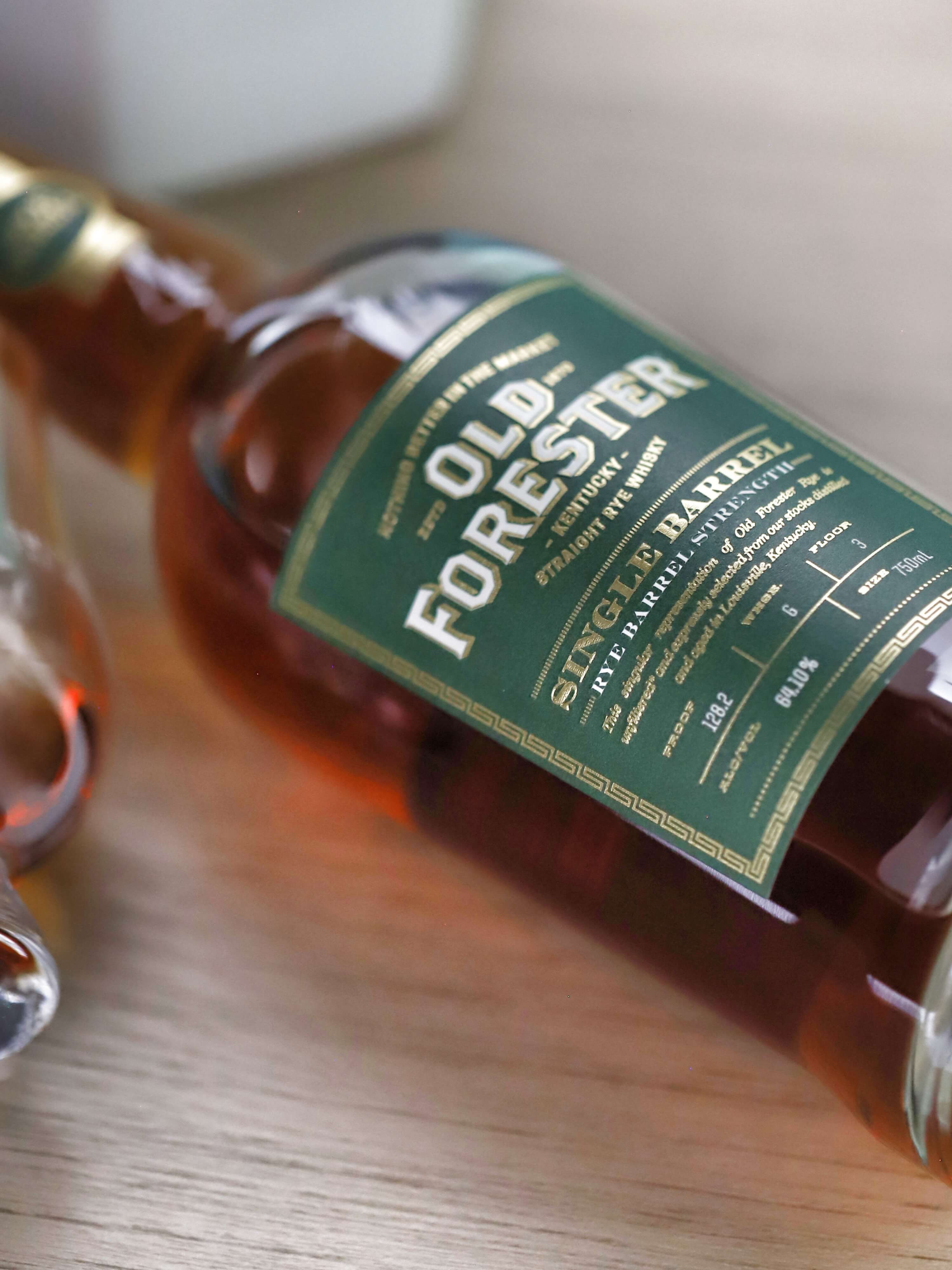
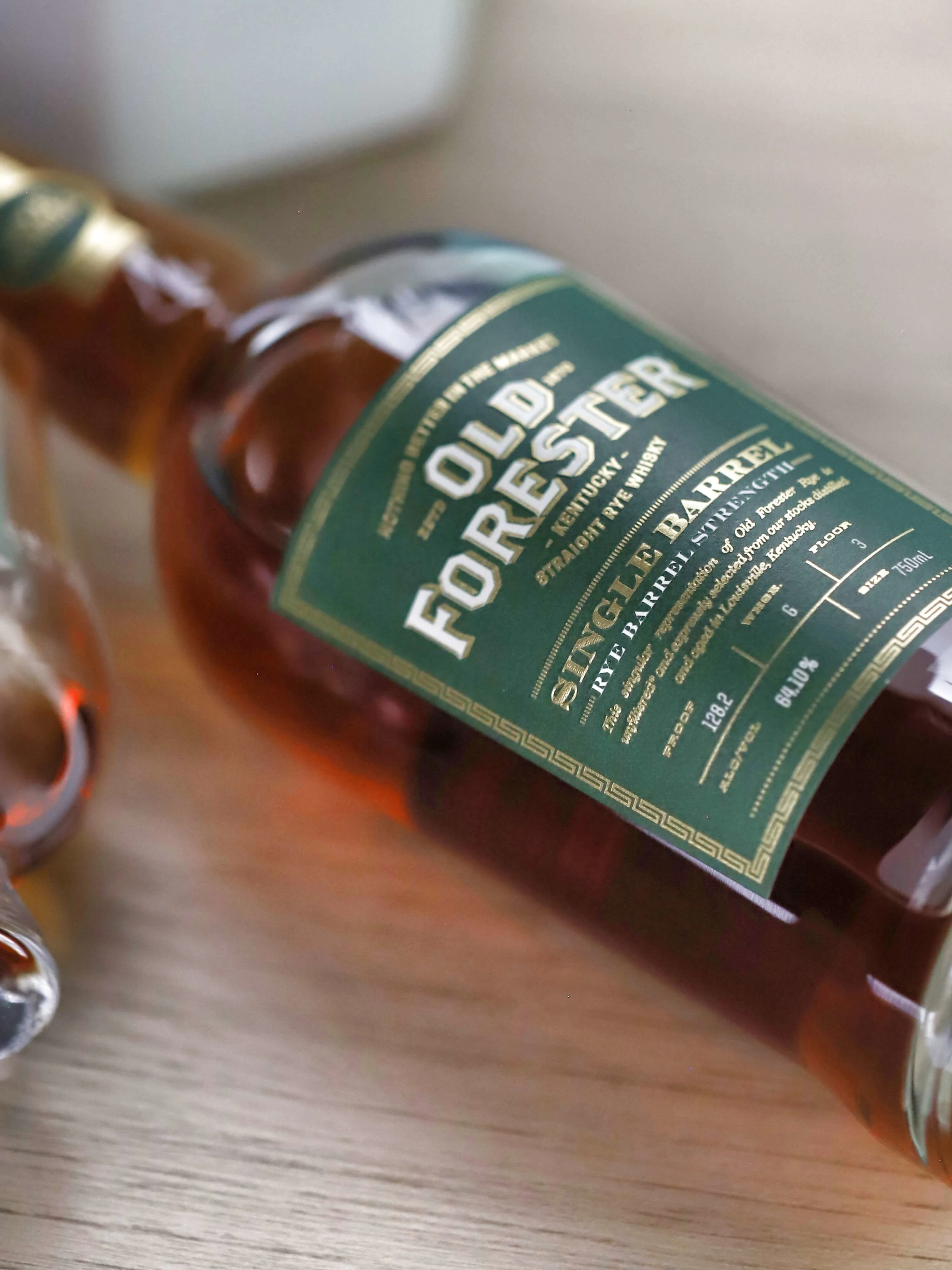
Tasting Notes
Nose: Sweet notes of honey, bubblegum and grainy corn muffins followed by fennel, mint and tons of floral and botanical notes. This has a great variety of greener scents that I love to find in ryes. Oak and tobacco leaf add some age to the nose and increase its complexity. This smells very similar to a Willett 4 Year Old Rye Whiskey, yet every now and then I catch a passing whiff of wet hay that reminds me of a craft rye whiskey.
Palate: A good amount of heat that has loads of sharp cinnamon, white peppercorn and red pepper flakes. That’s not to say it’s without sweetness, it’s just that the heat lays on top of it. There are flavors of caramel as well as herbal notes like mint, oregano, dill (just a tiny bit) and fresh cut grass. Baking spices add additional flavors throughout like cinnamon and clove. I can taste oak, but it’s not the most developed oak I’ve tasted. In fact, it borders on being “green” which is a detractor in my opinion. Fruit notes are few and far between but I can pick up on citrus rinds with lemon being most prominent.
Finish: Lingering notes of spearmint gum, molasses, citrus rind and honeydew melon all stand out. There are lots of lingering botanical and floral notes too, but I get a little bit of youthful “straw” that I don’t find enjoyable at the end. Luckily the other notes keep it from being a poor finish.
Score: 7.6/10
There is so much to like in this bottle of Old Forester. Conversely, there seems to be one youthful note that stands out at each stage of the sip. I know that this is not the oldest rye whiskey out there, but if Old Forester is going to release only around 50 barrels of this stuff, you’d think that each barrel would be cream of the crop. This single barrel shows that they are on the right track but might need to let it age for another year or so to iron it all out. I was surprised to find some grainy scents and I think that the heat comes off as even hotter than its 128.2 proof would indicate. An experienced rye whiskey (and barrel proof whiskey) drinker will be able to shrug it off, but to a novice drinker, this will simply be too much to handle. Additionally, there were more “green” notes than I would have expected for such an experienced rye whiskey maker.
Final Thoughts
Throughout my session with this whiskey, the main thought in my head was how similar this tasted to a standard small batch bottle of Willett Family Estate 4 Year Old Rye Whiskey. In fact, the mash bills almost line up even though the Willett is a blend of two rye whiskey mash bills that average out to about 65% rye and a high percentage of malted barley. Willett’s rye whiskey is also known for its strong presence of floral and botanical notes while also keeping enough sweetness to satisfy most drinkers. However the Willett’s rye is about $30-40 less expensive than this bottle of Old Forester (at retail) and if we’re talking secondary prices, which is the only way most of you are going to find this bottle, then it becomes even more absurd.
Over the last 2 years, I’ve really started to admire Old Forester products and was drooling with anticipation to try this. My expectations were deflated a bit after tasting this only because I felt like there should’ve been more. More maturity, more oak and more fruit. It’s not a total letdown, but it’s certainly nowhere near the $275 most flippers want for a bottle on secondary. But if you trust in my reviews and what I say, then hopefully you can put your mind and wallet at ease and just wait a couple more years when this bottle becomes more plentiful and, hopefully, better tasting.