
*Bourbon Culture is reader-supported. When you buy through links on our site, we may earn an affiliate commission.
| Don't like ads? | No ads |
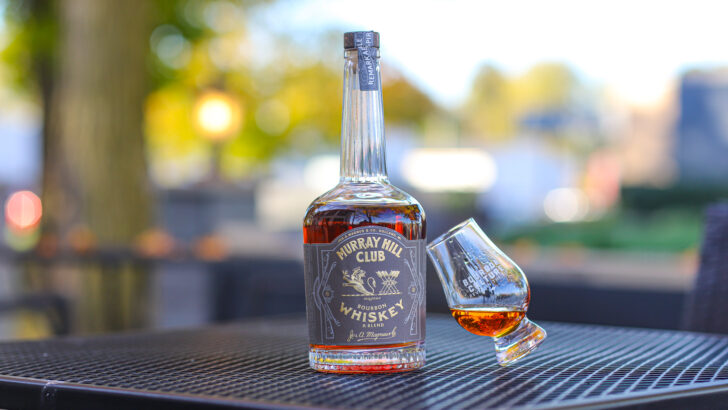
Within that Joseph Magnus portfolio, Murray Hill Club hides in the backdrop while the brand’s darling child “Cigar Blend” stands in the limelight. It’s sometimes easy to forget that Murray Hill Club is even a part of Joseph Magnus family. While the standard Magnus line focuses heavily on finished bourbons, Murray Hill Club represents a dedicated effort to highlight blending techniques that make it unique among whiskies.
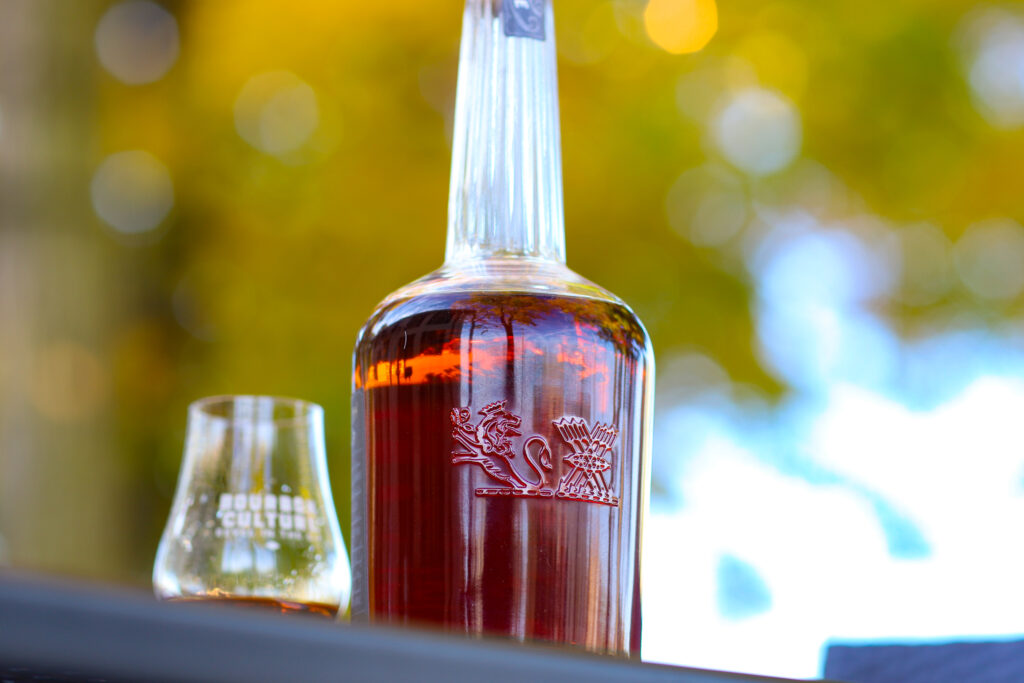
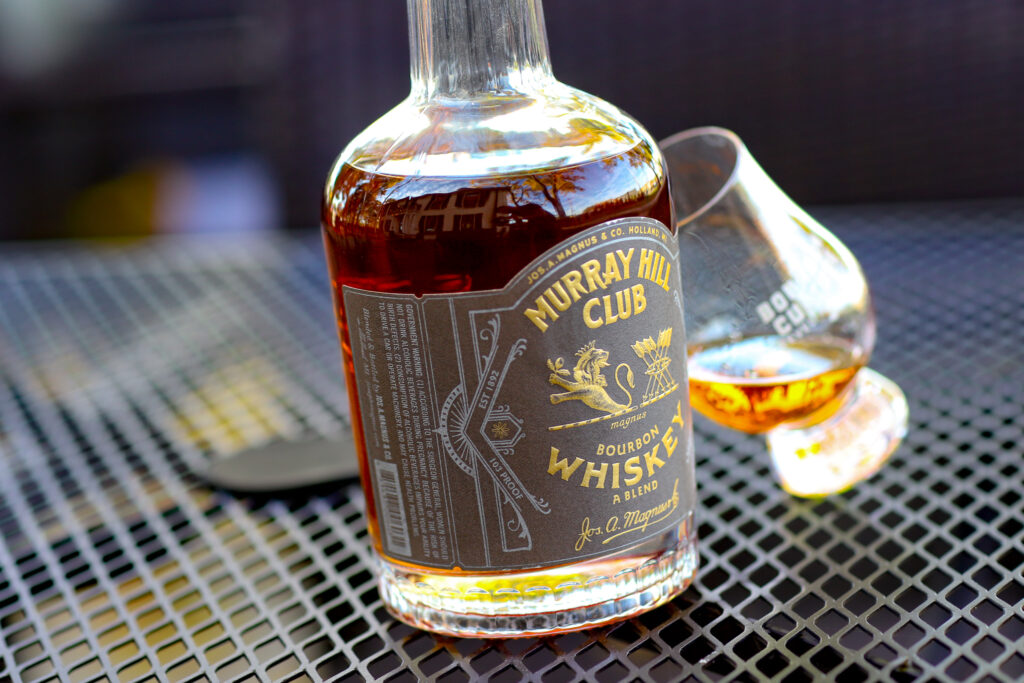
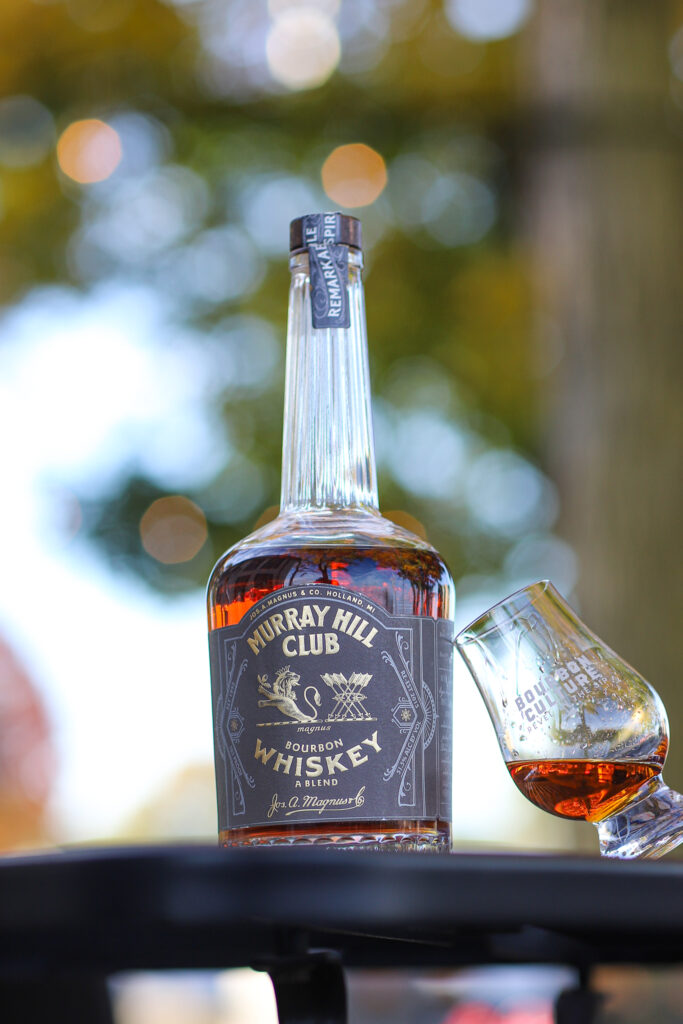
Why am I hesitant to use the word “bourbon?” Because Murray Hill Club is not legally a bourbon. The label is a little confusing in my opinion because it hides the words “A Blend” at the bottom. The dirty little secret that it’s hiding inside every bottle of Murray Hill Club is that Nancy Fraley has blended in a single barrel (or two) of Light Whiskey into every batch. Actually, I’m just going to paraphrase from one of her many comments that she graces reviewers with across the internet whenever they review a product that she’s laid her hands on. Here it goes:
Nancy Fraley – Architect of Bourbon?
Murray Hill Club typically contains about 1 or 2 Light Whiskey barrels sourced from MGP (typically aged 9 years or more) and 16 or 17 Bourbon barrels also sourced from MGP (aged anywhere from 11 to 18 years old). Nancy initially created this blend to honor the Murray Hill Club Whiskey as it would have been in the late 1800s. She didn’t get a chance to taste that one and try to recreate it like she did with an original Joseph Magnus bottle. But she took some of the cues from that label and applied it here, such as it being called a “Blended Whiskey.” She didn’t want to cheapen this homage by literally making it a blended whiskey (which could have allowed her to add Grain Neutral Spirits and coloring), so she decided that it would do better as a “Blended Bourbon” or “Bourbon, A Blend” (the latter is still recognized as a classification by the TTB). Her goal was for it to ultimately drink like a bourbon.
Nancy admitted herself that she stepped away from direct oversight of the Murray Hill Club blends for about 3-4 years (roughly from 2020 to 2023 by my calculations). But she began to notice a drift in the profile and decided to come back to the blend to correct it herself. Whenever I find out which batch number she resumed her hands-on process with, I’ll let you know by updating my review here.
No review of a product that Nancy touched would be complete without mentioning a method that she likes to utilize when preparing spirits for their journey into a bottle: most notably is Réduction Lente – AKA “slow reduction.” Most NDPs will cut their whiskey with water all at once to reach bottling strength, which can cause a thermal shock to the liquid. This exothermic reaction often leads to saponification, which creates those soapy or bitter flavors that can ruin the overall profile. Nancy insists on adding water in tiny, controlled increments over several months. It is an expensive and time-consuming process that allows the water and alcohol to marry without losing the delicate fatty acids and oils that provide a rich mouthfeel. If you’re wondering if Murray Hill Club employs this technique, I think the answer is yes. It should also be obvious because this is not a cask-strength product (it’s bottled at 103 proof). So water was definitely added.
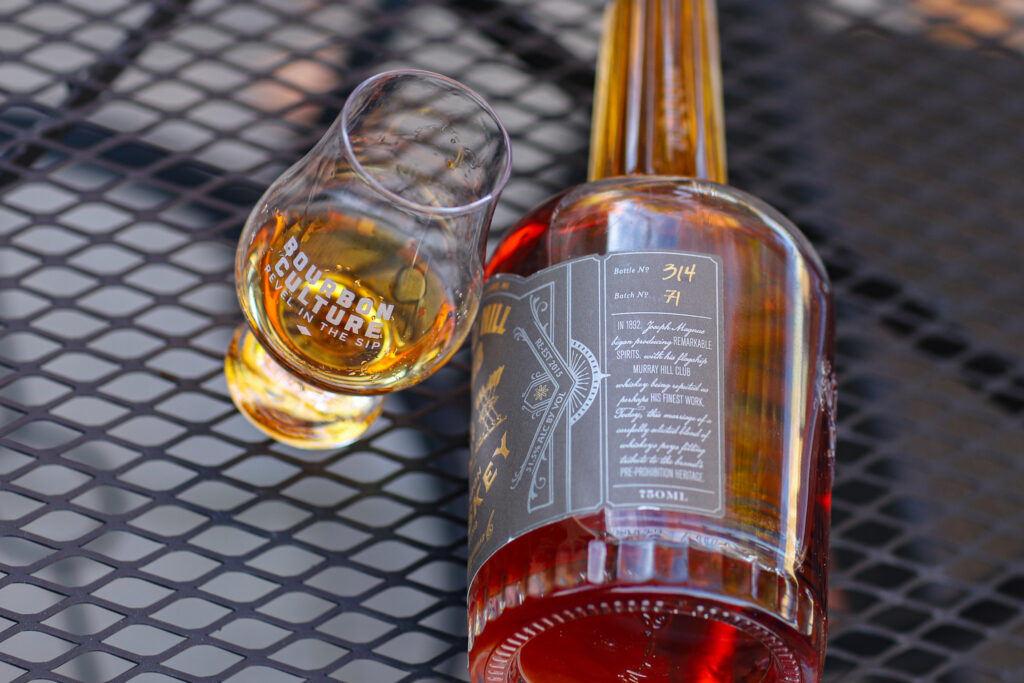
The bottle I am reviewing today is Batch 71. Based on the timeline of when it was purchased (roughly 2022 I think?), this should be one of those “off profile” batches that she had talked about. But let’s see if it’s truly not as good as some think it is. I sampled this neat in a glencairn.
Tasting Notes
Nose: If I didn’t already know this had a barrel or two of Light Whiskey in the blend, I wouldn’t have been able to tell this was anything other than a bourbon. One of the best things this has going for it seems to be that it has a lot of maturity on the nose. This smells like a whiskey that’s worth $120 just by the nose alone. I find rich sweets (candy corn and toffee), lots of oak and charred wood scents, some tobacco notes and even some fruit notes like raisins/dates and toasted citrus zest. Vanilla, cinnamon and allspice are all amped up as well. There’s even a touch of cocoa on the nose. This is overall a delightful product that kind of reminds me of some of the Remus Volstead/Gatsby releases I’ve had recently.
Palate: A thick and rich mouthfeel with loads of caramel and butterscotch candies as well as plenty of seasoned oak, pipe tobacco and some mellow cinnamon. Then the dried fruits come in that kind of reflect what I found in the nose with trail mix cherry pieces, dates and dried citrus zest. I have underlined in my notes just how balanced the sweet and bitter notes are – they do well to prevent one another from dominating.
Finish: Sweet and tannic notes continue during the finish with each one getting a little darker and more potent. The finish lasts for a moderately long time and leaves lots of wood, spice (cinnamon, allspice and nutmeg) and vanilla notes behind. Toffee and cocoa notes add something more to chew one while you sit and savor what the last sip was like. Everything is as it should be.
Score: 8.3/10
For years I avoided purchasing a bottle of Murray Hill Club – mainly because I didn’t see the difference between it and its sibling Joseph Magnus Bourbon. I also felt as if the $20-25 increase over the Magnus – despite not being a true bourbon – was dumb. They were cutting costs by using barrels of Light Whiskey, so why was this priced MORE? But experiencing this bottle showed me why it was more and honestly, my feelings about the label have changed. I feel as if MHC can really hang with a lot of the faux limited release bottles I see on the shelves these days for $150 to $200. I just hope me saying that doesn’t mean that Magnus decides to raise the price for it.
Final Thoughts
I made an observation in my tasting notes that Murray Hill Club seemed to give off Remus Volstead or Remus Gatsby vibes while I was drinking it. The average age of barrels and the proof seem to match up quite well with each other, so this comparison seems to make sense. So if you’re a fan of MGP’s limited release line, but you want to save $50 or more, MHC might make sense to buy instead.
While I’m not in a hurry to rush out and buy another one of these bottles, I will no longer view it as being a shelf turd. It’s really quite delightful and honestly, has a pretty good value proposition. No wonder I don’t see it sitting on shelves as much anymore.
Nancy Fraley
Wednesday 22nd of April 2026
Hey Mike & Mike, Master Blender Nancy Fraley here again, and I just wanted to take a moment to let you know how much I enjoyed your review of MHC. You fellas have definitely done your homework- it shows- and I wouldn't expect anything less from you! ;-) Just a few notes on it based on some of your queries in the review: Murray Hill Club, like everything else, always goes through the slow water reduction process. Also, you guys noted the flavor drift issue I had spotted a few years back (I don't remember the year; quite frankly, after the pandemic, I've lost my sense of time!). Your batch #71 would have been around the time I was correcting that issue. We are now around batch #96, and the age of the light whiskey (just ONE barrel anymore) is now 11 years old, while the Bourbon components are in the 10.5 to 20 y.o. range.
Finally, if you ever review a MHC Special Release, just know that I always make that recipe it's own thing. Although it goes under the legal TTB category of "Bourbon, a Blend," or "Blended Bourbon," the amount of the light whiskey component in this one is really just the absolute minimum amount needed. With batch #5 I'm currently working on, the ages of the components are 11 to 20 years old with MGP 21% "Q" yeast being the oldest Bourbon.