
*Bourbon Culture is reader-supported. When you buy through links on our site, we may earn an affiliate commission.
| Don't like ads? | No ads |
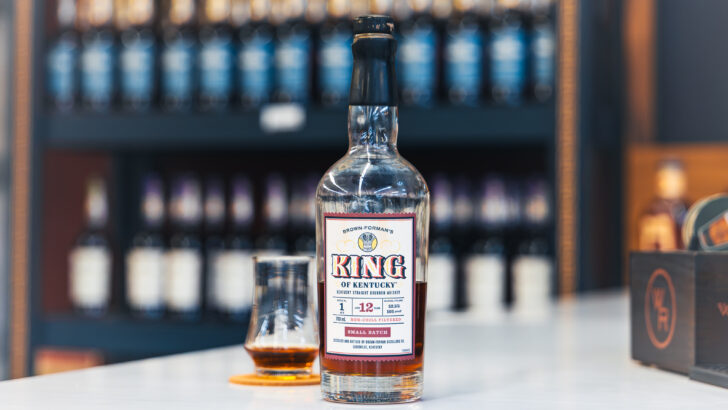
When I first heard the news that a new King of Kentucky “Small Batch” label was approved by the TTB, I wasn’t really surprised. It seemed like the next logical step for the Brown-Forman family of brands. After all, King of Kentucky has quietly become their number one most desirable product – besting Old Forester’s Birthday Bourbon, President’s Choice or anything that Woodford Reserve and Jack Daniel’s puts out. So why not capitalize on that success?
I’ll tell you why – because it’s going to water down the brand. I’m sure it makes good business sense to do something like this, but the reality is that we’ve seen Brown-Forman degrade highly sought after products like Old Forester’s Birthday Bourbon and President’s Choice by vastly increasing the number of bottles they sell each year. For example, Birthday Bourbon doubled its output a few years ago and President’s Choice is now putting out at least 30-50 barrels per year (up from 4 per year) – and I’m not even factoring in the rye whiskey version, either.
What I hope to answer in this review is if Brown-Forman is actively cheapening the King of Kentucky brand by introducing more spin-offs of this highly acclaimed brand. I sure hope not, but let’s dive in anyway.
King of Kentucky Small Batch
Back in 2020 – when Brown-Forman sold the Early Times brand to Sazerac – they did so with the clause that they would be selling them the rights to the brand. But there was no legal obligation for Brown-Forman to stop producing the same whiskey that went into that brand. So they kept on producing Early Times except that they couldn’t call it that. Instead, they called it the “King of Kentucky” mash bill. And just so my less-experienced readers are brought up to speed, the Early Times/KoK mash bill was a lower rye version than the Old Forester mash bill. They are 79% corn, 11% rye and 10% malt compared to 72% corn, 18% rye and 10% malt, respectively. Oh, and they also use different yeast strains.
The King of Kentucky may have been given an extension of life, but there was one giant issue that nobody seems to talk about. When you have a top-tier product that releases maybe four dozen barrels of 14+ year old bourbon (that is effectively matured to the point of a 20-year-old bourbon) every year, you’re going to have to cull a ton of barrels throughout the first 13 years of their life to end up with enough to make a limited release like that. And with Early Times gone, Brown-Forman was suddenly low on brands they could use their low-rye mash bill in. So what do you do with all of that younger bourbon?
The one thing that separates King of Kentucky Single Barrel from Small Batch
Up until now, there were only two brands we knew of that younger barrels of King of Kentucky mash bill went into: Old Forester 1924 and Cooper’s Craft. In regards to the latter, Cooper’s Craft is actually a blend of Old Forester and Early Times/King of Kentucky. The exact ratios are unknown, though. But King of Kentucky Small Batch uses the same concept, effectively making it an “Old Cooper’s Craft.” But there’s not much money to be made off of a label like that, so the King of Kentucky brand was used.
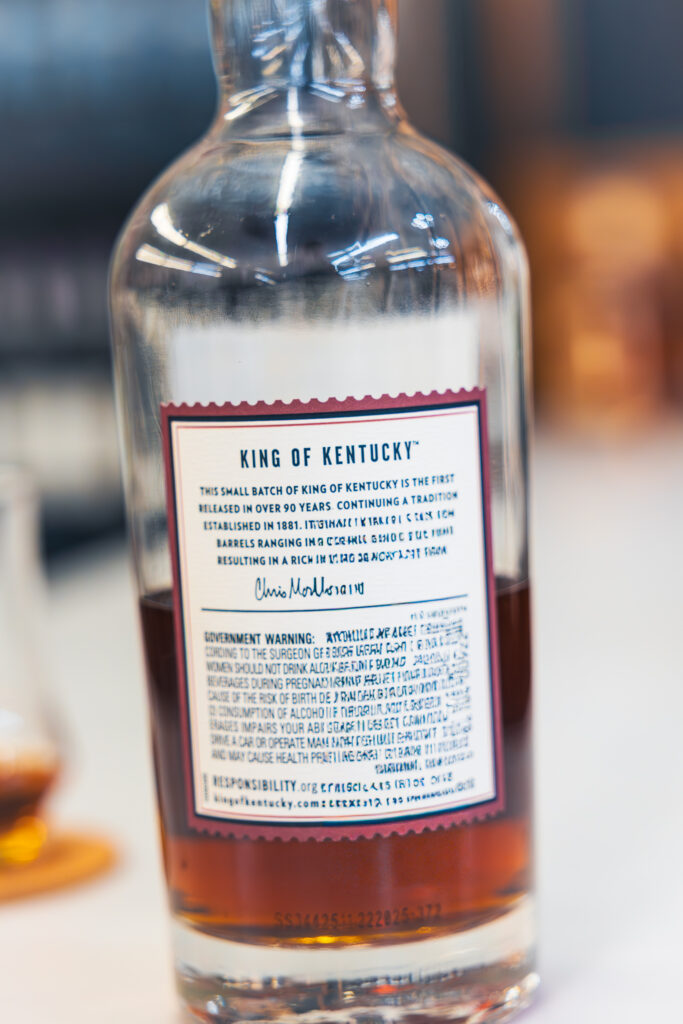
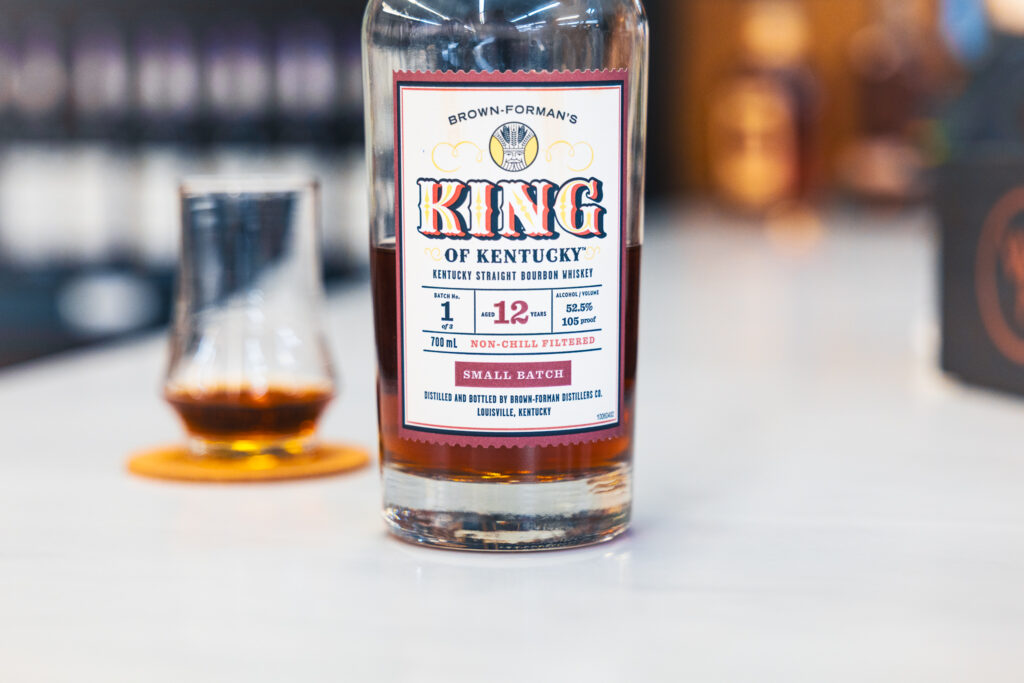
King of Kentucky Small Batch is a blend of both the 79/11/10 recipe and Old Forester’s 72/18/10 recipe. Combined, they derived mash bill is listed as 75/15/10. The barrels used for each of the inaugural batches (there are 3) were aged between 12 and 18 years. My guess (and it’s probably a pretty good guess) is that the Old Forester barrels were “reject” Birthday Bourbon Lots and we already know that the low-rye barrels were rejected from becoming single barrels of King of Kentucky. But hey, both of those sets of barrels should still make for a pretty good blend, right? Let’s find out. This is Batch 1, the lowest proof of all three batches coming in at . I sampled it neat in a glencairn.
Tasting Notes
Nose: The nose starts off with the sweet scents of butterscotch, honey and heavy vanilla. This thing definitely has some age to it with all of the wood varnish notes that are so typical of bourbon aged for long periods of time in a heat-cycled warehouse. I’m enjoying just nosing the glass as is. There are also spice notes that pop up with anise being one of the more prevalent ones I can smell and clove right behind it.
Palate: I’m getting some classic Brown-Forman notes like oak and wood varnish followed by spice notes like clove, anise (which joins cherry to become like a Twizzlers) and cinnamon. The vanilla bean is nice and smooth while honey keeps it all sweet. Strangely, the wide array of tasting notes I typically get on a similar products like Birthday Bourbon aren’t as forthcoming. I’m having to really stretch to find other flavors which means they’re nowhere near as impactful. I can find a little bit of citrus zest, some cork and a little tobacco, but they’re just passing by. This bottle is lacking a “wow” factor that I was expecting.
Finish: The finish has more oak notes, but begins to turn mildly bitter at the end. The sweetness, which has been heavy on the honey so far, turns into more of a burnt caramel. Tobacco leaf, dry cocoa and a little bit of vanilla remain on my tongue after the sip is complete and the fruits fade away quickly.
Score: 7.5/10
Wow, that was super anti-climatic. This bottle went from wannabe hero to real life zero over the course of 10 minutes. I can tell a lot of classic, mature Brown-Forman flavors are there, but it ends up being kind of flat in its delivery.
The bad part about having a tier of bourbon above King of Kentucky Single Barrel is that the barrels that went into Small Batch weren’t quite as amazing. In fact, most were probably just average at best. And when you apply the law of averages to a bunch of average barrels, then the sum is going to be, well, average?

Final Thoughts
For $300 a bottle, King of Kentucky Small Batch should have delivered a pour that rivaled its single barrel sibling. That’s not the case with Batch 1. It’s pretty much on par with an average bottle of Birthday Bourbon – and that’s not a good thing. To be fair, I’ve heard that Batch 1 is the worst of all three. However, I’m going to come back to the price point again and point out that for $300, NO bottle of should be this disappointing.
If you’re absolutely determined to experience the hype of King of Kentucky for a fraction of the price, my best advice is to stick to Old Forester 1924. For about a third of the price, it delivers a better sip than I found in this bottle. Check back in a couple of weeks to see my reviews of the other two batches and see if King of Kentucky Small Batch can redeem itself or if it is going to go down as the biggest flop of 2026.