
*Bourbon Culture is reader-supported. When you buy through links on our site, we may earn an affiliate commission.
| Don't like ads? | No ads |
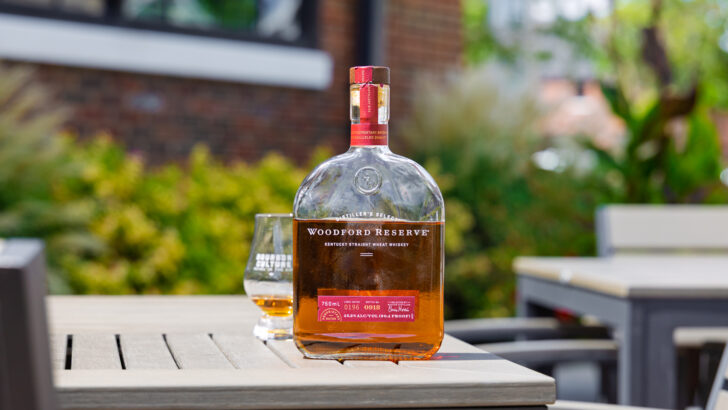
Woodford joined the ranks of Heaven Hill and MGP in 2019 when they released a wheat whiskey. This meant that they now distilled a whiskey from each of the four main distilling grains; corn, rye, wheat and (malted) barley. This rare feat doesn’t have a lot of copycats because most distilleries pick around two kinds of whiskey and stick with it. Some will create experimental versions just to gain some experience with them, but that’s as far as it goes. Creating permanent labels for your portfolio is the ultimate commitment.
The “Grand Slam” Strategy
Before writing this review, I was not aware that when Woodford’s Wheat Whiskey came out, that Chris Morris and the rest of the company kept referring to the addition of this label as being the final piece of their “Grand Slam” strategy whereby an enthusiasts could taste each specific type of whiskey. If you’re unfamiliar with what wheat whiskey is (and if you’re confusing it with a wheated bourbon), then let me explain that first.
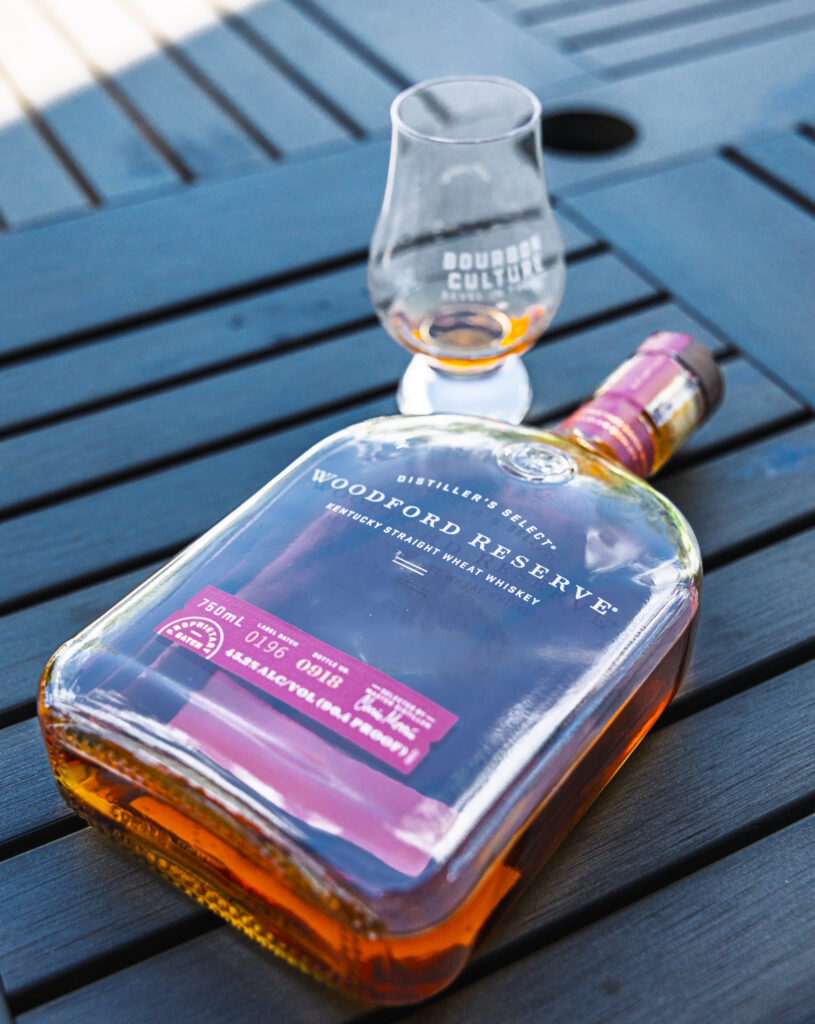
Back in 1935, the Federal Alcohol Administration Act outlined the four primary types of American Straight Whiskey based on the dominant grain: Bourbon (corn), Rye, Barley (most people just refer to this as “Malt”) and Wheat. Woodford Reserve decided they needed to be the first major distiller to offer a permanent, core lineup featuring all four of these categories. The word “permanent” is important here because when I mentioned Heaven Hill and MGP up above, you could argue that neither of them has a lineup that permanently feature these four whiskies, even if they have distilled them prior to Woodford doing so.
Breaking down Woodford’s Wheat Whiskey
The mashbill here utilizes 52% wheat, 20% corn, 20% malted barley AND 8% rye (that’s weird, right?). Remember, a wheat whiskey is just like a rye whiskey or a bourbon when it comes to the dominant grain needing to be a minimum of 51%. I guess they threw an extra 1% in there for safe measure. By doing this, Woodford is still counting on the corn and malted barley to do the heavy lifting. This is also what Heaven Hill does as well with its Bernheim Wheat Whiskey (51/37/12). MGP took a gamble by copying their famous 95/5 rye whiskey ratio and replacing the rye with wheat in order to make their wheat whiskey. My guess is that Woodford decided that keeping the ratio as close to possible to its bourbon would mitigate much of the risk of casual consumers rejecting the flavor profile.
If you’ve never read one of my Woodford Reserve reviews before, then here’s the quick skinny on what makes them different. The whiskies that they distill at their Versailles plant are triple pot distilled to a very high proof – often coming off somewhere between 156 and 158 proof (the legal limit is 160). Virtually no other large scale heritage distillery goes that high – but then again they almost all use column stills to make theirs. This triple pot distillation at such a high proofs enables a lighter bodied distillate that still carries some of the esters and congeners not found in column distilled whiskey.
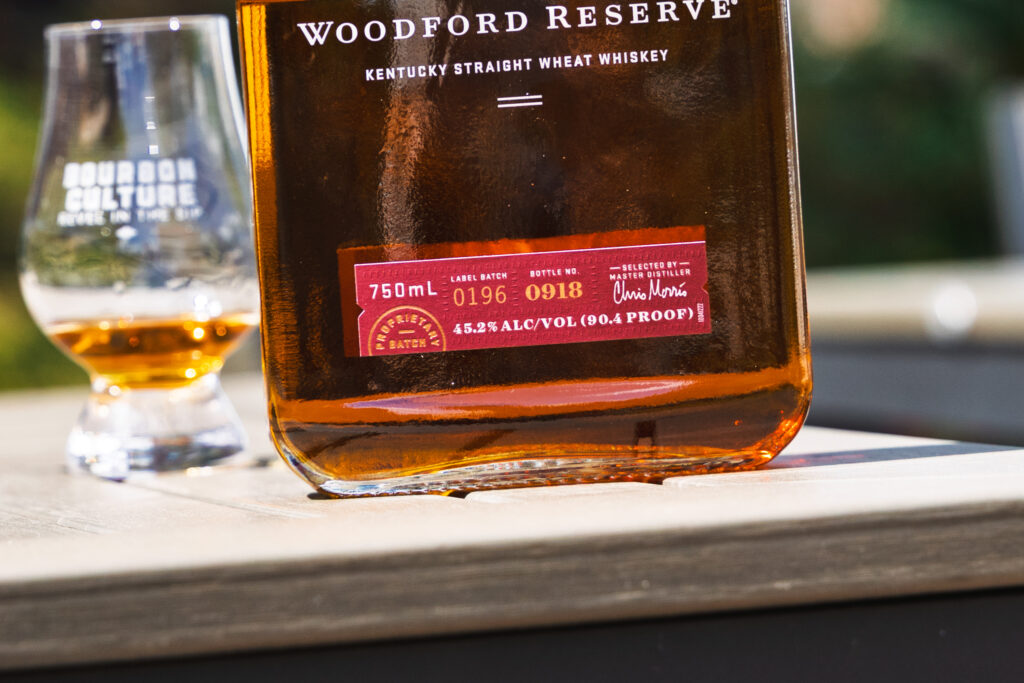
For such a high still proof, Woodford’s barrel entry proof is 110 proof. Most (but not all) other distillers use a barrel entry proof of 125. And while I don’t 100% know that Woodford is putting their wheat whiskey in the barrel at 110 proof, I’m pretty sure they do. The question I don’t know is if they also source the same recipe from the Brown-Forman plant at Shively Kentucky (where they make Old Forester and King of Kentucky) to blend in to it like how their bourbon is made. I’ll update this section if I find out the answer.
Here’s a snippet of something I read about why using wheat as a primary grain for distilling is tricky: When you are dealing with a heavily wheat focused mash bill, the extraction process will make or break the final flavor profile. Wheat is a neutral tasting grain for the most part and lacks the robust, spicy punch of rye or the rich, oily sweetness of corn or (malted) barley. To combat this – and so that they don’t make a bland whiskey – the 110 barrel entry proof is essential to extracting more wood sugars from the barrel. This should achieve a richer, sweeter mouthfeel. It also helps that the final proof (after maturation) is much lower requiring less water to be added to the final batch (Woodford is said to use 100-150 barrels per batch, btw). This means that the final bottling proof of 90.4 won’t be as watery and thin as comparable bourbons that entered the barrel at 125 proof. As a final piece of the puzzle, I believe that this whiskey is typically aged for 6 to 7 years, although I’d believe it if you told me it wasn’t actually aged for more than 5 seeing as how Woodford’s warehouses are all heat-cycled.
Okay, enough about the makeup of this whiskey, let’s see how it tastes. I sampled this neat in a glencairn.
Tasting Notes
Nose: The aroma opens mild and sweet – which I get when the mash bill contains this much wheat. I’m immediately hit with caramel, vanilla coffee cake and some spice (cinnamon, allspice). So far, this is the barrel influence doing the heavy lifting. Oak and tannic notes are few, but slightly recognizable. Really, the whole nose leans towards the scents you find walking into a bakery or donut shop. I don’t find much in the way of fruit, but cherries and the slightest hint of banana are some things I pick up on.
Palate: The “bakery” trend continues onto the tongue. Vanilla shortbread cookies meet banana bread and caramel. Slight cherry and citrus zest notes pair with cinnamon and allspice. However, despite the low barrel entry proof, which was specifically designed to boost viscosity and wood sugar extraction, the mouthfeel remains a bit on the thin side. It lacks some of the viscous texture I normally find in their bourbon.
Finish: The finale is medium in length and doesn’t stray from the bakery notes I gave on the nose and palate. Some of the thin viscosity means that it can turn a bit dry and/or bitter quickly. I can finally find a note that has evaded me so far, yet I find often in wheated products – chocolate. It lingers around with some caramel, citrus and cinnamon notes.
Score: 6.8/10
I came into this review not expecting a whole lot from Woodford. After all, their Rye Whiskey and Malt Whiskey are pretty good, but nothing mind-blowing. Their wheat whiskey ended up being mostly the same way. While I was pleased to find a much more bourbon-like experience, I didn’t feel like I was drinking something totally different from a bourbon. In a way, I think that’s what Woodford executives want to hear.
Final Thoughts
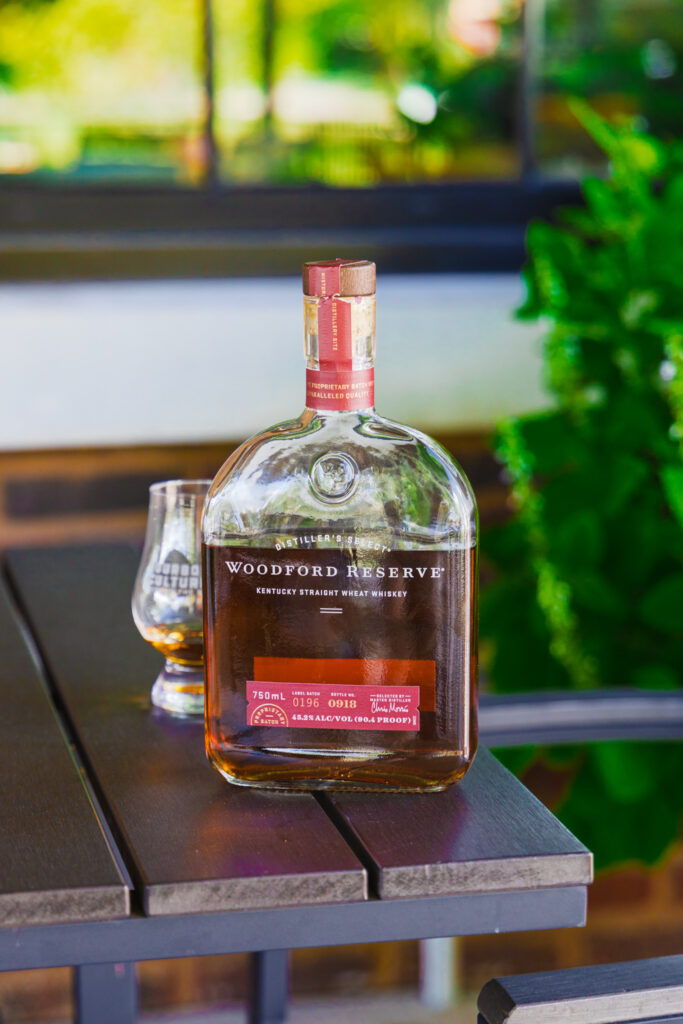
Thankfully, the price is right for something like this. Around Indianapolis, I can find it for $35 when it’s on sale and rarely is it above $40. If you’re game for something a little bit different, you could do a lot worse with your money. As for me, I think one bottle is all I need in my life. And if Woodford ever bothered to create a cask strength version, I’m sure you’d see me standing in line to try that, too.
Wheat Whiskey has its limitations and I think the trend will be to see more and more of these being finished in a variety of casks (like the new 2026 Remus Experimental Cask that I’ll be reviewing shortly). Until then, consider this bottle to be a decent sipper and a competent mixer for cocktails, but certainly don’t go out of your way to buy one if you’ve held off this long. One pour at a bar should show you all it has to offer.