
*Bourbon Culture is reader-supported. When you buy through links on our site, we may earn an affiliate commission.
| Don't like ads? | No ads |
The old saying “Once bitten, twice shy” applies all too well within the craft distilling industry. Oftentimes we’re shelling out the same amount of money for an unknown product that we could have for a heritage brand. And while distilleries can and do tweak their processes along the way, almost all of the ones that have opened over the last 10 years are still kind of figuring it out. So while I want to support many of them, the reality is that the money we spend is really just buying them time to figure it out.
Starlight is one of those distilleries who I have this struggle with. I’ve had some really nice finished bourbon or rye whiskies from them, but underneath most of them lies a youthful graininess that ruins my enjoyment. Thankfully, their prices remain relatively low so I don’t feel too burned when I get a bad bottle.
The quick and dirty of Starlight Distillery is that it’s operated by the Huber family in southern Indiana and relies on local grains (much of it from their own farm), sweet mash fermentation and three different head distillers making whiskey relatively the same but with their own personal touches (like when to cut the heads and tails from their pot still). While their business concept seems to rely upon finished whiskies, they have never really fully embraced age statements on their products with the exception of their Family Reserve series. So the real question remains “what happens when their distillate actually gets some real age on it?”
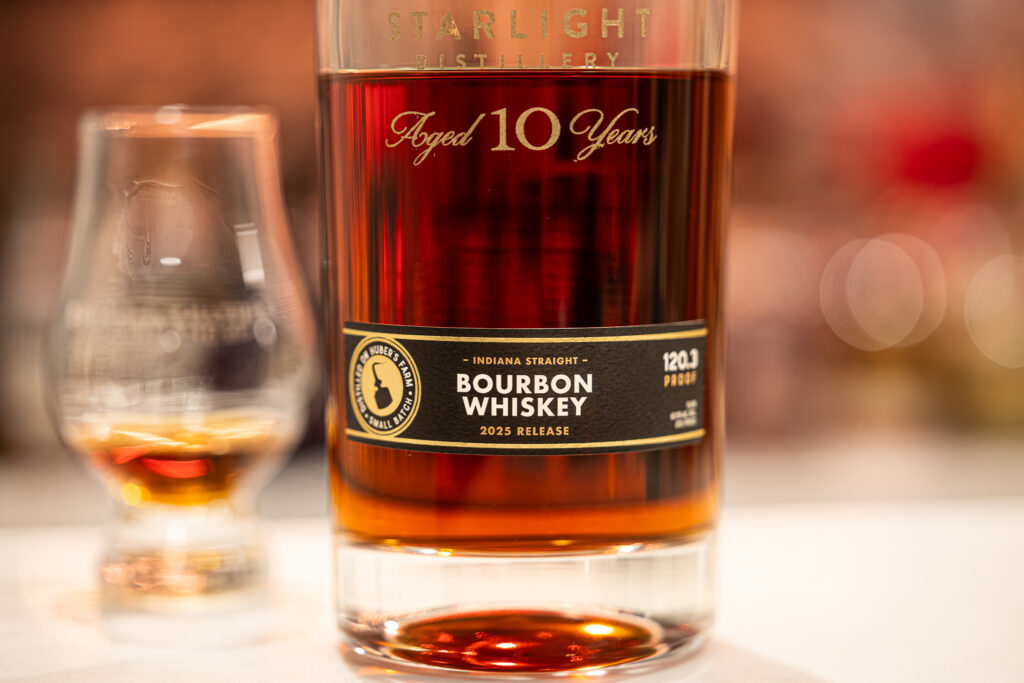
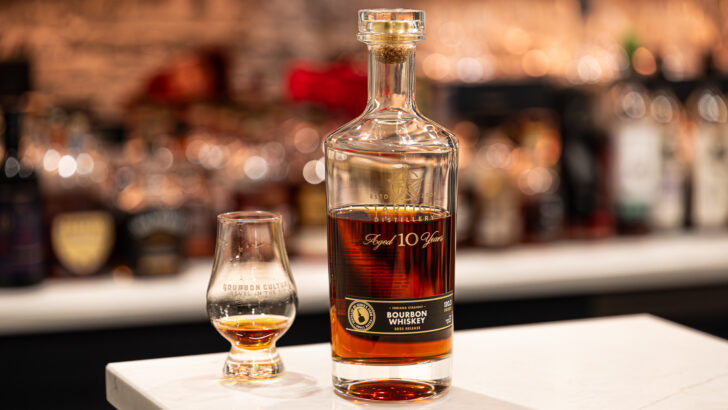
In 2025, we found out when they dropped their oldest and most expensive release to date: Starlight Aged 10 Years Bourbon. This milestone bottle was released with a wallet crushing $250 MSRP. But then again, most craft distilleries have been charging that amount for their 10-year old products like this bottle of Wyoming Whiskey that was released a few years ago. Still, that doesn’t make it an more justifiable in my opinion.
Another Seguin Moreau barrel sighting
One of the most interesting specs of this 10-year release isn’t the age statement itself, but the barrel it was aged in. Starlight has become one of the most aggressive adopters of the Seguin Moreau Icône Elevation barrel. For the uninitiated, these aren’t your standard $300-to-$400 Kelvin or Independent Stave Company barrels. These are high-tech tools designed for the fine wine industry, and they cost roughly $1,200 per unit. I have not confirmed if these are the same barrels that MGP (and Joseph Magnus) have also used in the past when there was a big barrel shortage, but the timeline seems to line up.
Why are these barrels pricey? It comes down to what the industry calls “molecular selection.” Instead of just picking staves based on which forest the oak came from, Seguin Moreau uses laboratory analysis to core and test staves for their “Oenological Potential.” They are looking for specific levels of tannins and aromatic potential before the barrel is even built. Additionally, these barrels don’t undergo a traditional aggressive charring that leaves a layer of carbon in the barrel. Instead, they use a scientific toasting process called “bousinage.” This type of heat gradient is specifically calibrated on how deep it’s supposed to penetrate into the wood. The flavors it is supposed to extract lean more towards rich desserts rather than green wood. This might be one of the key factors why this bottle is priced at $250.
Moving Barrels just like Maker’s Mark
The second distinctive characteristic of this 10-year expression is how it matured. For the first three years, this spirit was kept in Starlight’s Warehouse 1, a subterranean cellar constructed directly into limestone bedrock. This environment is cool and consistent, which allowed the new make spirit (distilled in May 2015) to interact with the wood slowly, resulting in minimal evaporation while maximizing what oxidation. This initial process is aimed at “setting the foundation.”
After those three years, the barrels were moved to the west side of Warehouse 2. This is a traditional above-ground wooden building that acts like a normal warehouse with the climate zones and changes within. The west side is known for its “hot pockets,” where Starlight claims extreme pressure changes force the whiskey deep into the barrel staves. The final product should hopefully share examples of both heat cycling and low-and-slow maturation.
Dave Pickerell Was Here
It’s also worth noting that this specific batch has some Dave Pickerell magic built in. The distillate was created under the early guidance of the late former Master Distiller Dave Pickerell. He helped the Hubers establish their distilling system before he passed away. Since the Huber’s had experience with winemaking, he advocated for a winemaker’s approach to their distillation such as using wine-strain yeasts and extended fermentations to create “ester-heavy,” fruit-forward profiles.
The mash bill itself is a marriage of Starlight’s 3-grain and 4-grain recipes (which has wheat and rye as the small grain) which always annoyed me. This release also utilizes four heirloom corn varieties grown right on the estate: Yellow, White, Red and Blue. Most large-scale distilleries won’t touch heirloom corn because the oil content is too high and it apparently clogs up the equipment, but their Vendome copper pot still apparently does okay with it, so they have been known to keep using these kinds of grains.
The batch was supposedly blended from only eight barrels and is intended to represent the pinnacle of their current stocks. It’s bottled at a cask strength of 120.3 proof which is quite high, but something I’m a fan of. Now that we know about the bourbon, let’s see how it tastes. A special thanks to my friend Mike who bit the bullet to buy this bottle when the rest of us wouldn’t. I sampled this neat in a glencairn.
Tasting Notes
Nose: The nose has very little ethanol sting. With that unknown out of the way, it allows me to take in the baked goods, caramel and cherry scents. However, I still think that directly behind those still lies this earthy scent that doesn’t seem to belong. The tannic notes waffle between lovely oak and vanilla to baker’s chocolate and maybe some coffee beans. Spice notes are relatively controlled with scents of cinnamon (both ground and stick variety), allspice and some clove. Following up on the fruit mentioned above, I do find some baked and raw orchard fruit notes as well.
Palate: The mouthfeel is quite good for Starlight with plenty of viscosity and oil – that’s probably the pot still’s work more than anything. The first sip immediately shows me some barrel-influenced notes like mocha, oak and leather. The sweet notes ping between salted caramel, milk chocolate and powdered donut. But there are also some off-notes like orchard fruit skin, sharp spices and a tiny bit of cardboard. I think the Seguin Moreau barrels did a lot of heavy lifting here, but couldn’t cover up some of the youthful grainy notes (must be that heirloom corn).
Finish: The finish is fairly long and a little dry. Cherry cola notes come into focus along with seasoned and dry oak and a touch of ginger root. There’s a little bit of chocolate that plays nicely with tobacco flavors. But there are also prickly spices like black pepper, cinnamon stick and even cardamom(?!). Despite the 120.3 proof, it doesn’t burn the throat; instead, it provides a slow, radiating warmth that stays with you for minutes.
Score: 7.3/10
If you were looking for a bottle that would change your mind about the kind of whiskey that Starlight is putting out… well, this isn’t really it. I do think that these double-digit age released whiskies that craft distilleries put out don’t ever do the thing that most consumers think they’re going to do which is change their minds. If you have been on the fence about all of their whiskey up until that point, a 10 year age statement isn’t going to magically evolve into something way better. I think the faults of craft distilling are always exposed in the first 3-4 years of their distilling followed by a serious look into what they can change and adjust to make it better. So while I was a little excited about Starlight 10 Year, I’m going to be more excited about what their 10 Year will taste like in 2030. Does that make sense?
Final Thoughts
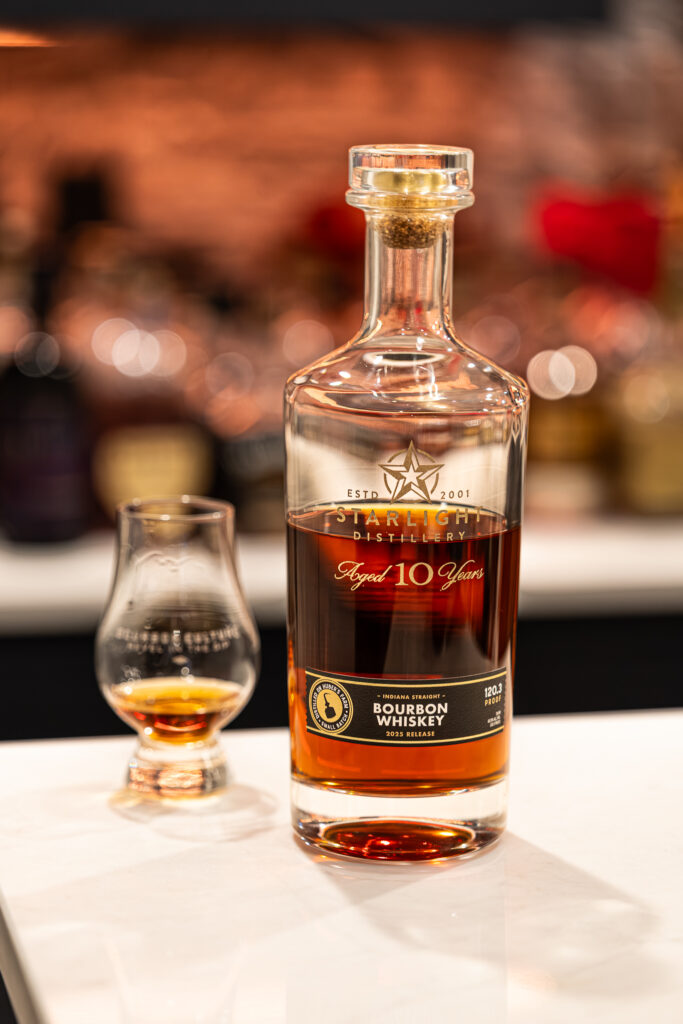
Let’s talk about the elephant in the room: the $250 price tag. In today’s market, you can find so many 10-year-old, cask-strength bourbons for under $100. You can even find many proofed-down ones for under $55. So if you are looking for a “value play,” this isn’t it. But I think we all kind of knew that coming into this bottle.
Some collectors will see the high prices as an investment in the barrels and the decade of patience required to see what the future of Indiana whiskey looks like. Starlight has officially entered the double-digit age statement era and I’m still pulling for them and their future. I know that with their perseverance, they’ll make it to that top shelf soon enough.